Staging a House With Dated Furniture for a Fresh Look
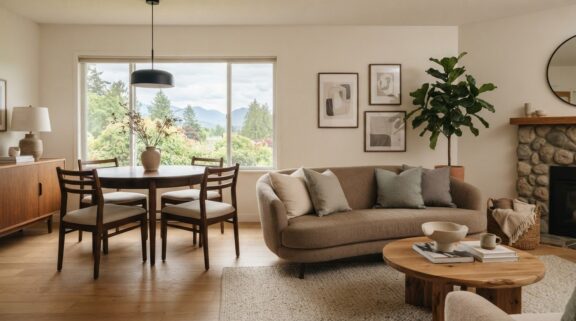
Dated furniture doesn’t have to define a room. Staging a house with dated furniture can give it a fresher feel by pairing existing pieces with modern accessories, updated dining chairs, and thoughtful choices in colour and texture. The key is to create a clean, cohesive setting where older furnishings feel intentional rather than out of place.
It’s understandable to look at a dated sofa or dining set and wonder whether it needs to go. Often, a few well-chosen changes can shift the room’s overall impression while preserving the warmth and character that make a home feel lived in.
Refresh furniture with pillows, lighting, artwork, and considered details, then use colour and texture to bring the room together. Assess which pieces add to the home’s appeal and which distract from it. That helps you create a welcoming, polished space without trying to make every room look brand new.
Key Takeaways
- Use a few contemporary details at eye level to draw focus and help older furnishings feel intentional.
- Refresh a traditional dining set by updating chair finishes or seat fabric, and balancing it with current lighting.
- Repeat a restrained colour palette, then mix patterns and textures selectively to keep the room cohesive.
- Assess each furniture piece by whether it supports the home’s appeal, rather than keeping it simply because it belongs there.
1. Using modern accessories to connect old and new decor
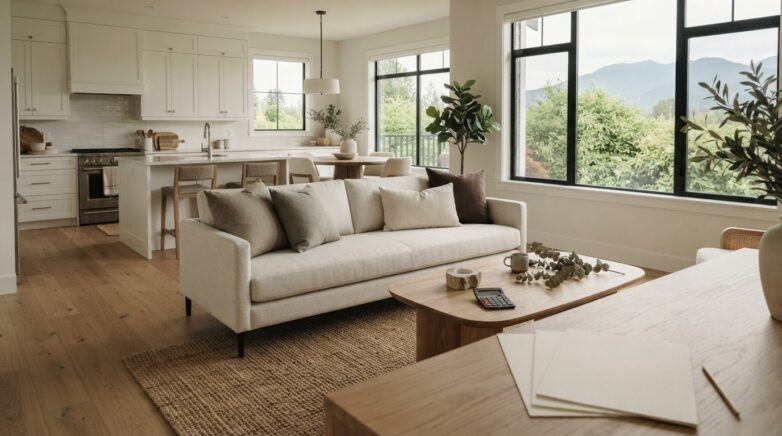
Start by clearing visual clutter, then add a few current accents that give dated furniture context. On a wooden dresser, contemporary drawer pulls and a sculptural lamp can make the piece feel deliberate. A pair of modern pillows can refresh an older sofa without hiding its shape. Use eye-level accessories, such as artwork above a mantel or a vase on the dining table, to draw attention to the room’s considered details.
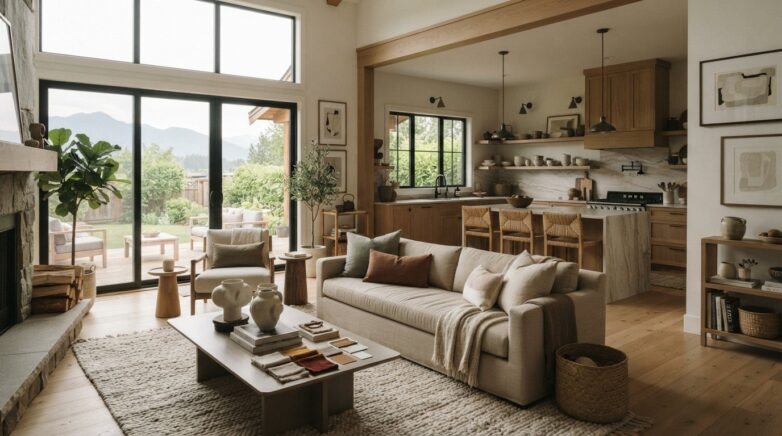
Choose accents to suit the home and its likely buyers, not just your personal taste. A Victorian house, for example, can retain its original trim while gaining a simple contemporary mirror and restrained lighting. In a newer suburban home, clean-lined accessories can make traditional furniture feel less formal. When staging a house with dated furniture, connect old and new through repeated finishes, such as warm wood paired with black metal, rather than layering in unrelated trends.
Adapt the approach room by room. In the living room, edit the coffee table and add a current lamp. In the bedroom, refresh the bed with a textured comforter and coordinated pillows. In the dining room, clear excess table decor and keep the furniture visible. These steps give each space a clear purpose while keeping the existing pieces in proportion.
Sellers should clearly distinguish staged or rented furnishings from items included in the sale. In listing details and buyer discussions, identify what stays so the presentation doesn’t create a false impression. Home staging or furniture rental costs in Canada depend on the property, rooms, furnishings required, and rental period; a quote request establishes the price. In listing photos, clutter, too many competing accessories, and lamps or artwork that overwhelm the furniture can make dated pieces look worse. Keep surfaces edited and accessories scaled to each item.
2. Adding fresh accessories and dining chairs
A dining set can feel dated when every piece has the same heavy finish. Keep the table, then introduce chairs with simpler lines for a more current contrast. If the existing wooden chairs are in good condition, try painting one soft grey to see how it looks beside the table before updating the set. A removable seat offers another focused option: replace its fabric with a fresh, understated texture that complements the room.
Choose an update that suits each chair. Sanding and waxing an older wooden chair can highlight its character and give it an appealing antique look. For a more contemporary effect, a soft grey finish can bridge traditional wood and a clean-lined table. Repeat a finish or fabric colour elsewhere, such as in a nearby curtain or cushion, so the dining chairs feel connected to the room rather than added at random.
Then edit the tabletop and surrounding details. A streamlined pendant light, a simple vase, and a small arrangement of fresh accessories can make traditional dining furniture feel more current. Keep the table surface visible, especially in listing photos, and leave enough open space to show how the chairs fit around it. If a formal dining set is matching and in good condition, keeping the pieces together can create a composed, intentional look.
Work in stages: assess the table and chair condition, choose whether to refresh or replace the chairs, then adjust lighting and accessories to support that choice. Avoid mixing several unrelated chair styles, finishes, and decorative themes; the contrast can overwhelm the dining set instead of updating it. If the room still feels unresolved, a professional room-styling perspective can help bring the furniture and details into balance.
Painting an older wooden chair soft grey can help it coordinate with a contemporary dining table. Keep the change focused, then consider how the chair’s finish relates to other dining-room details before making further updates.
Home sellers can look for high-style home-staging accessories at local Facebook Marketplace or ReStore listings. Choose pieces that support the room’s existing palette and leave the dining table visible, so accessories add polish without competing with the furniture.
3. Combining patterns, colours, and textures
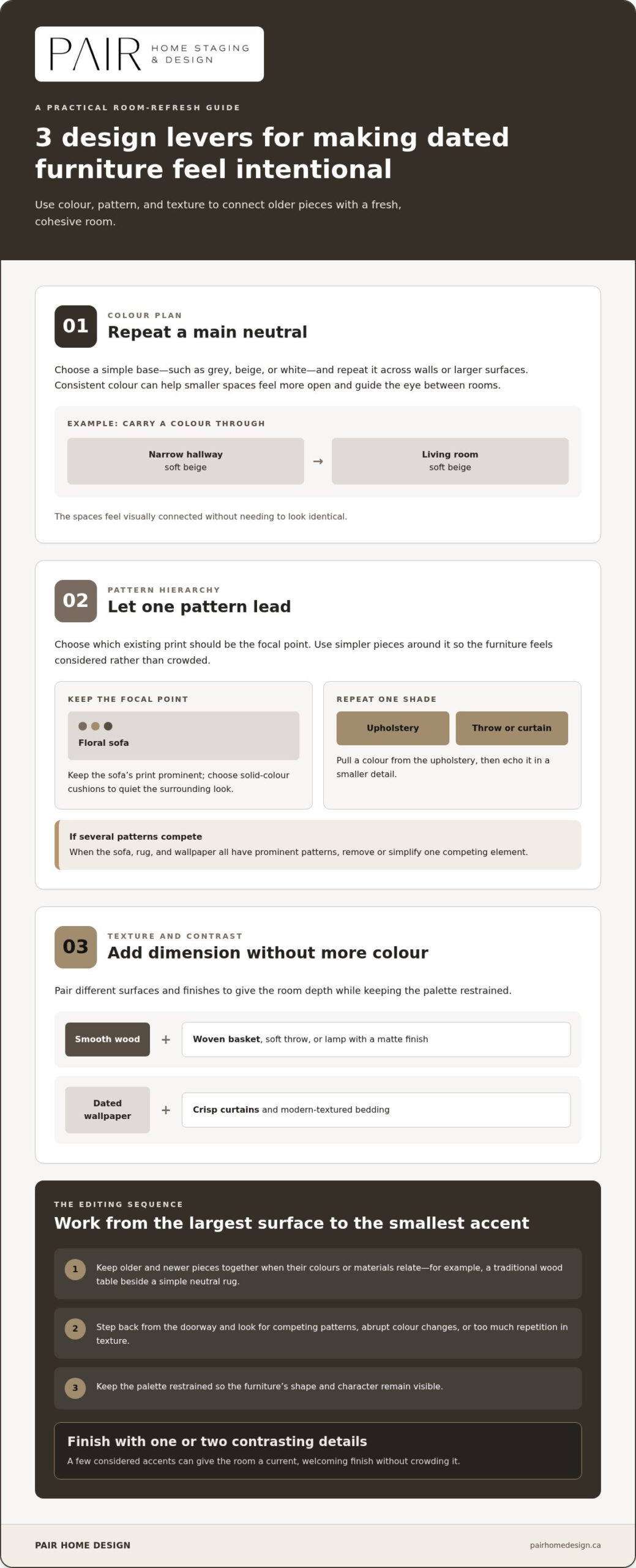
Begin with a simple colour plan for each room. Choose a main neutral, such as grey, beige, or white, then repeat it across walls or larger surfaces. Consistent colours can help smaller spaces feel more open and guide the eye from one room to the next. For example, carrying soft beige from a narrow hallway into the living room creates a visual connection without making the spaces identical.
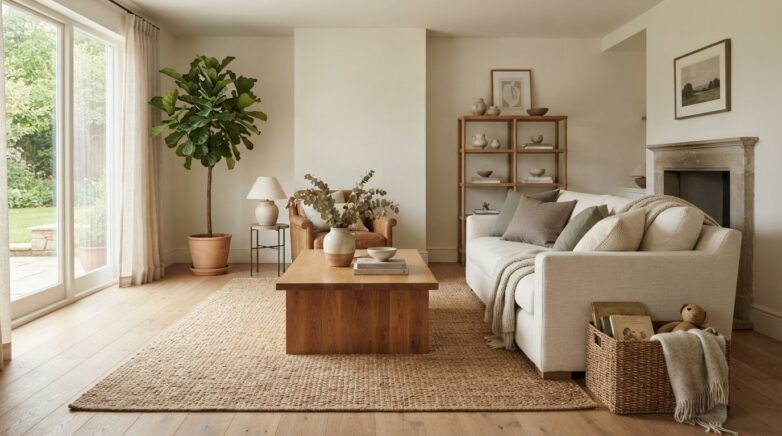
Next, decide which existing pattern should lead. A floral sofa can remain the focal point when solid-colour cushions tone down its busy print. Pull one shade from the upholstery, then repeat it in a smaller detail, such as a throw or curtain. If the sofa, rug, and wallpaper all feature prominent patterns, remove or simplify one competing element. The aim is to make the furniture feel considered, not crowded.
Texture adds dimension without introducing more colour. Pair a smooth wooden sideboard with a woven basket, a soft throw, or a lamp with a matte finish. In a bedroom with dated wallpaper, crisp curtains and modern-textured bedding can create a fresh contrast. Wall-to-wall carpet can also feel more intentional when bedding and window treatments introduce cleaner lines and tactile variety.
When staging a house with dated furniture, edit the room from the largest surface to the smallest accent. Keep older and newer pieces together when their colours or materials relate, such as a traditional wood table beside a simple neutral rug. Then step back from the doorway and look for competing patterns, abrupt colour changes, or too much repetition in texture. A restrained palette keeps the furniture’s shape and character visible, while one or two contrasting details give the room a current, welcoming finish.
4. Evaluating furniture for perceived value
Assess each piece by what it contributes to the home’s appeal, not by its age alone. A solid wood dining table may add warmth and function, while a bulky recliner can dominate a compact living room. Consider condition, scale, comfort, and how clearly the furniture shows the room’s purpose. A piece that blocks a window, narrows a walkway, or draws attention away from a fireplace may weaken the overall presentation.
Keep furniture that supports the room, and remove or relocate pieces that compete with it. For example, move an oversized armchair from a small bedroom to a more spacious family room if it fits there. Remove visibly worn upholstery or a damaged table if it distracts from the home’s features. Cover an older sofa only when the fabric fits smoothly and looks tailored; loose, bunched material can appear untidy. Group matching chairs when their symmetry helps the dining area feel composed.
Is it better to stage with dated furniture or rent modern furniture? Keep existing pieces when they’re clean, in good condition, and suited to the room’s scale. Rental furnishings can help when key rooms feel empty or existing items distract from the home’s layout and features.
Make the decision room by room. In a living room, keep a well-proportioned sofa and remove extra side tables. In a bedroom, retain a bed that leaves clear walking space. An empty room may need furnishings to communicate its purpose, while a crowded room usually benefits more from editing than from adding pieces. Judge the result from the doorway and check whether the room’s strongest feature remains easy to notice.
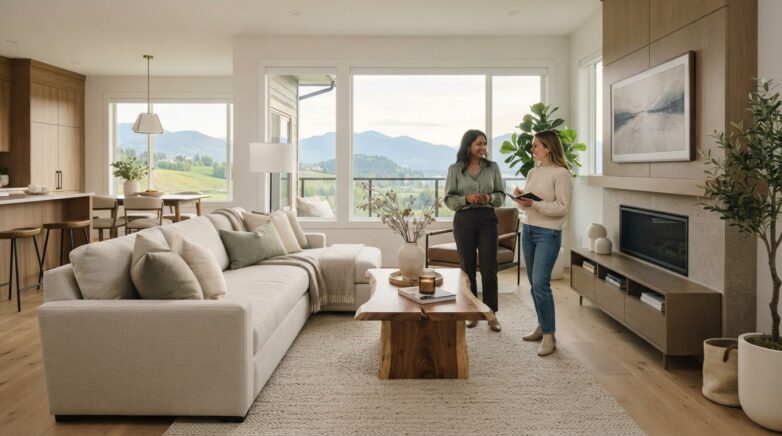
A focused Home Staging consultation can help you decide which pieces support the property’s presentation and which should be moved or replaced.
When preparing a home for sale, assess each furniture piece by how it contributes to the home’s presentation. Consider it as part of the overall space, not as an isolated possession. If its contribution is unclear, ask whether it strengthens the impression you want the home to make. This keeps the decision focused on the room’s appeal rather than personal attachment.
Pair Home Design: Home Staging
Pair Home Design helps homeowners prepare a property for sale through Home Staging that brings furniture, accessories, and room layout into a more cohesive presentation. If dated pieces make a room feel crowded or obscure its best features, a Home Consult can help clarify what to keep, move, or refresh before listing. For rooms that need a more considered finish, Home Styling can strengthen the home’s flow and atmosphere using thoughtfully selected inventory pieces. The goal is a welcoming, polished space that still feels connected to the home itself, not a collection of unrelated trends. For realtors, The Agent’s Edge offers a relevant option for supporting listing presentation. Contact Pair Home Design to discuss your staging needs, or visit pairhomedesign.ca.
Shape a home that feels ready for what’s next
A home’s character can be part of its appeal. Decide what you want buyers to notice and how each room can support that impression without losing its warmth. Staging a house with dated furniture is less about hiding its history and more about making the space feel cared for, clear, and easy to imagine living in.
Walk through the property as a visitor would. Notice where your attention naturally lands, which areas feel difficult to use, and whether the home’s personality comes through. These observations can help you prioritize meaningful changes instead of trying to update everything at once.
If you’d like an experienced perspective on preparing the home for sale, connect with Pair Home Design to discuss a considered staging approach. A thoughtful plan can help you move forward with clarity and present the home with confidence.
Frequently Asked Questions
What are budget-friendly ways to update dated furniture for home staging?
Start with changes that use what you already own: clean visible surfaces, remove unnecessary items, and move furniture to improve the room’s flow. A careful edit can make a stronger difference than adding more decor. If a small update is needed, focus on one visible detail, such as replacing worn knobs or refreshing a removable seat cover. Choose changes that suit the furniture’s condition and the home’s overall presentation.