Buyer Impression Staging: Create a Welcoming First Impression
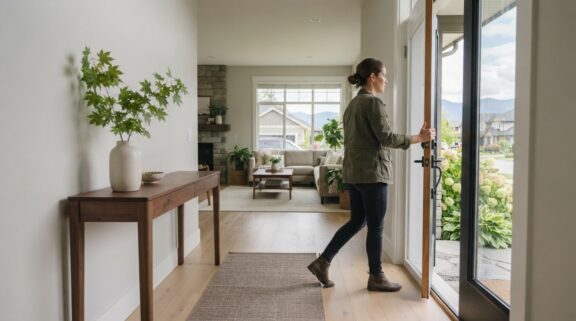
A buyer’s first impression can shape how they see a home from the moment they step inside. Thoughtful buyer impression staging helps buyers picture daily life in the space by highlighting its best features, creating a welcoming feel, and reducing visual distractions. Neutral colours, considered decor, and furniture arranged for easy movement all contribute.
Presentation matters: personal photos and crowded rooms can make it harder for buyers to imagine the home as their own. But a welcoming impression doesn’t require every room to look perfect. Use neutral tones, tasteful finishing touches, and inviting details to create a lighter, less personal feel that helps buyers connect with the space.
Key Takeaways
- Arrange furniture to keep entrances clear and create an easy path between rooms, helping each space feel more open and functional.
- Use neutral colours and a few coordinated decor pieces to create a calm backdrop that lets buyers picture their own style at home.
- Bring warmth to key rooms with natural light, thoughtful lighting, and simple details that suggest how the space can be enjoyed.
- Clear excess belongings and personal items so the home’s features stand out and buyers can imagine making the space their own.
1. Did you know that staging can impact the buyer’s first impression?
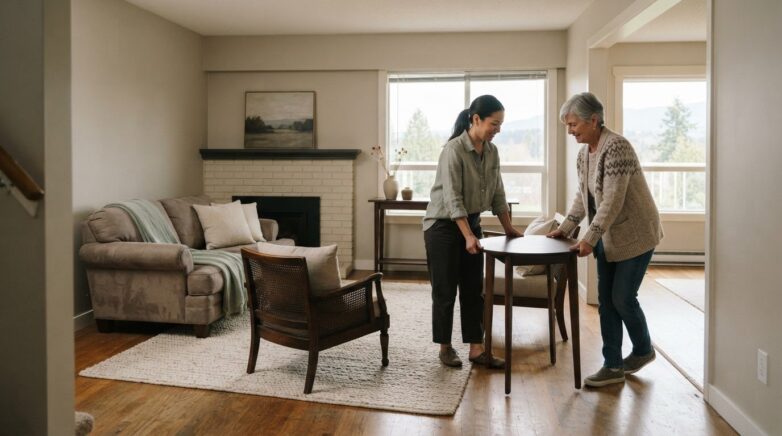
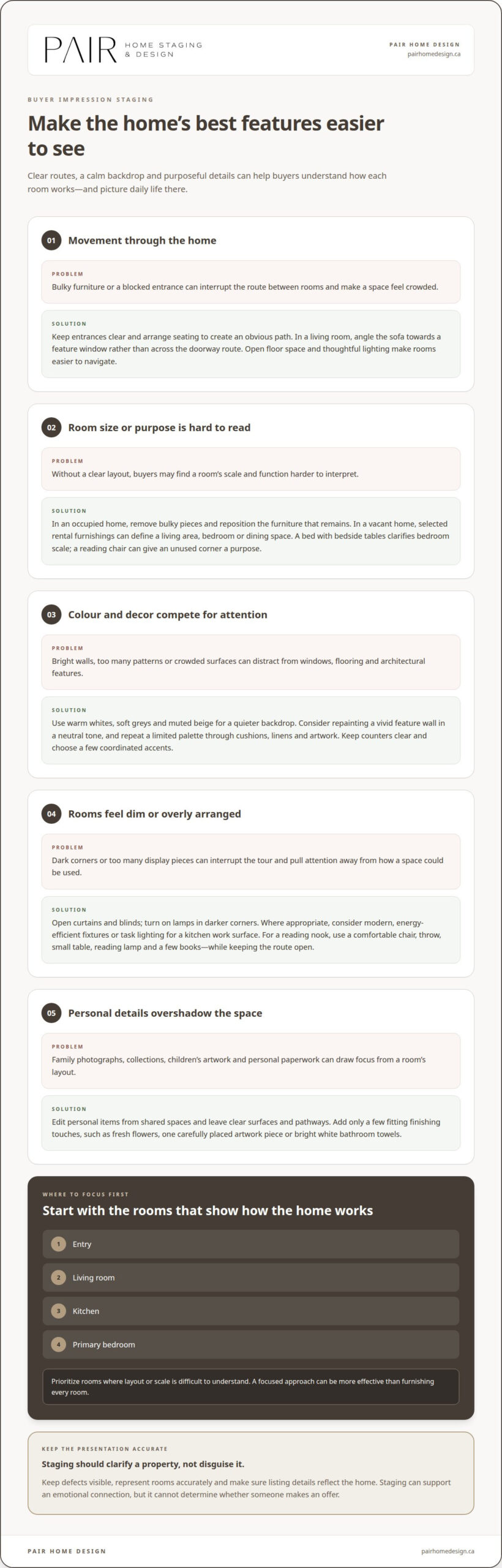
Furniture placement influences how buyers move through a home and notice its appeal. Keep entrances clear, then arrange seating to create an obvious route between rooms. For example, angle a living-room sofa towards a feature window rather than across the path from the doorway. Thoughtful lighting and open floor space make rooms easier to navigate. With buyer impression staging, each room should suggest its purpose while leaving space for buyers to imagine themselves living there.
Occupied and vacant homes benefit from different approaches. In an occupied home, existing furniture adds useful scale and warmth. Remove bulky pieces, then reposition what remains to open walkways. In a vacant property, selected rental furnishings can define a living area, bedroom, or dining space. Without furniture, buyers may find the room size and layout harder to interpret. In both cases, home staging makes spaces feel functional, not crowded.
Start with the entry, living room, kitchen, and primary bedroom, since these spaces quickly show how a home works. A reading chair can give an unused corner a purpose, while a bed and bedside tables help clarify bedroom scale. Staging can shape a buyer’s first impression and support an emotional connection, but it cannot determine whether someone makes an offer. A clear route from the entrance into the living area helps visitors experience the layout naturally.
Is staging worth the cost for Canadian sellers? Its value depends on the home’s condition, the rooms that need attention, and whether existing furniture suits the space. Prioritize areas where layout or scale is difficult to understand, then consider how the furnishings support the overall presentation. A focused approach can be more effective than furnishing every room.
Staging can create legal concerns if photos or furnishings mislead buyers about the property’s actual condition. Keep defects visible, represent rooms accurately, and ensure listing details reflect the home. Presentation should clarify a property, not disguise it.
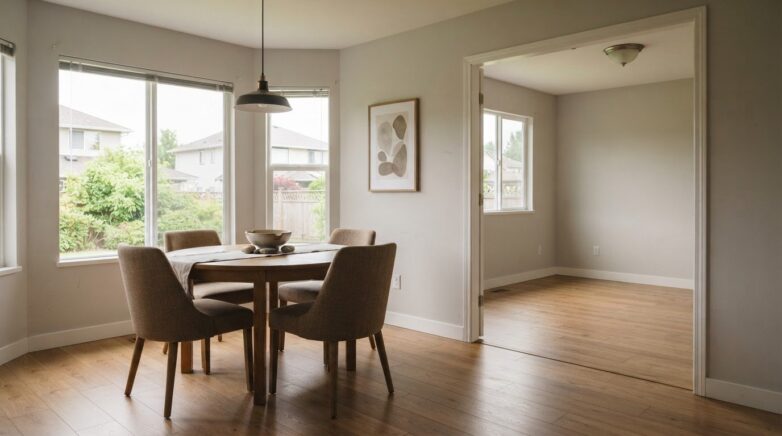
For 2026, focus on practical choices that remain appealing beyond a passing style: flexible layouts, comfortable seating, natural light, and a few well-chosen accents. In a dining room, keep the table and chairs as the focus; a simple runner or fresh flowers adds polish without crowding the surface. Residential sales specialists such as skrealtors.com.au note that combining clean, functional presentation with knowledgeable representation gives sellers a clear edge in the current property market.
2. Neutral colours and tasteful decor
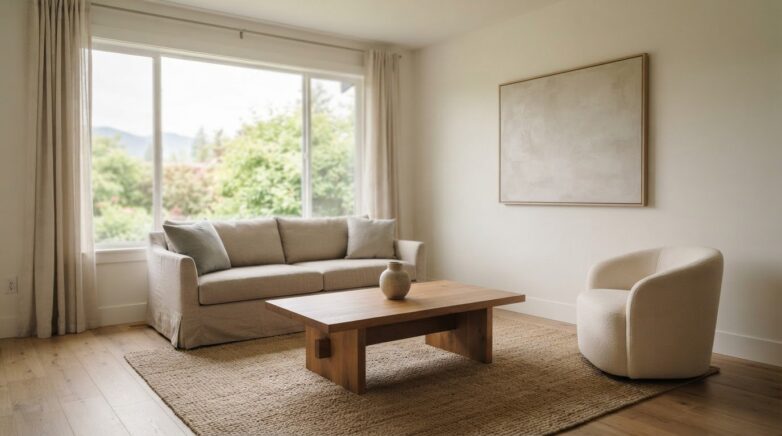
Colour can soften a room’s mood before buyers notice its details. Brightly coloured walls may compete with flooring, windows, and architectural features, while warm whites, soft greys, and muted beige create a quieter backdrop. Repainting a vivid feature wall in a neutral tone can help the room feel cohesive. This restraint also lets buyers imagine their own furniture and choices without stripping the space of personality.
In a dated but sound kitchen, white or light grey cabinet paint can refresh the overall impression. Keep counters clear, then add a small, useful accent, such as a wooden cutting board or bowl of fruit. For listing photos, repeat a limited colour palette through cushions, linens, and artwork. Coordinated details make rooms feel considered, while too many patterns or accessories can create clutter and distract from the home’s features.
A calm primary bedroom should feel restful, not heavily decorated. Plain white sheets, a neutral textured bedspread, and a few accent pillows create layers without overwhelming the bed. Remove extra chairs or side tables if they restrict walking space. In photos, a neatly made bed and clear bedside surfaces help show the room’s size and proportions, giving the eye a place to settle.
Small finishing touches can add warmth without taking over. Fresh flowers on a dining table, one carefully placed artwork piece, or bright white towels in the bathroom can make a space feel prepared. Choose decor that suits the room: coordinated bedding in the bedroom, for example, or a simple vase near a bright window. A tailored home styling plan can bring these choices together, balancing colour, texture, and appeal across the home.
3. Creating an inviting atmosphere for buyers
Potential buyers notice how a home feels as they enter and move through it. Before a showing, open curtains and blinds to let natural light reveal window views and room proportions. In a living room facing a garden, clear the window area and keep nearby surfaces simple. These choices create a bright, considered first impression and help visitors visualize everyday life in the home.
Lighting should work from the entrance through the rooms buyers are most likely to explore. When appropriate, replace dim or outdated fixtures with modern, energy-efficient options, and turn on lamps in darker corners. In a kitchen with limited natural light, task lighting can brighten the work surface and make the room feel more welcoming. Consistent lighting helps a staged home feel cohesive, without a shadowy area interrupting the tour.
A reading nook gives an unused corner a clear purpose. Pair a comfortable chair with a throw, small table, reading lamp, and a few books. If possible, place the chair where it receives natural light while keeping the route through the room open. Reading glasses can complete the scene, but a small selection of props is enough. The aim is to suggest a relaxed routine, not create an overly arranged display.
Choose welcoming details that suit each space. An open cookbook with a colourful recipe photograph can add a lived-in touch to a kitchen; fresh flowers can soften an entry table. Keep counters and pathways clear so potential buyers notice the room, not its accessories. A welcoming atmosphere comes from balancing natural light, practical lighting, and purposeful details. Together, these choices can help visitors connect with the home and imagine how they might use it.
4. Decluttering and depersonalizing rooms
Before listing photos or showings, edit what buyers see first. Remove family photographs, children’s artwork, collections, and personal paperwork from shared spaces. These details matter at home, but they can draw attention away from a room’s layout and make it harder for visitors to picture themselves living there. Keep a few neutral accessories, such as a simple bowl or framed print, so shelves don’t look bare.
Next, clear surfaces and storage areas. Put away small appliances crowding the kitchen counter, extra toiletries on the bathroom vanity, and shoes beside the entry. Remove bulky furniture that restricts movement, while keeping pieces that show how each room works. A staged home should feel usable, not empty. For example, a dining table can define a gathering area without extra furnishings around it.
Cleaning is part of the same preparation process. Deep-clean floors, windows, bathrooms, and kitchen surfaces so dust, fingerprints, and water marks don’t distract from the home. Then look for small repairs or cosmetic issues, such as scuffed paint or a loose cabinet handle. Fresh, clean surfaces help buyers focus on the property rather than signs of daily wear. Use a neutral palette where bright personal choices dominate.
What should sellers remove or fix before staging? Clear personal belongings, excess decor, and furniture that blocks pathways; clean visible surfaces and address minor cosmetic distractions. For a practical sequence, sort items into keep, store, and remove groups, then prepare each room for its intended use. Pair Home Design’s Home Staging support can help bring those decisions together when preparing a property for sale, from selecting what stays to creating a composed, buyer-ready presentation.
Decluttering is a practical first step when preparing a home for sale. Decide what to remove before choosing the level of staging support you need. Real estate professionals such as The Agency Coffs Coast frequently emphasize that clear, well-presented spaces allow buyers to appreciate a property’s true potential. Professional staging can help with furniture arrangement, curated furnishings, and a cohesive presentation, while a consultation can provide guidance on preparing the home yourself.
Pair Home Design: Home Staging
Pair Home Design helps homeowners prepare a property for sale with Home Staging, Home Styling, and Home Consults. If rooms are difficult to arrange, furnishings are limited, or the home needs a cohesive presentation, staging can bring the layout and details together for listing photos and showings. Curated inventory pieces help define how spaces can be used, while styling refines the look of furnishings already in the home.
A Home Consult can clarify which rooms need attention and how to approach the preparation. Realtors can also use The Agent’s Edge to support a property’s presentation. The right next step depends on the home and the support it needs. Contact Pair Home Design to discuss preparing your property for buyers.
Prepare a home that feels ready for its next chapter
Before listing your property, take a fresh look through a buyer’s eyes. Which spaces feel clear and easy to understand? Where could a considered design choice help the home feel more connected, comfortable, or purposeful? These questions can guide your next decisions without erasing the character that makes the property feel like home.
Thoughtful buyer impression staging is about creating a sense of possibility. Each room can help visitors imagine a routine, a gathering, or a quiet moment of their own. If you’d like a professional perspective as you prepare, Pair Home Design can help shape a polished, welcoming presentation. Book a consultation to discuss your next steps.
Contact Pair Home Design to discuss your home’s next step. With a clear plan, you can prepare to welcome buyers with confidence.
Frequently Asked Questions
Did you know that staging can impact the buyer’s first impression?
Yes. Staging influences which details buyers notice first and how they understand a home’s condition and potential. A deliberate focal point, such as a fireplace or large window, can help visitors read the room’s layout before turning to smaller details. This first response can shape their overall experience of the viewing, although each buyer’s preferences and priorities differ.
What does buyer impression mean in home staging?
Buyer impression is the feeling and understanding a prospective buyer forms while viewing a property. In staging, it means presenting the home so its purpose, proportions, and strongest features are easy to read. For example, a clearly arranged entrance can signal a practical arrival space, while a defined dining area helps visitors see how adjoining rooms connect.
What are the most effective low-cost home staging tips?
Start with small updates that refresh visible surfaces: tidy the front yard, add flowers, or repaint a scuffed front door. In a bathroom, fresh paint or updated cabinet hardware can make the room feel more cared for; replacing worn kitchen knobs can sharpen the cabinetry. These details can support a polished listing in Chilliwack, Abbotsford, Hope, Mission, Langley, Maple Ridge, Coquitlam, Surrey, Burnaby, and Vancouver.