Modern home staging style for balanced, welcoming rooms
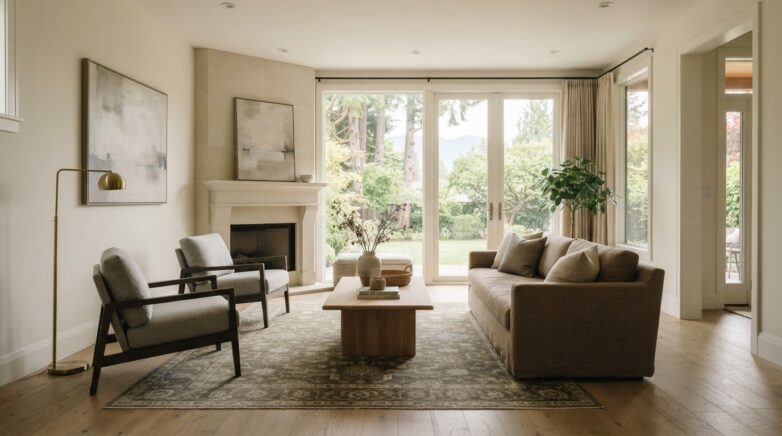
A room can feel modern without feeling cold. A modern home staging style balances clean lines and open space with warm lighting, greenery, and a few traditional accents, creating a polished room that still feels inviting.
That balance matters: a space can look current in photos and feel welcoming in person. Rather than removing every sign of character, thoughtful staging lets a home’s features stand out while keeping the overall mood comfortable and composed.
In this guide, you’ll learn how lighting and plants can create focal points, why considered decluttering helps rooms feel more spacious, and how grouping decor can bring visual rhythm to a surface. You’ll also see how traditional details can soften contemporary choices, and why a transitional approach can suit a range of homes and tastes. The goal is not a room that feels staged for its own sake, but one with a clear, balanced atmosphere that helps potential buyers picture their life there.
Key Takeaways
- Layer ambient, task and accent lighting, then use healthy plants to add colour and draw attention to a room’s best features.
- Thoughtful edits to furnishings and personal belongings can open up sightlines while keeping the home warm and inviting.
- Vary the shapes, heights and colours in a group of three decor pieces to create a balanced focal point.
- Blend contemporary lines with traditional details for a transitional look that feels polished yet welcoming to a broad range of buyers.
How professionals create focal points with lighting and plants
A professional begins by observing how daylight moves through the room and where sightlines lead. They consider the view from the entrance, window placement, and features such as a fireplace or built-in shelving. Furniture can then be arranged to draw attention towards those features without blocking natural light. Where appropriate, a mirror opposite a window reflects daylight and adds visual depth, helping the room feel larger.
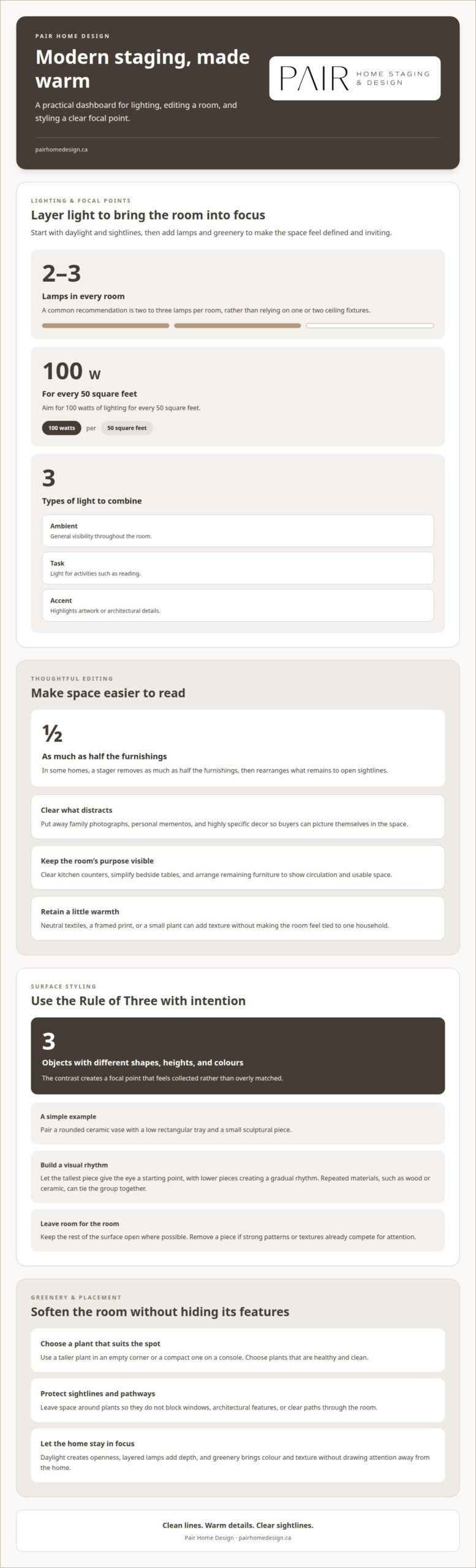
Layered lamps bring definition to dim corners and make a staged room feel comfortable beyond daylight hours. A common recommendation is two to three lamps in every room, rather than relying on one or two ceiling fixtures. Professionals can also aim for 100 watts of lighting for every 50 square feet. They combine three types: ambient light for general visibility, task light for activities such as reading, and accent light to highlight artwork or architectural details.
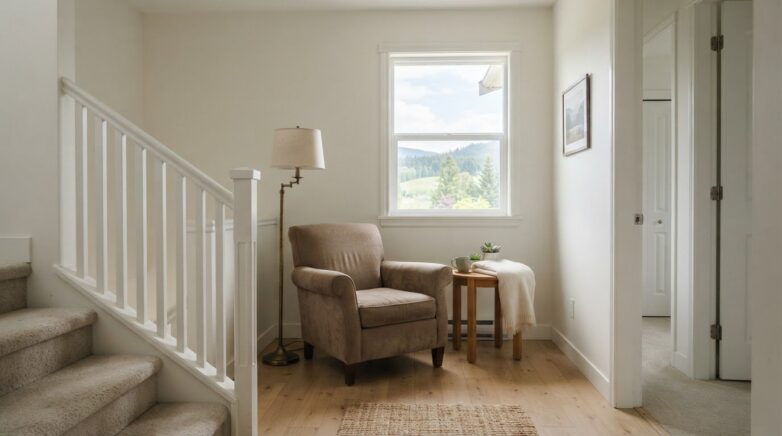
Next, they assess existing fixtures, dimmers, and bulb types together. A fixture’s shape and finish should suit the home’s style, while the bulb’s light should work with the room’s neutral palette, paint, and furnishings. Dimmers allow the level of light to shift for different moments, and a table lamp beside a reading chair gives task lighting a clear purpose. These details matter in real estate photography, where harsh shadows or a dark corner can distract from the room’s layout.
Plants bring colour, texture, and dimension beside streamlined furniture. A professional selects healthy, clean plants in a scale that suits the spot, such as a taller plant in an empty corner or a compact one on a console. Leaving space around each plant keeps pathways clear and avoids hiding windows or architectural features. Daylight creates openness, layered lamps add depth, and greenery softens the room without drawing attention away from the home.
How professionals declutter and personalize staged spaces
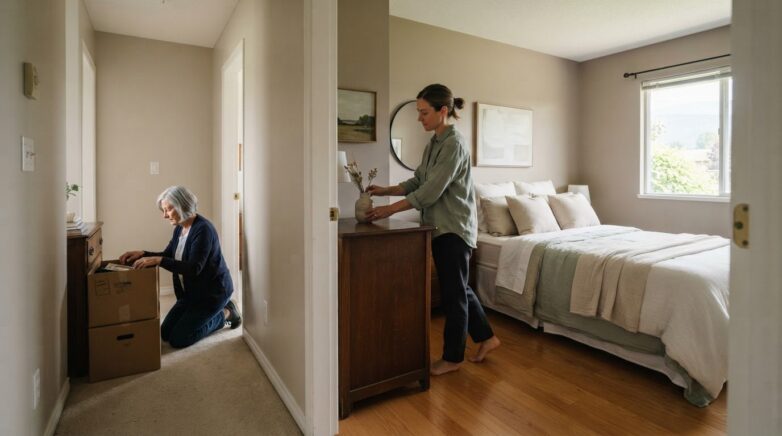
A stager edits a room to reveal its size, function, and strongest features. In some homes, that means removing as much as half the furnishings, then rearranging what remains to open sightlines. Family photographs, personal mementos, and highly specific decor are usually cleared so potential buyers can picture themselves in the spaces. The aim is not to erase warmth, but to make each room feel considered and easy to understand.
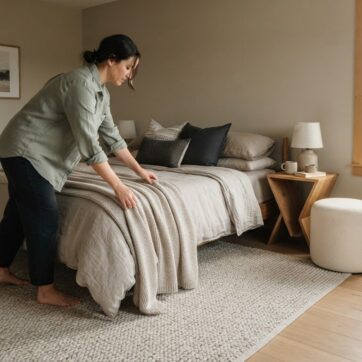
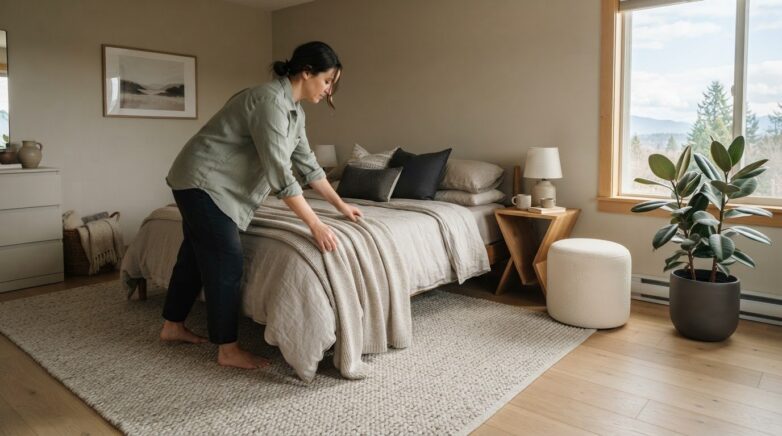
In a modern living room, kitchen, or bedroom, a professional clears visual clutter and arranges furniture around the room’s purpose. A living room might keep its seating and one accent detail; a kitchen might have clear counters and a small, tasteful grouping; a bedroom might feature coordinated linens and uncluttered bedside tables.
Surfaces matter. A stager clears counters, tables, and shelves, then selects a few pieces that suit the room. In a kitchen, removing small appliances and everyday items reveals counter space and cabinet lines. A simple bowl or vase adds a restrained accent without competing with the finishes. These budget-conscious updates rely on curation and placement, not replacing kitchen components.
Furniture needs the same careful review. A bulky chair may interrupt the path through a living room, while an overfilled bedroom can make its layout harder to read. The stager may move selected pieces into storage, then adjust what remains to show clear circulation and usable space. This helps rooms feel open while showing how each area works.
Personalization should be selective, not absent. Neutral textiles, a framed print, or a small plant can lend texture without tying the room to one household. A tidy entry and maintained outdoor area also support a cohesive first impression, extending the home’s appeal beyond its interior. For a tailored, room-by-room approach, explore professional staging guidance that considers each space’s layout and character.
How professionals group decor using the Rule of Three
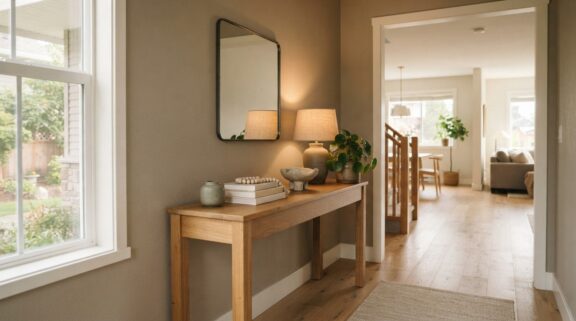
The Rule of Three gives a staged surface an intentional focal point without making it feel crowded. A professional groups three objects with different shapes, heights, and colours, then considers how they relate to the room’s lines and finishes. For example, a rounded ceramic vase, a low rectangular tray, and a small sculptural piece create contrast. Their varied silhouettes help the arrangement feel collected rather than overly matched.
Scale matters as much as selection. On a broad console, objects need enough presence to read clearly, while a narrow shelf calls for compact pieces. The tallest item gives the eye a starting point; lower pieces create a gradual visual rhythm. A bright accent can bring energy to a neutral palette, while repeated materials, such as wood or ceramic, tie the group together.
Placement gives the grouping purpose. On a coffee table, three accessories can sit together on one side, leaving the rest of the surface open for everyday use. Near a fireplace, a trio on the mantel can draw attention to the architectural feature without competing with it. In a living room, pillows can echo one colour from the decor grouping, linking the accessories to the seating without matching every fabric.
Professionals consider what buyers notice from the doorway and in listing photos. They adjust a grouping until its outline stands out against the wall, furniture, or countertop. Objects of identical height can look flat, while sharply contrasting colours may distract from the room. A stager may remove a piece if the surface already has strong pattern or texture. The Rule of Three is a starting point, not a reason to fill every table. Used selectively, it adds definition while keeping the home’s layout and features in focus.
How professionals blend modern and traditional styles in transitional staging
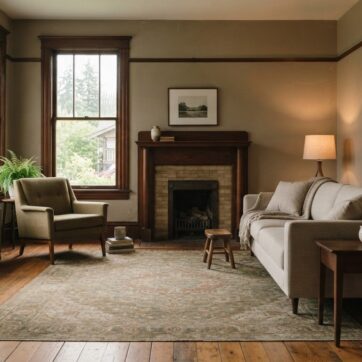
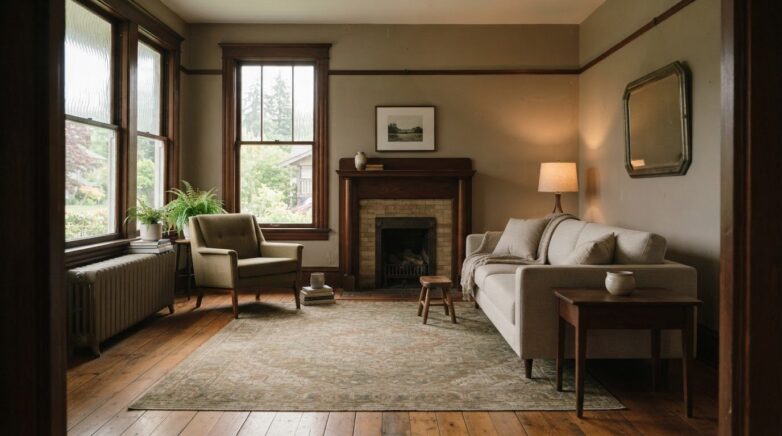
Transitional staging combines modern lines with traditional warmth, creating an interior that feels current without losing character. In a living room, a stager might pair a streamlined sofa with a dark wood side table, then ground the arrangement with neutral textiles and natural materials. This contrast lets traditional pieces stand out without making the room feel formal.
Modern staging often uses black, white, and grey with a bold accent colour; transitional rooms soften that contrast with warm wood, linen, or woven texture. Contemporary furniture with 90-degree angles can sit comfortably beside a traditional lamp or framed artwork. The key is balance: repeat a material or colour elsewhere so a single traditional detail feels connected, not out of place. This approach can suit varied tastes when a home is being prepared for showings.
For a listing, rental staging furniture can be practical when a seller wants a coordinated look for a limited time without storing the pieces afterward. Buying may suit furniture that will be used repeatedly when storage is available. A professional considers the home’s layout, existing furnishings, and presentation needs when shaping the plan.
In Canada, staging and disclosure are separate considerations. Staging should not conceal or misrepresent a home’s condition. Sellers and agents should keep listing information accurate and follow applicable provincial requirements.
Common mistakes include mixing too many competing styles, choosing furniture that overwhelms the room, and using decor to distract from clutter or a property concern. A professional can assess whether each piece supports the home’s architecture and whether the living room still feels functional. For a cohesive presentation, plan professional staging for your home around its features and intended audience.
Pair Home Design: Home Staging
Pair Home Design helps homeowners and realtors prepare properties for sale with curated Home Staging that brings out a home’s layout, character, and welcoming atmosphere. Home Styling offers a lighter touch to refine a property’s presentation, while Home Consults provide guidance on preparing a space for listing. Realtors can also explore The Agent’s Edge, a staging-focused offering.
A professional staging plan brings together the ideas in this guide, from clearing visual distractions to balancing modern details with traditional warmth. The approach depends on the home’s features, furnishings, and presentation goals. Pair Home Design considers these details to create a cohesive result.
If you’re preparing a home for sale, contact Pair Home Design to discuss your staging needs.
Shape a welcoming first impression
A modern home staging style works best when it feels connected to the home, not imposed on it. Before listing, consider what you want a showing to communicate: a calm place to unwind, room to gather, or an easy-to-navigate layout. Those priorities can guide which features to emphasize and how the presentation should feel.
A professional perspective can turn that intention into a cohesive plan. Pair Home Design offers Home Staging, Home Styling, and Home Consults for different presentation needs, from a curated setup to guidance before listing. Share what you’re preparing and what you hope buyers will notice to discuss the right next step.
Contact Pair Home Design to discuss staging and take the next step towards a home that feels considered, welcoming, and ready to show.
Frequently Asked Questions
What defines modern home staging style?
A modern home staging style uses deliberate lines, edited furnishings, and a cohesive palette to make a property feel current and easy to understand. Its success comes from proportion and consistency, not just modern-looking pieces. For example, a sculptural chair can add character beside a simple sofa, while repeated finishes create visual connection. The result should still suit the home.
How does modern home staging differ from contemporary, minimalist, and Scandinavian styles?
Modern staging draws on enduring design principles, while contemporary style reflects current tastes and may change with trends. Minimalism pares back objects and visual detail; it can be modern, but the terms are not interchangeable. Scandinavian interiors often emphasize function, simplicity, and natural influences. A staged home can draw from any of these approaches, as long as the choices support the property rather than impose a strict design label.
What steps do professionals take to stage a home in a modern style before listing?
Professionals begin with a property walkthrough, noting architectural features, room proportions, and the intended listing presentation. They then plan for the rooms buyers will see most clearly, considering how furnishings will look in photos and during showings. In Chilliwack, Abbotsford, Hope, Mission, Langley, Maple Ridge, Coquitlam, Surrey, Burnaby, and Vancouver, a thoughtful plan also considers how the home will function while it’s being shown.
Which modern staging updates do professionals recommend for the best return on investment?
Professionals prioritize visible improvements that help a home feel maintained and cohesive before adding decorative details. Fresh paint in a consistent neutral shade, clean grout, repaired trim, and coordinated cabinet hardware can address distracting signs of wear. Priorities depend on what stands out in the property and its listing presentation. A professional can help focus on updates that support the home’s features rather than unnecessary changes.