
Staging a Tenanted Property for Sale in BC: Consent and Leases

You can sell a BC home while tenants still live in it, but the sale itself doesn’t end the tenancy. For staging a tenanted property for sale in BC, tenant consent is needed before the rental unit is staged, and a buyer must honour a fixed-term lease unless the landlord and tenant mutually agree to end it. Preparing the home for market calls for cooperation, not treating it as vacant.
It’s understandable to want rooms to feel bright, balanced, and easy for buyers to imagine living in. Staging a tenanted property for sale in BC calls for a plan that improves presentation while respecting the tenant’s home and belongings. This article explains how a sale affects the lease, when consent is needed for staging, and how to arrange showings. You’ll also learn how an agreed schedule and clear communication can help the property show well without losing sight of the tenant’s rights.
Key Takeaways
- A sale doesn’t automatically end a tenancy; understand how the existing lease shapes the buyer’s plans.
- Staging a rental unit calls for the tenant’s consent, so discuss the approach before making changes to their home.
- A clear showing schedule can help balance buyers’ access with the tenant’s privacy and daily routine.
- Agree on staging costs and responsibilities early, then consider whether professional staging or styling suits the property.
Lease continuation and transfer to a buyer
In British Columbia, a sale does not by itself end a tenancy. Buyers need to know whether the rental unit will remain occupied on the possession date or whether a lawful process may apply.
Lease Continuity After a Sale
Lease continuity means the tenancy carries on when ownership changes. A buyer must honour a fixed-term agreement unless the landlord and tenant mutually agree to end it. Keep this in mind when setting a possession date: a sale does not automatically give buyers vacant possession or allow them to change the lease.
For a purchaser seeking to occupy the home, the process has specific conditions. After a genuine sale is accepted, the purchaser must intend in good faith to occupy the property. Under section 49(5) of British Columbia’s Residential Tenancy Act, the purchaser must ask the seller in writing to give the tenant notice. Notice requirements can depend on the circumstances, so sellers should confirm the applicable process before proceeding. A tenant has 21 days to dispute a notice for purchaser occupancy. The person moving in must occupy the home for at least 12 months.
Sharing Tenancy Terms with Buyers
Sharing the tenancy terms gives prospective buyers a clear written picture of the agreement and occupancy. This helps them assess whether the property suits their plans, whether they are seeking rental income or intend to live there.
Before marketing, organize the written lease and a plain-language summary of its key terms, including whether it is fixed-term or month-to-month, the rent, and any agreed conditions. A buyer planning to move in, for example, needs to understand that a fixed-term lease continues unless both parties agree to end it. Buyers seeking an investment can assess the existing tenancy and its terms. If the tenant remains in the rental unit on the possession date, the security deposit transfers to the buyer as a credit on the closing statement of adjustments. Clear documents help buyers compare the occupied property with their plans without suggesting that the sale alone ends the tenancy.
Tenant consent for staging a rental unit
In British Columbia, a landlord may not stage a rental unit without the tenant’s consent. Staging without agreement, or entering unlawfully for a showing, can lead to disputes over access and quiet enjoyment under section 28 of the Residential Tenancy Act. A tenant may apply for dispute resolution to suspend or set conditions on the landlord’s right to enter.
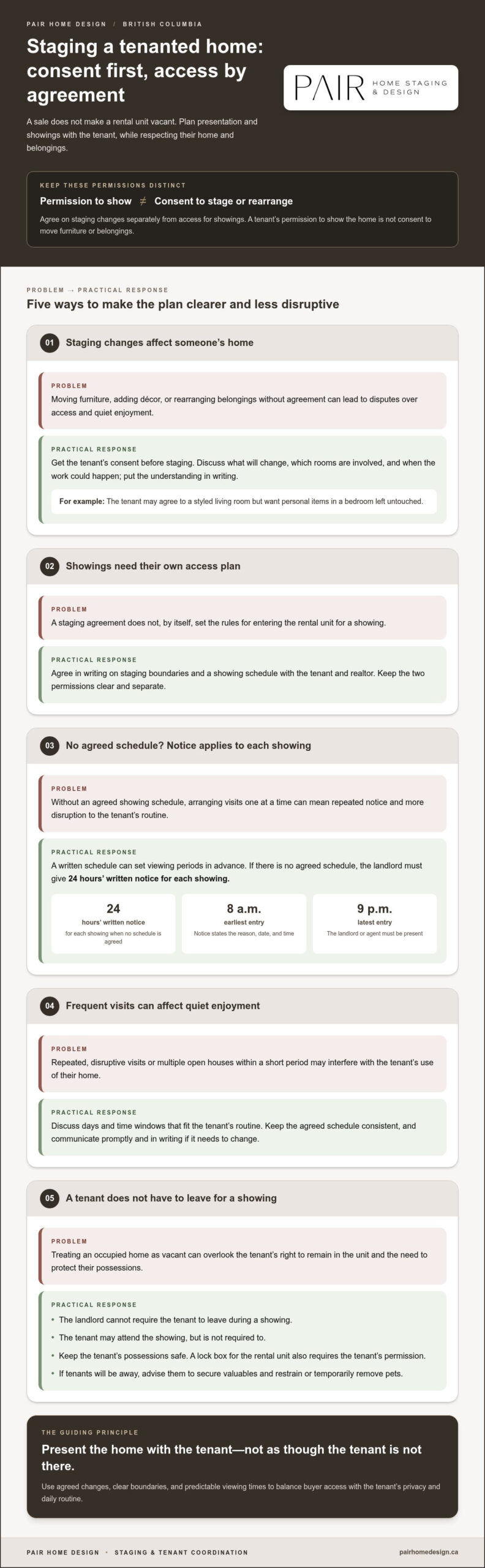
Get the tenant’s agreement before moving furniture, adding décor, or rearranging belongings. Discuss what would change, which rooms are involved, and when the work could happen. For example, a tenant might agree to a styled living room but prefer that personal items in a bedroom remain untouched. A clear written understanding keeps the staging plan separate from permission to enter for showings.
Showing access has its own rules. If there’s no agreed schedule, the landlord must give 24 hours’ written notice for each showing. The notice must state the reason, date, and time, with entry scheduled between 8 a.m. and 9 p.m. The landlord or agent must be present, and the tenant’s possessions must be kept safe.
A tenant can refuse entry that is unreasonable or unlawful. The landlord cannot require the tenant to leave during a showing, and the tenant may attend but is not required to. A lock box for the rental unit also requires the tenant’s permission. Permission to show is not the same as consent to stage or rearrange the home.
Before scheduling, have the realtor and tenant agree in writing on staging boundaries and a showing schedule. Avoid repeated, disruptive visits that could affect quiet enjoyment. Thoughtful home staging can work with the tenant’s belongings and agreed boundaries, keeping the presentation intentional without treating an occupied home as vacant.
Tenant cooperation and property presentation
Sellers can plan staging around a tenant’s routine by agreeing on practical arrangements for preparation and viewings. A shared schedule can make the home easier to present while respecting the tenant’s use of their living space.
How can sellers stage a BC property while tenants still live there? Coordinate agreed staging boundaries and showing times with the tenant, then keep the plan in writing. If there’s no agreed showing schedule, the landlord must give 24 hours’ written notice for each showing.
Tenant Cooperation
Cooperation means coordinating reasonable access and presentation plans with the person who lives in the home. Selling activity takes place in the tenant’s occupied space, where their right to quiet enjoyment continues during the sale.
Discuss a showing schedule before listing, including days and time windows that work with the tenant’s routine. A written agreement can replace separate notice for each showing. For example, the tenant and landlord might agree on set viewing periods instead of arranging visits one at a time. Sticking to the arrangement helps buyers plan visits and gives the tenant a clearer sense of what to expect.
Staging Around Tenants in Residence
Staging around a tenant means presenting the home without treating it as vacant or disrupting daily life. Focus on agreed changes that clarify how a room can be used, such as arranging existing furniture to open a walkway or clearing a surface with the tenant’s consent.
Plan open houses carefully. The landlord cannot require the tenant to leave during a showing, and the tenant may attend or choose not to. If tenants will be away, advise them to secure valuables and restrain or temporarily remove pets. Avoid scheduling multiple open houses within a short period, as this may disrupt quiet enjoyment.
Keep the agreed schedule consistent throughout the selling period. If a change is needed, communicate it promptly and put the updated arrangement in writing. A predictable plan supports buyer access while recognizing that the tenant’s home life is part of the presentation, not an obstacle to it.
Who pays for staging a tenanted property for sale in BC?
Agree on payment responsibility before booking staging. The seller can decide whether to arrange staging to prepare the property for market. Any tenant contribution should be discussed and agreed upon, not assumed. Put the arrangement in writing so the scope, payment responsibility, and any agreed changes to the rental unit are clear.
Start by listing the specific tasks. For example, the seller might arrange and pay for furniture placement in the living room, while the tenant agrees to clear a particular surface before photographs. This does not mean the tenant has accepted responsibility for a staging bill. If the tenant is asked to contribute, explain the request and record the amount, payment timing, and agreed work before booking.
Keep staging expenses separate from costs connected with ending a tenancy. A sale alone does not end the rental agreement, and staging is not a substitute for a lawful notice to end tenancy. If a purchaser’s occupancy plan leads to a qualifying tenancy-ending notice, the tenant is entitled to compensation under the applicable rules. Treat that separately from any voluntary staging arrangement, and do not count compensation or rent as a staging budget.
For the seller, the decision is practical: weigh the presentation you want against the work the tenant is comfortable allowing. Existing furniture may be enough to define how a room is used; a more curated look may require agreed additions or rearrangement. Confirm who will coordinate access, protect belongings, and handle any hired inventory. Written terms help prevent confusion if the listing plan changes or the home sells before the planned staging period ends.
If a polished, lived-in presentation would help your listing, explore home staging for a tenanted property and plan the scope around the agreed boundaries.
Pair Home Design: Home Staging
Pair Home Design helps prepare occupied properties for sale with Home Staging tailored to the home and the agreed boundaries. When a tenant remains in place, a Home Consult can identify which spaces and existing furnishings to focus on. Home Styling can then refine the presentation while preserving the home’s lived-in warmth.
Move the staging plan forward once you understand the lease, have the tenant’s consent for staging, and know how showings will be arranged. This gives the design process a clear foundation and keeps presentation choices aligned with the tenant’s home and the property’s sale goals.
For a considered staging plan, contact Pair Home Design or visit pairhomedesign.ca.
Shape a considered plan for the sale
Start the next stage with a shared vision for how the home should feel. Effective presentation is not a temporary layer placed over everyday life; it helps buyers notice the home’s proportions, light, and possibilities while keeping its character intact. A focused plan helps you decide which rooms deserve attention and what atmosphere you want the listing to convey.
Planning to stage a tenanted property for sale in BC means connecting design choices with the practical realities of an occupied home. Bring your priorities to a design conversation, then shape a presentation that feels intentional rather than overworked. The result can feel polished and welcoming without asking the home to become something it is not.
Start a staging conversation with Pair Home Design and take the next step toward a considered listing.
Frequently Asked Questions
Can I sell my Vancouver home while tenants are still living in it?
Yes, you can sell a Vancouver home with tenants living there. The sale alone does not end the tenancy, and a buyer generally takes ownership subject to the existing agreement. A purchaser who wants to occupy the home must meet the legal requirements for ending the tenancy, rather than assuming vacant possession comes with the sale. Consider whether your listing and possession plans suit buyers seeking a home or a rental investment.
Do I have to disclose that a property is tenanted when I sell?
Make the tenancy clear to prospective buyers and provide the written agreement and relevant terms during the sale process. Identify whether the lease is fixed-term or month-to-month, for example, and clarify whether the tenant is expected to remain after completion. This helps buyers assess the property against their intended use and consider possession arrangements before making an offer. Do not describe an occupied home as vacant or imply that the tenancy ends automatically at closing.
How much notice do I need to give a tenant for a showing in BC?
If you and the tenant haven’t agreed on a showing schedule, give at least 24 hours’ written notice for each showing. The notice needs to state the reason for entry and the date and time. Schedule entry between 8 a.m. and 9 p.m. A mutually agreed schedule can replace separate notices, but keep the arrangement clear so the tenant and your realtor know which visits are planned.
Should I sell my rental with the tenant in place or empty?
Choose based on the lease, your sale timeline, and the likely buyer’s intended use. Selling with the tenant in place can suit buyers seeking rental income, while an owner-occupier may want to live in the home. But a sale does not itself end the tenancy, so do not promise vacant possession unless it can lawfully be delivered. From Chilliwack and Abbotsford to Vancouver, assess presentation and buyer fit property by property.
What mistakes do sellers make most often when selling a tenanted home?
Common missteps include treating the rental as vacant, staging without the tenant’s consent, and arranging showings without respecting the tenant’s space. A lock box cannot be used for the rental unit without permission, for example, and the tenant cannot be required to leave during a showing. Do not assume that an accepted offer ends the lease; keep sale planning separate from any lawful tenancy-ending process.
What are the BC rules for showing a tenanted property to prospective buyers?
Showings must respect the tenant’s right to quiet enjoyment. If there’s no agreed schedule, provide 24 hours’ written notice for each visit, stating the reason, date, and time; entry must be between 8 a.m. and 9 p.m. The landlord or their agent must attend and keep the tenant’s belongings safe. Tenants may be present, but aren’t required to attend or leave.