Waterfront Property Staging in BC for Views, Docks and Access

The water may draw buyers in, but the way a home frames its views, dock and shoreline access helps them picture life there. Waterfront property staging in BC brings those features into focus through thoughtful furniture placement, edited décor and clear sightlines, while keeping the home welcoming and easy to move through.
It’s natural to want the lake or ocean to take centre stage. But rooms still need warmth and purpose, and waterfront features should feel connected to everyday life rather than treated as a backdrop.
This guide explains what staging can involve and why it matters when preparing a waterfront home for sale. You’ll learn how staging can highlight views, indoor-outdoor flow, docks and beach access, what a professional considers when evaluating a home, and how the approach can suit the property’s layout and setting.
Key Takeaways
- Thoughtful staging helps buyers see the home’s layout and lifestyle, while keeping waterfront views in focus.
- A professional evaluation shapes the staging plan around sightlines, room flow and the property’s features.
- Well-presented docks, beach access and boat slips can help communicate how the shoreline fits into daily life.
- Furniture scale, natural colours and indoor-outdoor flow can make ocean- or lake-facing spaces feel cohesive and inviting.
What is home staging and why is it important?
Home staging prepares a property for potential buyers through edited belongings, thoughtful furniture placement and decorative details. In Chilliwack, a waterfront home should feel comfortable while keeping its setting part of the experience.
Attracting Prospective Waterfront Buyers
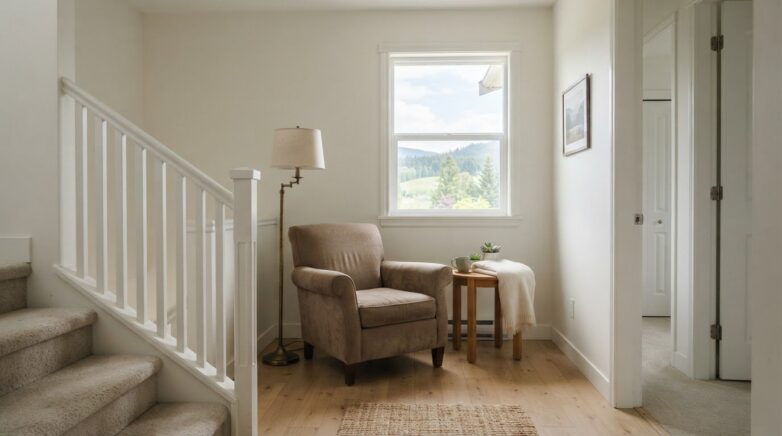
Staging helps buyers understand how rooms function instead of leaving them to guess. A seating area near a window, for example, can connect the water view to daily life. Clear routes between the living room and patio show how indoor and outdoor areas relate. A staging plan considers these details alongside the home’s layout and listing needs.
Buyer Appeal and Local Preferences
Buyer appeal depends on a home’s condition, layout and setting, not one style that suits every BC community. A property in Chilliwack may call for a different presentation from one in Vancouver or Surrey. Staging can respond to the home’s particular strengths, whether that means a wide view, a quiet shoreline or easy outdoor access. The goal is a balanced presentation that feels inviting without distracting from what makes the property distinctive.
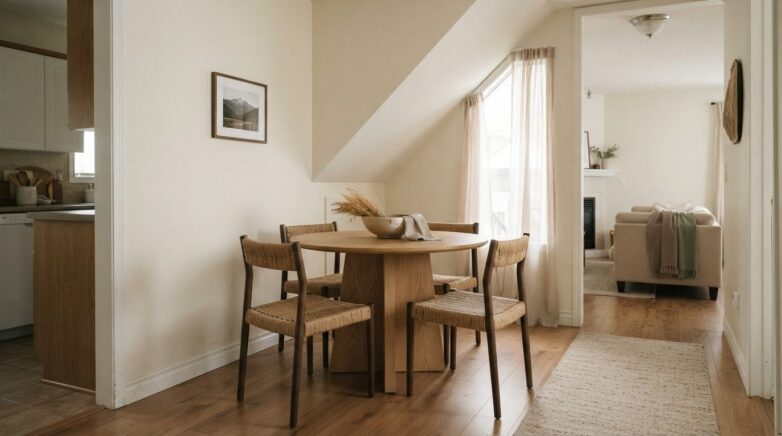
Targeted marketing carries that presentation into listing images. High-quality photography and videography, including aerial shots, can show how the home relates to the shoreline. Staging supports those images by defining useful spaces and keeping views clear. For example, a dining area can suggest relaxed entertaining without competing with the water beyond the windows.
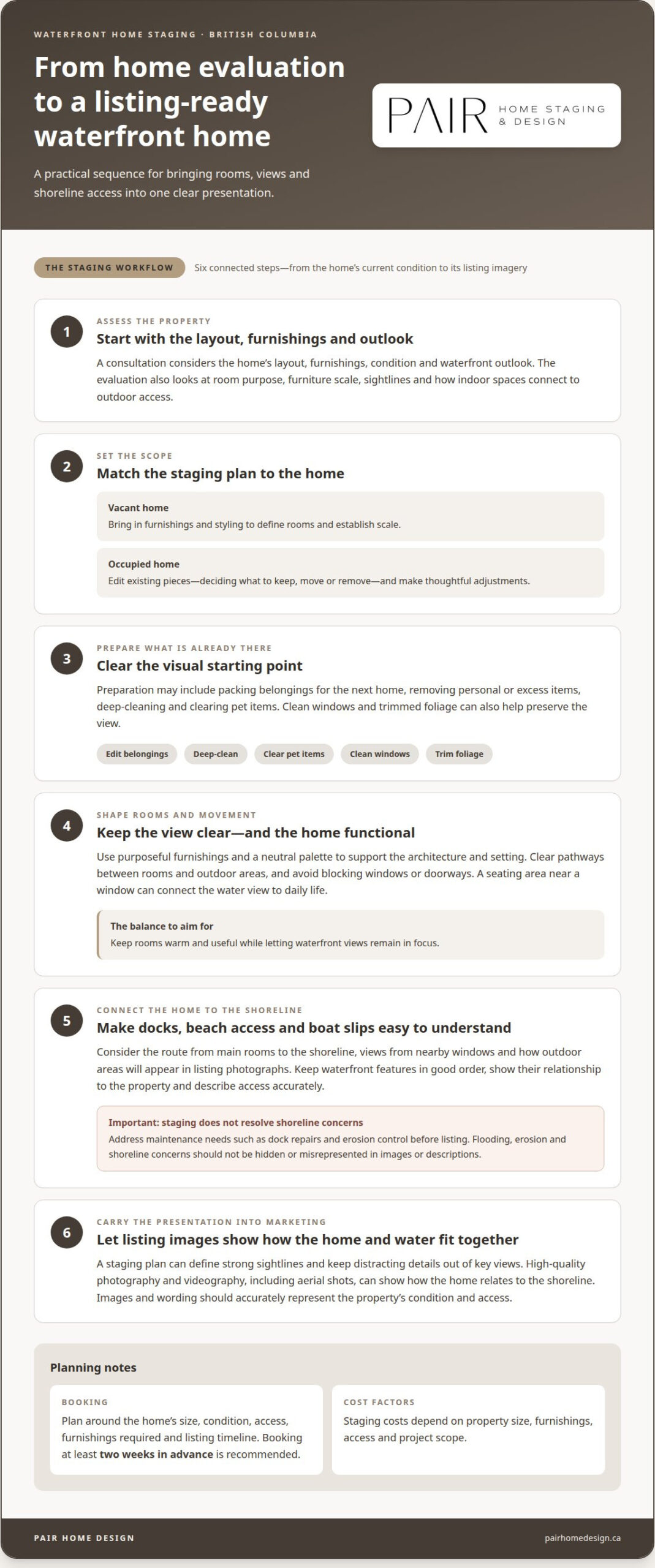
Staging costs in Chilliwack, Abbotsford and other BC markets depend on property size, furnishings, access and project scope. The cost reflects the work and inventory needed for the home’s presentation.
The staging schedule is planned around the home’s size, condition, access and furnishings required, as well as the listing timeline. We recommend booking at least two weeks in advance.
Flooding, erosion and shoreline concerns affect a home’s presentation, but staging cannot resolve them. Before listing, address maintenance needs such as dock repairs and erosion control. Keep listing descriptions and images accurate about the property’s condition and access.
Staging consultations and home evaluation
A consultation considers the home’s layout, furnishings, condition and waterfront outlook before the staging plan takes shape. Vacant homes may need furniture and styling; occupied homes often benefit from editing and carefully chosen adjustments to existing pieces.
How a Professional Stager Prepares a Home for Staging
The evaluation connects the owner’s vision with how buyers may move through each room. A professional considers room purpose, furniture scale, sightlines and the relationship between indoor spaces and outdoor access. For example, a crowded living room may need fewer pieces so windows and pathways feel clear. The plan also keeps staging distinct from show-home design: staging is marketing-focused and buyer-friendly.
Preparation starts with the home’s current contents. The staging process may include packing belongings for the next home, removing personal or excess items, deep-cleaning and clearing pet items. Clean windows and trimmed foliage can also help preserve the view. These steps give the evaluation a practical starting point, rather than treating the property as an empty canvas.
Vacant and Occupied Property Services
For a vacant home, staging adds furnishings that define rooms and establish scale. In an occupied property, the approach can work with existing furniture, identifying what to keep, move or remove. A consultation helps clarify the scope, priorities and intended presentation in either situation. The key question is whether the home needs furnishings brought in or a thoughtful edit of what is already there.
Staging choices should support the property’s architecture and setting, not compete with them. A neutral palette and purposeful furnishings can help buyers picture daily life, while a cohesive look can bring connected rooms together. The evaluation also considers practical details, such as the entry route from outside and whether furniture blocks a window or doorway.
Houzz lists 36,329 local home-staging projects in British Columbia, offering context for the province’s range of property types. A consultation can translate the home’s specific layout into a focused plan. For tailored guidance, a home staging consultation can help establish what the property needs before staging begins.
Professional Staging to Highlight Docks, Beach Access, and Boat Slips
In waterfront real estate, a dock or beach path can shape how buyers understand a property. Professional staging connects these features to the home’s living spaces, so they feel like part of the experience rather than separate selling points. The plan considers the route from main rooms to the shoreline, views from nearby windows and how outdoor areas appear in listing photographs.
Presentation starts with the feature itself. A staging professional considers whether the dock, beach access or boat slip is visible, clearly described and consistent with the property’s actual condition. Maintenance matters: keep waterfront features in good order before listing, including by completing needed dock repairs. Furnishings and décor can guide attention without hiding wear or implying the property has amenities it doesn’t.
Inside, seating near a glass door can draw the eye towards a dock. Outside, a clear route helps buyers understand how the home connects to beach access. For a boat slip, listing materials can identify its location and show its relationship to the property. These details help buyers picture practical use while keeping rooms comfortable and functional.
Marketing should carry the same story into photographs and video. A staging plan can define strong sightlines and keep distracting details out of key views. High-quality photography and videography, including aerial shots, can show how the home, dock and shoreline fit together. Wording and images should accurately represent access and waterfront features, rather than using a styled scene to imply details.
For a property with several outdoor amenities, staging can establish a clear viewing sequence: living area, outdoor access, then dock or beach. This helps potential buyers follow the connection between spaces during a showing. In a BC waterfront listing, a thoughtful sequence can make the home’s real features easier to notice and remember.
Waterfront and ocean-view property staging
Waterfront staging should make the view feel integral to the home, not like a backdrop added for the listing. In Chilliwack, lower-profile furniture can preserve sightlines while a considered layout gives each room a clear purpose. Keep the outlook visible without making interiors feel sparse or impersonal.
Staging focused on interior furnishings is distinct from work on a dock or foreshore. Whether proposed shoreline changes need approval depends on the location and work involved. A staging plan can present existing features without implying repairs, access or alterations that aren’t part of the property.
Colour and material choices can connect rooms to their surroundings. A nautical theme or colours that complement the natural setting can feel cohesive, but overt motifs may distract from the architecture. For example, a restrained palette inspired by nearby water, stone or trees can add warmth while keeping the view visually dominant.
Indoor-outdoor flow matters in Chilliwack and other BC waterfront settings. Staging can define the transition from a living room to a patio with furnishings suited to each area, while keeping doors and pathways clear. Clean windows and foliage trimmed away from the view also help a listing show how the interior meets the landscape.
Before photography, the staging plan considers how rooms appear from key viewpoints. A dining table set away from a broad window can preserve the view, while a sofa angled towards the water makes the outlook part of everyday living. The arrangement should feel welcoming in person and read clearly in listing images.
For a tailored plan that balances the view with comfortable interiors, arrange waterfront home staging.
Pair Home Design: Home Staging
Pair Home Design prepares waterfront homes for sale with staging shaped around each property’s layout, views and shoreline access. For a vacant home, staging can establish the scale and purpose of its rooms; for an occupied home, a thoughtful edit can refine the existing presentation.
A Home Consult can clarify priorities before a staging plan takes shape, while Home Styling can bring greater cohesion to the spaces buyers see. The Agent’s Edge is another option for real estate professionals preparing a listing. The right next step depends on whether the home needs a full presentation or focused guidance.
If you’re preparing a waterfront property for sale, contact Pair Home Design to discuss your staging needs.
Prepare Your Waterfront Listing with a Clear Plan
A waterfront home’s next chapter begins with a presentation that feels polished and true to the property. With waterfront property staging in BC, the goal is to help buyers connect the home’s character with the way its rooms, outlook and setting come together. A thoughtful plan can make that connection feel natural, from the first listing image to an in-person viewing.
Pair Home Design offers Home Staging, Home Styling and Home Consults for different stages of preparing a property for sale. A consultation can clarify where focused guidance would help, while staging or styling can shape the home’s presentation around its distinctive features. The right approach starts with the property and the impression you want to create.
Ready to explore a considered presentation for your waterfront listing? Contact Pair Home Design to discuss the next step and bring your home’s potential into focus.
Frequently Asked Questions
What does waterfront property staging in British Columbia involve?
Waterfront staging prepares a home’s presentation for buyers while reflecting its setting. The plan can account for how rooms function, the property’s condition and the relationship between indoor and outdoor areas. For example, a dining space might feel ready for everyday use, while furnishings throughout the home create a cohesive look rather than a themed display.
How does a professional stager highlight a waterfront home’s views and outdoor spaces?
A professional stager considers how furniture placement and room purpose shape the experience of the view. In a home with windows facing different directions, the arrangement can give each outlook visual breathing room. The presentation also considers how the interior relates to a patio or garden, so outdoor areas read as usable extensions of the home rather than disconnected features.
Is professional staging worth the cost when selling a waterfront home in BC?
Staging can be worthwhile when a home’s presentation needs work to help buyers understand its layout, scale or potential. It can be especially useful when empty rooms are difficult to interpret or personal furnishings distract from the property’s character. Staging creates a more considered impression, but its role is presentation, not a promise of a particular sale price or timeline.
How do I choose a home stager experienced with waterfront properties in British Columbia?
Look for an approach that considers the home’s specific layout, outlook and connection to outdoor spaces, rather than relying on a generic style. In a Home Consult, Pair Home Design can assess how rooms function and where the presentation needs attention. This provides a practical starting point whether the property is vacant or occupied, without treating every waterfront home alike.