The 2026 Guide to Vacant Home Staging Cost in British Columbia

What if the most expensive mistake you make when selling your property isn’t the commission, but leaving the rooms completely empty? It’s a common trap. Without furniture to provide scale and warmth, even the most expansive Fraser Valley living rooms can feel small, cold, and uninviting in professional photos. You might be staring at your initial quotes and feeling a bit of sticker shock, wondering how to justify the vacant home staging cost while your mortgage carrying costs continue to climb. It’s a stressful position to be in, especially when you want your property to feel like a sanctuary rather than a shell.
We understand that every dollar counts when you’re preparing to move. This guide will help you understand the nuances of professional staging budgets and explain why this investment is the most effective way to protect your equity in the current British Columbia market. We’ll explore how fee structures are organized, why curated colour palettes and thoughtful design prevent the dreaded price reduction, and how to create a polished, market-ready listing that buyers can actually see themselves living in.
Key Takeaways
- Learn how professional staging eliminates the “empty home discount” by helping buyers visualize a lifestyle rather than just measuring cold, empty square footage.
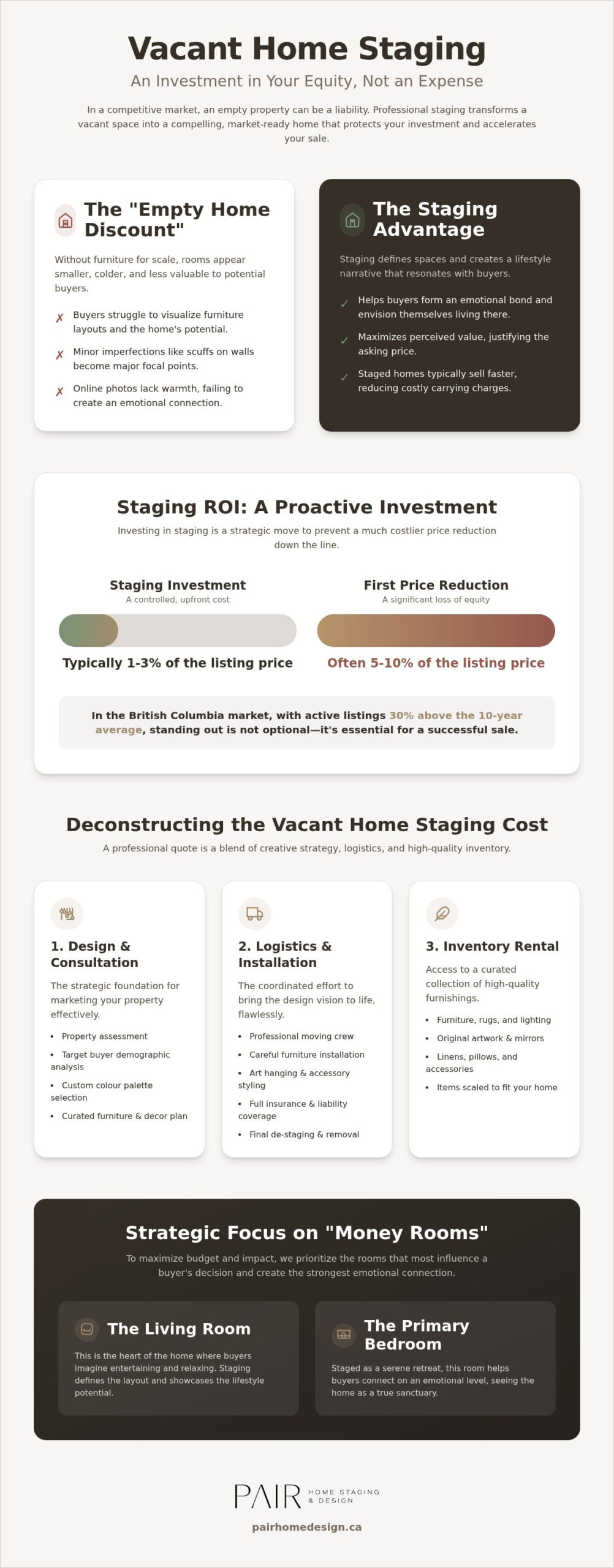
- Gain a transparent look at how a vacant home staging cost is structured, including the design strategy, logistical coordination, and curated rental inventory.
- Understand why prioritizing high-impact “money rooms” like the living room and primary bedroom is the most strategic way to allocate your marketing budget.
- Discover the financial benefits of investing in a polished listing early to avoid the heavy burden of mortgage carrying costs and future price reductions.
- See how a warm, design-forward aesthetic creates the emotional resonance needed to make your property stand out in the competitive Fraser Valley market.
Understanding the Investment: Why Vacant Staging is a Strategic Choice
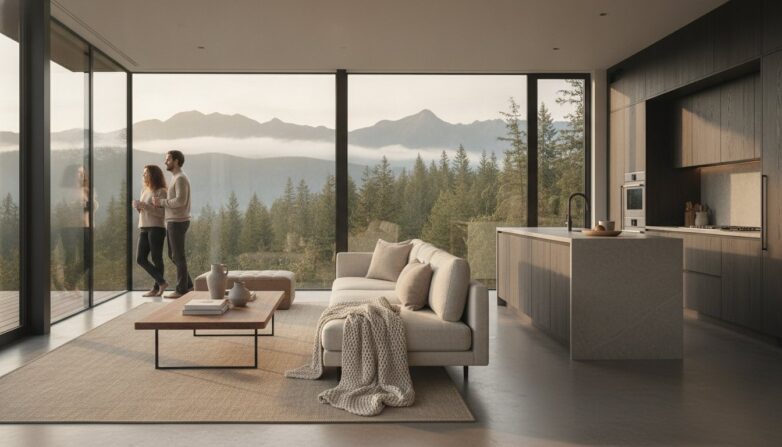
Empty properties often feel like echoing boxes. Vacant staging transforms these hollow shells into inviting homes by introducing a curated collection of furniture, original art, and accessories in a cohesive colour palette. It’s a comprehensive design service that answers the question, What is Home Staging? by blending marketing strategy with interior aesthetics. In the 2026 British Columbia market, where active listings have climbed 30% above the 10-year average, standing out isn’t just a goal; it’s a necessity. Sellers who overlook this often face the “Empty Home Discount.” Buyers subconsciously perceive unfurnished properties as less valuable, focusing on minor scuffs rather than helping them realize the property’s potential.
The Psychology of the Empty Space
Human brains aren’t naturally wired to calculate square footage in a vacuum. Most people struggle to judge if a king-sized bed will fit in a primary suite or how a sectional might anchor a living room without reference points. Staging provides that vital sense of scale. It defines the flow of open-concept layouts, guiding the eye from the kitchen to the dining area with quiet intentionality. For online photography, these visual cues are essential. They transform a flat, cold image into a warm invitation that resonates emotionally with a potential buyer scrolling through listings in Chilliwack or Greater Vancouver. We focus on creating a “lived-in” feel that suggests a lifestyle, helping buyers imagine their own morning coffee in a sunlit breakfast nook.
Staging as a Risk Mitigation Tool
Viewing the vacant home staging cost as an expense is a common misconception. It’s actually a strategic risk mitigation tool. When a home sits vacant, the carrying costs, property taxes, insurance, and mortgage interest, accumulate daily. In competitive markets like Langley and Abbotsford, a staged home typically sees a significant reduction in days on market (DOM) compared to its empty counterparts. National data from 2025 shows that nearly half of sellers’ agents observed staging reduced the time a home spent on the market. It’s a proactive move to prevent the first price reduction, which is almost always significantly larger than the initial staging investment. By presenting a home that feels impeccably maintained and ready for life, you elevate the perceived quality of the entire property.
The Core Components of a Vacant Home Staging Cost Structure
Understanding the layers of a professional quote helps demystify the investment required to move a property quickly. A comprehensive vacant home staging cost typically rests on three primary pillars: design and consultation, logistics, and inventory rental. Each element plays a distinct role in transforming a property from a silent, empty space into a compelling narrative that attracts high-value offers. It’s a structured process that ensures every piece of furniture serves a specific marketing purpose.
The Design and Consultation Fee
Everything starts with a pre-listing consultation. This isn’t just a simple walkthrough; it’s the strategic roadmap for the entire project. A professional stager uses this time to assess the property’s unique architecture and identify the most likely target demographic for the neighbourhood. They select a specific colour palette and furniture style that speaks directly to that buyer’s lifestyle and aspirations. Custom design plans are far superior to “one-size-fits-all” furniture packages because they address the specific quirks and strengths of your home. It’s about curation and intentionality, ensuring the scale of the furniture complements the room dimensions perfectly.
Logistics and Installation Management
The “heavy lifting” phase of staging involves significant coordination that goes beyond just moving boxes. This pillar covers the delivery, professional installation, and the eventual removal, or de-staging, of all items. It requires a synchronized team of movers, designers, and stylists to ensure a seamless setup that protects the property’s floors and walls. Insurance and liability are also critical factors here. Professional firms carry specialized coverage to protect the high-end inventory while it’s in your vacant home. According to the National Association of Realtors® 2025 Profile of Home Staging, 83% of buyers’ agents believe staging makes it easier for a buyer to visualize a property as their future home. This visualization is only possible when the logistics are handled with precision and care.
Inventory rental fees represent the final component of the budget. These are typically structured in 30 to 60-day blocks, providing a consistent look for the most critical first weeks of the listing. Unlike generic rental furniture, professional staging inventory is often more diverse and design-forward, featuring pieces that aren’t available in standard retail stores. This exclusivity ensures the home feels authentic and high-end rather than like a temporary showroom. If you’re curious about how these elements come together for your specific property, booking a professional home consult is the best way to get a tailored perspective. Investing in the right vacant home staging cost structure early on ensures your marketing efforts are built on a solid, professional foundation.
Key Factors That Influence Your Custom Staging Quote
No two properties in British Columbia are identical, so it follows that no two staging quotes are either. While square footage provides a baseline, a professional vacant home staging cost is influenced by a range of variables that reflect the unique character and logistical needs of your home. A sprawling detached house in Chilliwack requires a different strategy than a compact condo in Greater Vancouver, not just in volume, but in the specific pieces required to make each space feel intentional and balanced.
The “Key Rooms” Strategy
Most sellers begin by focusing on the “money rooms” where buyers spend the most time visualizing their future lives. This essential staging package typically includes the living room, dining area, and primary bedroom. These spaces carry the heaviest emotional weight. However, as remote work remains a staple of the 2026 lifestyle, adding a home office can often provide a better return on investment than staging a third guest bedroom. The goal is to build a cohesive visual narrative that flows naturally from one room to the next without overextending your budget on low-impact spaces.
Inventory Grade and Style Curation
The quality of your rental inventory home staging plays a massive role in the final aesthetic and perceived value of the listing. High-end properties demand luxury-grade furniture that mirrors the listing price point. Sourcing unique, design-forward pieces that stand out in a crowded market requires a deeper level of curation. As RESA members, we prioritize well-maintained, sophisticated inventory that feels authentic. This approach avoids the sterile, “staged” look that often comes with generic, mass-produced furniture packages, ensuring your home feels like a curated sanctuary.
Accessibility is another practical factor that shapes your custom quote. Logistics teams must account for the physical effort involved in the installation. A third-floor walk-up or a property with a long, steep driveway in the Fraser Valley requires more time and labour than a ground-level home with easy street access. These details matter. They ensure the installation is handled safely and professionally, protecting both the furniture and your property’s finishes throughout the process. By understanding these variables, you can better appreciate how a tailored quote protects your equity and positions your home for a successful sale.
Measuring Value: The ROI of Staging vs. the Cost of a Price Reduction
Viewing the vacant home staging cost as a simple expense often misses the broader financial picture. It’s more accurate to see it as a strategic investment that protects your equity. When a property sits empty, it isn’t just standing still; it’s actively costing you money through mortgage interest, insurance premiums, property taxes, and utility bills. These carrying costs accumulate quietly every week the home remains on the market. By investing in professional presentation early, you’re essentially buying time and market momentum. It’s a proactive choice that almost always costs less than the first price reduction a seller is forced to make when a listing goes stale.
The first two weeks are the most critical for any new listing in British Columbia. This is when buyer curiosity is at its peak and the “market heat” is highest. A vacant property that lacks warmth often fails to convert this initial interest into concrete offers. Instead, it lingers, leading buyers to wonder what’s wrong with the home. This “stale listing” syndrome is a magnet for lowball offers. Consider a hypothetical scenario: on a property valued at $1,000,000, a modest 3% price reduction is $30,000. In almost every case, the investment in high-end staging is a fraction of that amount, making it a far more efficient way to secure the property’s value.
Carrying Costs and Market Momentum
Every month a home sits vacant in the Fraser Valley, the owner is effectively paying a “vacancy tax” in the form of ongoing expenses. Professional staging helps maintain buyer urgency by presenting a home that feels move-in ready and aspirational. It creates a sense of competition. When a buyer walks into a beautifully curated space, they don’t just see a building; they see a lifestyle they don’t want to miss out on. This emotional connection is what drives strong, clean offers and reduces the total days on market, ultimately saving the seller thousands in recurring carrying costs.
The Virtual Staging Pitfall
While digital renders might seem like a budget-friendly alternative, they often create a significant psychological hurdle during physical tours. This is the “photo disappointment” effect. A buyer falls in love with a warm, furnished home online, only to be met with a cold, echoing, and empty reality when they step through the front door. This disconnect can break the trust needed to close a deal. Physical staging wins because it manages expectations and provides a tangible experience that virtual pixels simply cannot replicate. You can explore more about this in our guide on Staging vs. Virtual Staging for Realtors. To ensure your property makes the best possible first impression, it’s best to partner with a professional staging team who understands the local BC market.
Collaborative Success: Navigating Staging with Pair Home Design
At Pair Home Design, we view every project as a strategic partnership rather than a simple service transaction. We believe a home should feel like a sanctuary, not a sterile showroom. Our design philosophy centres on a warm, approachable aesthetic that invites buyers to linger and imagine their own lives within the space. When you are evaluating the vacant home staging cost for your property, you’re choosing a team that understands the delicate balance between high-end design and market-savvy practicality. We don’t just fill rooms; we create emotional connections that drive results.
Expert Guidance and RESA Standards
Working with a RESA-certified professional like Rita ensures that your project is handled with the highest level of industry ethics and expertise. We don’t simply drop off furniture. Instead, we collaborate closely with homeowners and real estate agents to ensure the design aligns with the property’s unique story. We handle the heavy lifting and carefully organize every logistical detail, from the initial delivery to the final de-staging, making the entire process stress-free for the seller. This seamless execution is a core part of “The Agent’s Edge,” our specialized approach that helps realtors win more listings and secure faster sales for their clients by providing a superior presentation standard.
Service Areas and Local Market Insight
Our deep roots in the Fraser Valley and Greater Vancouver allow us to tailor our styling to the specific “neighbourhood” vibes of each community. Whether it’s a modern urban condo in Langley, a sleek townhouse in Chilliwack, or a sprawling suburban family home in Abbotsford, we understand what buyers in these specific areas are looking for. We don’t believe in generic solutions. Instead, we curate our rental inventory to reflect the local market, ensuring your home stands out against the competition. We know the local landscape, and we use that knowledge to elevate your property’s perceived value.
Getting started is a straightforward and transparent process. We begin with a professional consultation to assess the space and determine the most effective strategy for your specific budget. Once we understand the layout and the most likely target buyer, we provide a clear, detailed breakdown of the vacant home staging cost tailored specifically to your listing. This clarity gives you the confidence to move forward, knowing your investment is positioned for maximum impact and a successful sale. Ready to transform your listing? Contact Pair Home Design for a consultation today and let’s bring your property to life.
Elevating Your Listing for a Successful Sale
Leaving a property empty is a gamble that often costs more than the initial investment in professional design. By transforming cold, echoing rooms into warm, curated spaces, you provide buyers with a clear vision of their future lifestyle. We’ve explored how a professional vacant home staging cost is structured around design expertise, logistics, and high-quality inventory, all working together to prevent the heavy burden of a future price reduction. It’s about protecting your equity while ensuring your listing stands out in a crowded market.
As a proud member of the Real Estate Staging Association (RESA), Pair Home Design is committed to industry-leading standards and ethics. We serve the entire Fraser Valley and Greater Vancouver area with a curated inventory and a design-forward approach that focuses on emotional resonance. Let’s collaborate to make your property feel like a home from the very first moment a buyer walks through the door. Book Your Vacant Home Staging Consultation with Pair Home Design today. We’re ready to help you navigate this transition with confidence and ease.
Frequently Asked Questions
Does the realtor or the homeowner usually pay for vacant home staging costs?
The homeowner typically pays for the vacant home staging cost as it is an investment in their property’s equity and final sale price. However, some real estate agents offer a credit or cover a portion of the fee as part of a premium marketing package. It’s a good idea to discuss this with your agent early to see how they structure their listing services and if they offer “The Agent’s Edge” partnerships.
How long does a typical vacant staging contract last in British Columbia?
Most vacant staging contracts in the Fraser Valley are structured around an initial 30 to 60-day term. This window is designed to cover the most critical period of market activity, including the debut, initial showings, and open houses. If the property requires more time to sell, many firms offer monthly extensions to keep the home looking its best until the deal is finalized and subjects are removed.
Can I stage only the main living areas to save on costs?
Yes, staging only the “money rooms” is a very effective strategy to manage your overall vacant home staging cost. Focusing on the living room, kitchen, and primary bedroom creates the strongest emotional connection where buyers spend the most time. This targeted approach ensures your professional photography looks warm and inviting while keeping the project budget focused on the areas that drive the highest return on investment for your listing.
What is included in a professional vacant home staging consultation?
A professional consultation involves a detailed walkthrough of the empty property to assess the layout, flow, and natural lighting. We identify the most likely buyer demographic and select a curated colour palette that suits the specific neighbourhood vibe. You’ll receive a comprehensive strategy that outlines the recommended furniture placement and design style. This session serves as the essential roadmap for transforming a hollow space into a market-ready, aspirational home.
Is virtual staging a viable alternative to physical staging for vacant homes?
Virtual staging is a budget-friendly option, but it often leads to “photo disappointment” during physical tours. When a buyer visits an empty, echoing house after seeing furnished photos online, the emotional connection can break instantly. Physical staging manages expectations and provides a tangible experience of the home’s scale and warmth. In the competitive 2026 BC market, the real-world feel of physical furniture remains the most effective tool for serious sellers.
How much lead time is required to book and install a vacant staging project?
We generally recommend a lead time of one to two weeks to ensure a seamless installation process. This period allows us to finalize the design strategy, curate specific pieces from our rental inventory, and coordinate the logistics team for delivery. Booking early is especially important in high-demand areas like Langley or Abbotsford. Proper preparation ensures that every detail is organized and the home is perfectly styled for its photography debut.
Do staged homes really sell for more money in the 2026 BC market?
Statistics consistently show that staged homes attract higher offers by helping buyers visualize the property as their future home. National data indicates that staging can lead to a 1% to 10% increase in the dollar value offered by buyers. In a market with elevated inventory, a polished, design-forward presentation helps your property stand out. It creates a sense of perceived quality and maintenance that encourages buyers to bid more competitively.
What happens if my home sells faster than the initial contract period?
If your home sells quickly, it’s a sign that the staging did its job perfectly. While initial contracts are for a fixed term to cover the logistical expenses of installation and inventory reservation, we can often arrange for an early de-staging once the sale is firm. The primary goal of managing the vacant home staging cost is to trigger a fast, high-value sale that ultimately minimizes your long-term mortgage and utility carrying costs.