How Long Does Home Staging Take? A Practical 2026 Timeline

How long does home staging take when your photography date and listing plans are already taking shape? It depends on more than the time spent arranging furniture. Staging involves planning, preparing the home, selecting furnishings and coordinating the work, so each property follows its own timeline.
If you’re worried that booking a stager could delay your listing, a clear sequence can help. Decluttering, cleaning, staging and photography all need to fit together. Knowing what must happen first makes it easier to set priorities and plan around your target dates.
This guide covers the main staging milestones, from the initial consultation to preparation and installation. You’ll learn what can affect the timeline, how to organize tasks before staging begins and how to plan around photography and your intended listing date. A home consult can clarify your property’s priorities and help you build a coordinated plan.
Key Takeaways
- How long does home staging take? The timeline depends on the property’s readiness and the scope of staging, so plan around milestones rather than assuming one standard appointment.
- Map the steps from assessment and preparation to staging, then coordinate when the home will be ready for photography.
- Consider the home’s size, condition and whether it’s occupied or vacant when planning the work.
- Work backwards from your intended listing date, allowing time for preparation, staging and photography, with room to adjust if plans change.
- A project-specific consultation with Pair Home Design can help clarify priorities and shape a practical plan for your property.
How long does home staging take from planning to listing?
There isn’t one standard answer to how long does home staging take. The schedule depends on what the property needs, how ready it is, the scope of staging and how the work fits with photography and your intended listing date. A focused styling plan for a home that’s already prepared involves different steps from a project where rooms need to be cleared, cleaned or organized first.
Think of staging as a pre-listing sequence, not just the time spent arranging a room. The timeline includes planning, preparation, staging and getting the home ready for the camera. The on-site appointment is one milestone within that broader schedule. Once staging is complete, check that rooms are photo-ready and the photographer’s timing fits the plan.
For a general overview of its purpose and background, see What is home staging? For sellers preparing to list, the practical challenge is coordinating each step so the home feels considered and inviting in photographs.
What does a home-staging timeline include?
Planning comes first. A consultation helps identify the property’s needs, choose which areas to focus on and set priorities. Once the scope is clear, organize the next steps around the home’s requirements and your target dates for photography and listing.
Preparation and staging are separate milestones. Before furniture and décor are arranged, you may need to declutter, clean or complete other agreed tasks. After staging, review the home for photography readiness. Booking photography once the staging plan is in place helps keep the presentation and listing schedule aligned.
Why there is no single standard duration
Every property starts from a different place. Its size, condition, occupancy and staging scope affect what needs to be prepared and coordinated. A home with clear surfaces and rooms ready for styling has different preparation needs from one where belongings need sorting or rooms need attention first.
The milestones are straightforward: planning, preparation, staging and photography readiness. The time between them varies. Preparation depends on the tasks and the seller’s progress, while access and scheduling can also affect when the work happens. A project-specific plan makes those dependencies visible and helps you catch potential delays early.
If you have a target photography date, work backwards. Set a date for staging, then identify what needs to be ready beforehand. This shows whether preparation and coordination fit the available window or whether you need to adjust the plan.
Quotable takeaway: One home’s staging duration isn’t a reliable timeline for another; plan around the property’s needs, readiness and photography schedule.
The home-staging process, milestone by milestone
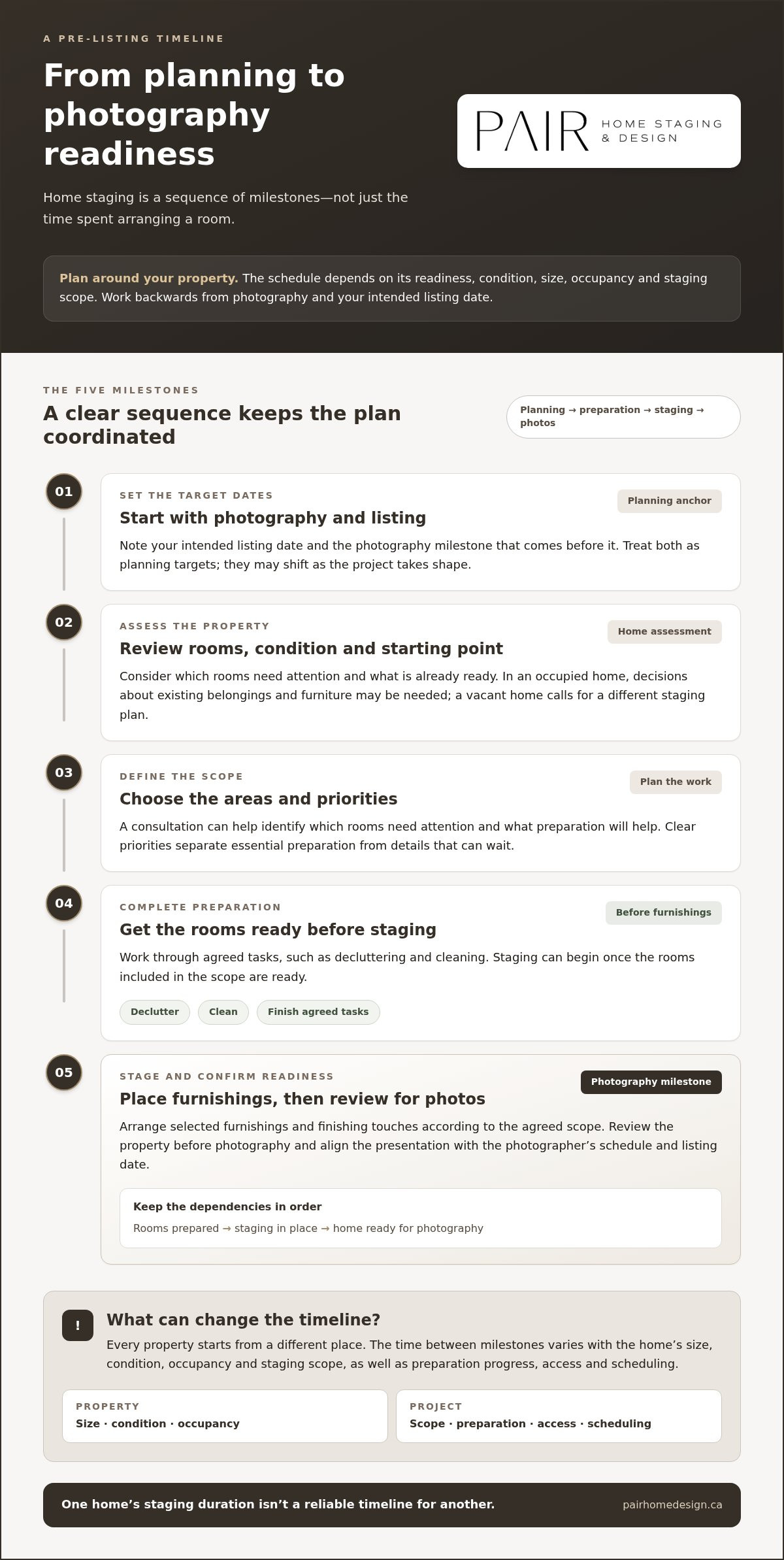
A clear sequence helps coordinate decisions, household preparation, staging and photography without treating them as one appointment. At each milestone, identify what needs to happen, what must be ready first and which date the next step depends on.
From initial planning to a defined staging scope
Start with the property’s current condition and your intended listing milestones. A pre-listing consultation can identify which rooms need attention, what preparation will help and how staging can support the home’s presentation. Share your target photography date and any scheduling constraints so they can inform the plan from the outset.
- Set the target dates. Note your intended listing date and the photography milestone that comes before it. Use these as planning targets, knowing they may shift as the project takes shape.
- Assess the property. Review the rooms, their condition and the home’s starting point. In an occupied home, you may need to make decisions about existing belongings and furniture. A vacant home calls for a different staging plan.
- Define the scope. Decide which areas to address and what the presentation needs to accomplish. Clear priorities help separate essential preparation from details that can wait.
- Complete preparation. Work through agreed tasks, such as decluttering and cleaning, before furniture and décor are placed. Staging can begin once the rooms in scope are ready.
- Stage and confirm readiness. Arrange the selected furnishings and finishing touches, then review the property before photography. Align the planned presentation with the photographer’s schedule and listing date.
In brief: assess the home, set the staging scope, prepare the spaces, place furnishings and décor, then coordinate photography readiness.
The Home staging process and impact report from the National Association of REALTORS® offers further context on staging approaches, including consultations. A consultation helps turn a general listing goal into priorities for a specific property. If the main living area needs the most attention, for example, that can guide what you prepare first and how the staging plan fits the photography schedule.
Staging day and readiness for photography
Staging day is one coordinated milestone in the wider project, not the whole timeline. Furniture and décor are placed according to the agreed scope, after the necessary preparation is complete. Photography can then be scheduled around the home’s readiness. Don’t assume the staging appointment and photo session will automatically happen together.
If you’re working towards a set listing date, check the dependencies early: rooms need to be prepared before staging, and the staged presentation needs to be in place before photography. If a preparation task takes longer than expected, adjust the schedule before it creates a last-minute scramble. That’s a more useful way to answer how long does home staging take than relying on another property’s timeline.
A project-specific home staging consultation with Pair Home Design can bring the scope, preparation priorities and photography milestone into one considered plan.
What changes how long home staging takes?
The number of rooms is only one factor. Property size, condition, occupancy, staging scope and the furnishings needed all affect what has to be prepared and coordinated. These factors can overlap: a larger home may need a broader plan, while a smaller property may still require extra preparation if its rooms aren’t ready for styling.
Staging isn’t a single appointment with a universal duration. On-site work is one part of the schedule; decisions, seller preparation, inventory planning and delivery coordination also matter. Identify these variables early to set realistic expectations for the specific home.
Property readiness and the amount of work involved
A home that’s tidy, accessible and ready for styling starts from a different place than one where surfaces need clearing, belongings need sorting or rooms aren’t available. Decluttering and other minor preparation may be needed before staging begins. How long these tasks take depends on the home and the seller’s progress, and they’re separate from the staging appointment itself.
Condition and scope matter, too. A plan focused on a few key rooms involves different coordination from one covering more of the home. Occupied and vacant properties also have different starting conditions. Existing furniture and everyday routines can affect what needs to be moved or organized, while empty rooms need a furnishing plan. A consultation helps identify which tasks actually apply to your property.
Inventory and local project coordination
The planned look determines which pieces need to be selected and placed. Furniture, artwork, lighting and accessories all contribute to a room’s presentation, but the inventory needs to suit the layout and scope. If several spaces need furnishings, selections and delivery must be coordinated with the home’s readiness. A change in scope can also affect which pieces are needed and when they should arrive.
Location is another scheduling consideration. Pair Home Design serves Chilliwack, Abbotsford, Hope, Mission, Langley, Maple Ridge, Coquitlam, Surrey, Burnaby and Vancouver. The property’s location is one of the details to consider alongside preparation, staging and photography milestones when coordinating a project.
Curated rental inventory can be part of the staging plan, giving you access to furnishings without purchasing them. The most useful estimate considers the property’s condition, the rooms in scope and what needs to be coordinated. With those details clear, the schedule can reflect the actual project rather than a generic rule of thumb.
How to plan home staging around your listing date
Your target listing date gives the staging plan an anchor. Photography is the key milestone immediately before launch: plan backwards from the date you hope to list, placing photography before it and staging before the photo session. This keeps the home’s presentation from becoming a last-minute task.
Set the key dates before preparation begins
Write down your intended listing date and preferred photography date. Share both, along with any access limits or scheduling constraints, during a staging consultation. Working backwards from photography helps identify when the home needs to be prepared and when staging should take place. Keep the dates visible as planning targets, and adjust them if the project details call for it.
Use this sequence to build a practical framework:
- Choose the listing target. Align on the intended market date with the people involved in preparing and presenting the property.
- Schedule around photography. Set a preferred photo date early, so it becomes a genuine planning milestone rather than a booking made after everything else is complete.
- Work backwards to staging. Plan for staging and coordination to happen before photography, with the property ready for the agreed work.
- Place homeowner preparation ahead of staging. Identify the tasks you control, such as clearing personal items or arranging access, and set personal target dates to complete them.
This division helps keep responsibilities clear: sellers manage household preparation and communicate changes, while the staging professional coordinates the project scope, selections and staging work. Both affect the schedule, so share decisions and updates early enough to guide the next step.
Build in flexibility without delaying decisions
Leave room for preparation to take longer or coordination to change. Flexibility doesn’t mean postponing decisions. Settle the rooms in scope, access arrangements and furniture needs early because these choices shape the logistics. If a room won’t be available or a task could affect readiness, share that information promptly so the plan can be adjusted before the final stretch.
If the home will be occupied during preparation, decide in advance how access and everyday use of the spaces will work. If a task slips, review which milestone it affects: staging, photography or the intended listing date. That gives you a specific schedule change to address rather than leaving the whole plan uncertain.
How long does home staging take depends partly on how early key decisions are made. A pre-listing staging consultation with Pair Home Design can clarify property priorities and scheduling considerations before you set a photo date. Share your target dates and constraints so the plan reflects your home and the presentation you’re preparing for.
Plan a realistic staging timeline with Pair Home Design
A thoughtful staging plan starts with the home in front of you, not a standard timeline borrowed from another property. Pair Home Design works with sellers to create a market-ready presentation around the home’s needs, intended listing window and preparation priorities. This can bring design decisions and scheduling into focus, giving photography and listing plans a clearer foundation.
If you’re still wondering how long does home staging take, a project-specific conversation is more useful than a fixed estimate. The scope, starting condition and coordination all influence the plan. Every home has its own needs, so start by identifying what yours requires.
What professional staging guidance can clarify
A professional perspective can help identify which rooms and details deserve attention in the home’s presentation. During a consultation, discuss the property, your goals and the listing milestones you’re working towards. From there, you can clarify priorities and scope, including which preparation tasks should happen before staging and what needs to be coordinated for photography.
This planning isn’t about adding unnecessary work. It’s about making considered choices: which spaces will shape a buyer’s first impression, how furnishings and décor can support those rooms, and what needs to be ready beforehand. Rita’s membership in the Real Estate Staging Association brings a staging perspective to decisions that also affect the project schedule.
Take the next step when your listing date is taking shape
You don’t need every detail finalized before you begin planning. Once you have a likely listing window, share it alongside your preferred photography date to give the conversation a useful starting point. Early planning connects preparation and staging decisions to those milestones, while leaving room to adapt as the property’s needs or coordination change.
A consultation can help distinguish decisions that need early attention, such as which rooms are in scope or what furnishings the presentation may call for, from details that can be settled later. That clarity helps everyone plan around the same priorities. It doesn’t promise a particular turnaround or sale outcome, but it can make the path to photography more coordinated.
Pair Home Design serves Chilliwack, Abbotsford, Hope, Mission, Langley, Maple Ridge, Coquitlam, Surrey, Burnaby and Vancouver. If you’re preparing to list and would value a property-specific perspective on staging scope and priorities, explore Pair Home Design’s home staging services.
Give your listing plans room to take shape
You don’t need every detail of your sale settled before making a thoughtful next move. A likely listing window is enough to start considering how the home should feel in its market presentation and which decisions will bring that vision into focus. Rather than predicting how long does home staging take from another property’s experience, use your own priorities to shape a manageable plan.
Think about what you want buyers to notice first, which rooms best express the home’s character and what support would help you prepare for photography. Those early choices can turn an uncertain deadline into a more considered plan that accounts for your home’s specific needs.
Ready to plan the presentation of your property? Explore home staging with Pair Home Design and take the next step towards a well-prepared listing.
Frequently Asked Questions
How far in advance should I book home staging?
Start planning as soon as you have a likely listing window, rather than waiting until your photography date is set. Early discussion gives you time to understand the property’s priorities and decide on the staging scope. If your home is in Chilliwack, Abbotsford, Hope, Mission, Langley, Maple Ridge, Coquitlam, Surrey, Burnaby or Vancouver, share your target dates and any scheduling constraints at the outset.
Can home staging and real estate photography happen on the same day?
They can happen on the same day if staging is complete and the home is ready before the photographer arrives. Allow time between the appointments for furniture and décor placement, a readiness check and any final adjustments. Coordinate the order and timing in advance, especially if several rooms are being staged or furnishings need to be delivered.
Does a larger home always take longer to stage?
No. A larger home may involve more rooms to plan, but floor area alone doesn’t determine the schedule. A spacious property with a clear scope and rooms ready for styling may be straightforward to coordinate. A smaller home with access limitations, unfinished preparation or several spaces requiring attention may involve more planning. The number of rooms being staged matters as much as the home’s overall size.
What should be completed before the staging appointment?
Complete the preparation tasks agreed for your property and make sure the rooms in scope are accessible. This may include clearing personal belongings from selected surfaces, organizing items that need to be stored elsewhere and keeping pathways free of obstacles. If the living room is being staged, for example, decide where everyday items and furniture will go before the appointment so the room is ready for placement.
How long does staging furniture stay in a home for sale?
Staging furniture stays for the period set out in the project’s rental arrangement, which may be monthly or per project. Include the planned rental period, any extension and furniture removal in your schedule. The sale date, possession date and removal date aren’t necessarily the same milestone, so don’t assume the furniture leaves as soon as the listing is under contract.
Can a home staging schedule change after it has been planned?
Yes. The schedule may need adjusting if preparation takes longer than expected, access changes, the staging scope shifts or photography is rescheduled. Let the staging team know as soon as a change becomes likely, then revisit the milestones it affects instead of trying to preserve dates that no longer fit. A delay in preparing one room, for example, may affect staging and photography while other parts of the listing plan stay on track.