How to Choose Anchor Furniture and Build a Cohesive Home Palette
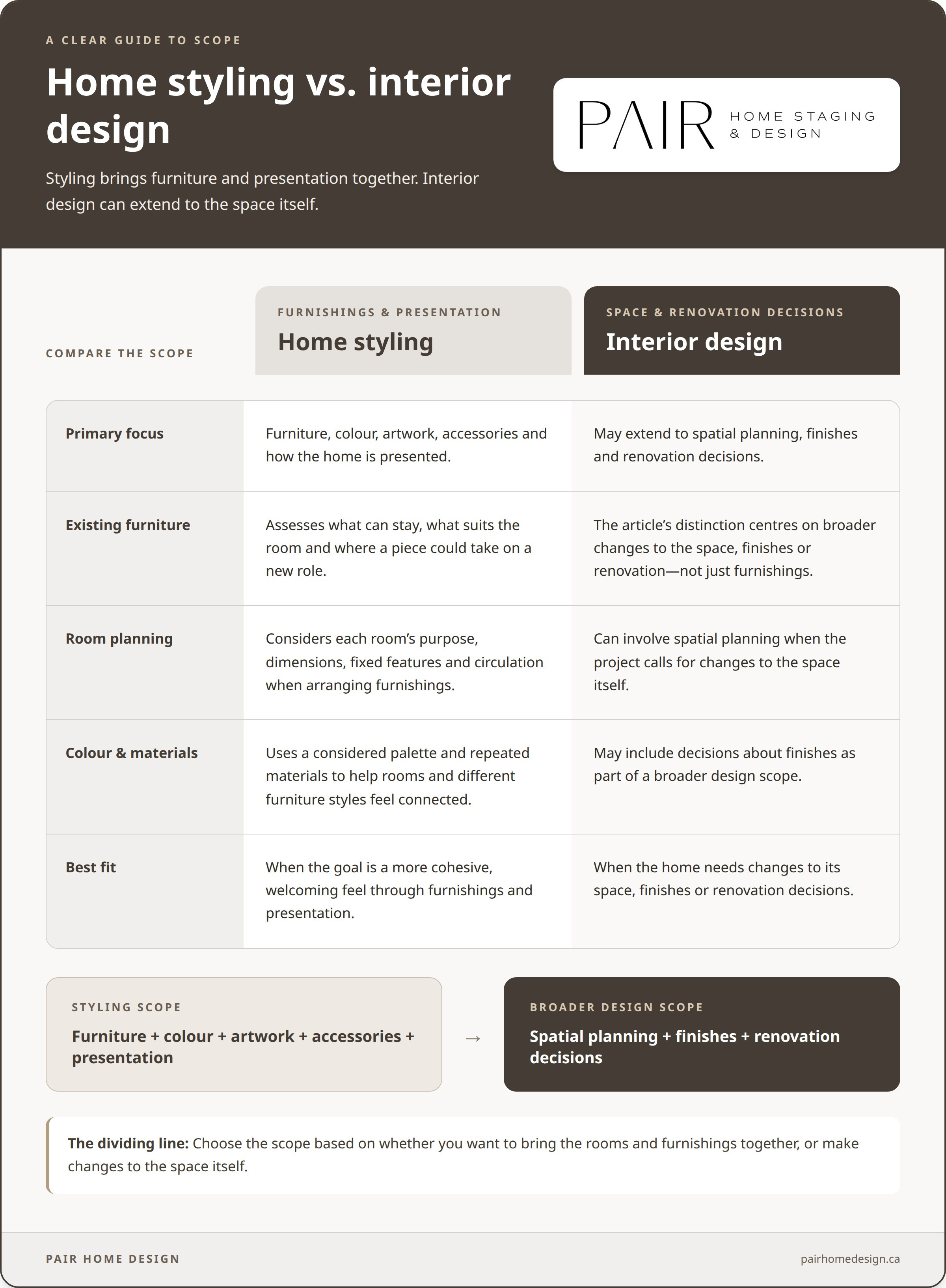
A beautifully styled home doesn’t always need a renovation. A new home interior styling service focuses on furniture, colour, artwork, accessories and presentation, while interior design can extend to spatial planning, finishes and renovation decisions. The right scope depends on whether your home needs a more cohesive, welcoming feel or changes to the space itself.
It’s easy to see the terms overlap, especially when you’re settling into a new home and bringing existing pieces together with new ones. A home stylist can assess each room, identify furniture worth keeping, select anchor pieces and connect the spaces through a considered palette of colours and materials. You’ll learn what to share with a stylist and what to expect from the process. We’ll also explain where styling ends and broader interior design begins, helping you choose support that suits your home and goals.
Key Takeaways
- A stylist assesses room dimensions, circulation and existing furniture to see what can stay and what needs a new role.
- Anchor furniture is chosen for each room’s function, scale and relationship to the pieces around it.
- A restrained palette and repeated materials help different rooms and furniture styles feel connected.
- Styling focuses on furnishings and presentation, while broader changes to space, finishes or renovation call for interior design.
Professional assessment of room needs and existing furniture
A stylist starts with how each room needs to function, then considers its layout, existing furnishings and visual character. Room photos, measurements, details of pieces to keep and your budget help guide the assessment.
-
How a home stylist assesses each room’s needs
Share room photos, measurements and details of the furniture you’d like to keep. The stylist considers each room’s purpose, fixed features and how people move through it. Include walls, windows, doors, ceiling height and other fixed elements in your measurements. A floor plan can help show circulation paths before furniture is moved. The stylist assesses whether existing pieces suit the room’s scale, use and overall direction, rather than automatically keeping or replacing them.
-
How a home stylist approaches decorating room by room
Describe how you use each room and which features matter most. In a dining room, for example, the table needs to work for meals while leaving comfortable routes around it. A living room may need seating arranged for conversation, reading or television. The stylist plans each layout around its purpose, then connects rooms through colour, materials and visual details. This room-by-room approach gives each space a clear role while preserving a sense of cohesion throughout the home.
-
Planning room-by-room makeovers with a home stylist
Choose the rooms that need attention first and explain what you hope to change. The stylist can plan the work in stages, using useful existing pieces as a foundation and identifying where an anchor item or finishing touches could make a difference. Before moving furniture, outline proposed dimensions on the floor with painter’s tape. This helps you assess scale and walking paths, while measurements keep decisions grounded in the actual room.
How a home stylist chooses anchor furniture for each room
A strong anchor gives a room a clear centre of attention. The stylist considers function, scale, condition and colour before shaping the surrounding space.
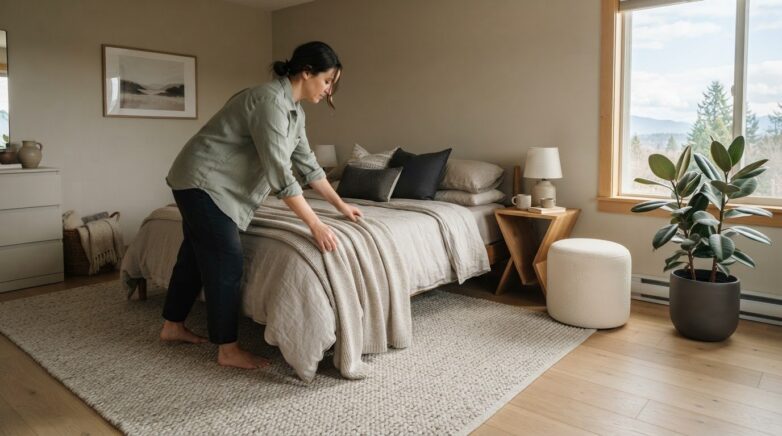
- Start with the room’s main activity and choose furniture to support it. In a living room, a sofa may anchor conversation and set the seating arrangement. In a bedroom, the bed often establishes visual balance while leaving room for bedside pieces. In a kitchen or dining area, the table’s size and placement shape how people gather and move through the space.
- Compare new and second-hand options using the same practical criteria. Consider dimensions, construction, upholstery, finish, care instructions and assembly needs. A beautiful vintage chair can add personality and warmth, but its scale, condition and fabric should suit its intended use. Delivery access matters too: doorways, hallways, stairs and lifts can affect whether a large piece will fit into its final position.
- Build a consistent colour palette around existing finishes and chosen anchor pieces. A neutral foundation can connect different furniture styles, while repeated materials help rooms feel related. A mood board can bring together images, fabric and finish samples. Remember that screen settings and room lighting can change how colours appear, so assess actual materials alongside digital visuals.
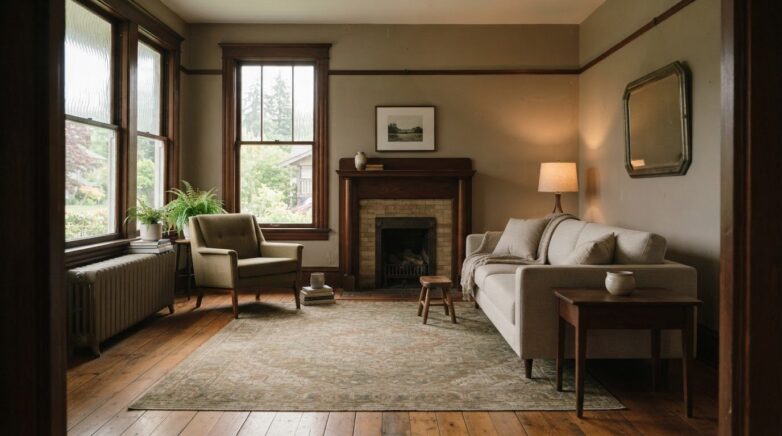
- Choose a rug by relating its size to the furniture group and the room’s proportions. In a living room, the rug should visually connect the seating rather than sit like an isolated mat. The stylist checks how its colour, texture and pattern work with the anchor furniture and nearby flooring. A palette of 3-4 tones can keep the scheme composed. For tailored home styling support, the stylist can coordinate these choices with your existing pieces.
How a home stylist builds a cohesive colour and material palette
A stylist connects colour, texture, lighting and artwork to create a cohesive look. Each choice should suit the home’s existing finishes and the atmosphere you want.
- Begin with the finishes that already shape the room. A stylist considers flooring, cabinetry, countertops and larger furniture before selecting colours. For example, warm wood can guide choices towards earthy tones, while cool stone may pair naturally with softer greys. The aim is to complement permanent features rather than compete with them, giving the room a grounded starting point.
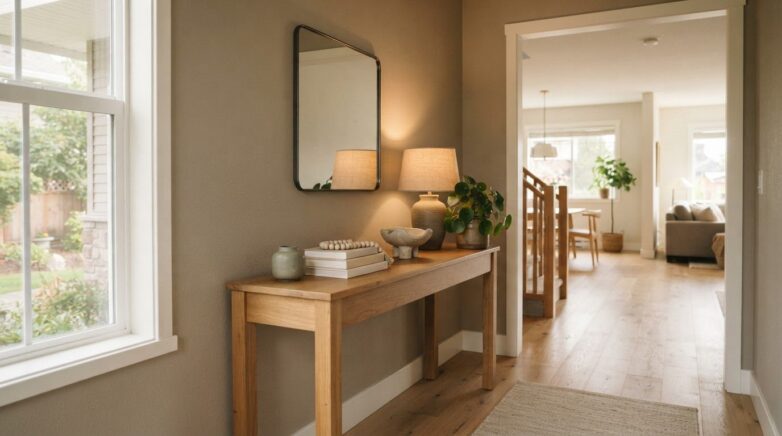
- Choose colours that work together across adjoining spaces. A stylist might carry a muted wall colour from the living room into a hallway, then introduce a deeper accent in the dining area. Repeating a colour in cushions, artwork or accessories can link rooms without making them identical. Lighting matters too: daylight and evening lamps can change how colours appear on walls and fabrics.
- Compare textures and materials alongside colour samples. Smooth timber, woven fabric and soft upholstery can create contrast while keeping the palette composed. Repeating a material in different rooms, such as wood in a table and a frame, helps the home feel connected. A mood board of finish samples, fabric and artwork gives the stylist a practical way to assess how these elements work together.
- Choose art and accessories after establishing the main colours and textures. A large artwork can introduce an accent colour, while smaller objects echo its tones elsewhere. The stylist also considers layers of lighting: general lighting illuminates the room, task lighting supports reading or work, and accent lighting adds atmosphere. Together, these choices create a considered look for both daylight and evening use.
Interior styling services and service scope
Styling focuses on furnishings, colour, artwork, accessories and presentation. Interior design may also involve spatial planning, finishes and renovation decisions.
-
Define the styling service scope
Before choosing a home stylist, describe the result you want and identify the rooms involved. Clarify whether you need help selecting furniture, arranging existing pieces, choosing colours or adding finishing touches. A styling plan can shape how a room looks and functions, but it isn’t renovation planning. Confirm the service’s scope, deliverables and how furniture purchases will be handled.
-
Follow the consultation steps
For a new-home consultation, start by discussing your vision, daily routines and priorities. Share room photos, measurements, details of pieces to keep and your budget. The stylist assesses the rooms, discusses layouts and existing furnishings, then develops a direction for selections and finishing elements. Ask how recommendations will be presented and what decisions or purchases come next. These steps help make the consultation useful for your home.
- To choose a home stylist near you in Canada, look for a service that fits your location, goals and required scope. Ask about experience with similar rooms, what the consultation includes, how recommendations are delivered and whether purchasing is part of the arrangement. Before agreeing, read the contract for scope, deliverables, fees, deposit terms, cancellations and refunds. These details should be clear in writing.
Tax deductibility depends on how the property is used and the purpose of the expense. Don’t assume personal home-styling fees or furniture purchases qualify as deductions. Income-related situations depend on their specific tax circumstances.
For coordinated guidance on room layouts, selections and presentation, explore home styling support.
Pair Home Design: Home Styling
Pair Home Design offers Home Styling for homeowners who want existing furnishings and thoughtful additions to feel connected, functional and welcoming. It’s a natural next step when you know which rooms need attention and want professional guidance to bring the details together.
Home Consults can help clarify priorities and direction, while Home Staging prepares a property for sale. The Agent’s Edge is another offering for real estate professionals. The right fit depends on whether you want to refresh everyday spaces or prepare a listing for presentation.
Ready to discuss your home and styling goals? Contact Pair Home Design.
Make your next move feel like home
Before making another furniture or décor decision, choose the feeling you want your home to offer. A quieter bedroom, a more inviting dining space or a living room made for gathering can each guide your choices. A new home interior styling service turns that personal direction into a practical starting point for shaping spaces around the way you live.
Professional support can serve different goals. Pair Home Design offers Home Styling for everyday spaces, Home Consults for focused guidance and Home Staging to prepare a property for sale. Consider which outcome matters most now, then take the next step with that purpose in mind.
Contact Pair Home Design to discuss your home and what you’d like it to become. A thoughtful plan can help your new space feel more distinctly yours.
Frequently Asked Questions
Home Styling vs Interior Design: What Is the Difference?
Home styling shapes a space’s look and feel through furnishings, colour, artwork and accessories. Interior design can involve broader decisions, including spatial planning, finishes and renovation. For example, styling might arrange a living room around furniture you already own, while changing the room’s structure goes beyond styling. Understanding the distinction helps you choose support that matches the changes you want.
How Can a Home Stylist Make My Home Look Cohesive?
A stylist can create cohesion by linking rooms through repeated colours, materials or visual details. For example, a wood tone in the dining table could echo in a hallway frame, while cushions bring a related accent colour into the living room. Rooms can still have distinct moods. Shared details simply help the home feel connected as you move between spaces.
Should a Home Stylist Recommend the Sofa or Rug First?
The stylist considers the room’s main anchor and existing furnishings before deciding which item should lead. If you plan to keep your sofa, its scale, upholstery and colour can guide rug selection. If the room is empty, the intended furniture arrangement and available space help determine the order. The goal is to make each choice work with the whole room, not in isolation.
What Exactly Are Home Styling Services?
Home styling services refine the look and comfort of everyday residential spaces through furniture, textures and décor. Depending on the project, guidance may focus on arranging furnishings, selecting complementary pieces or adding finishing details. Home Staging has a different purpose: preparing a property for sale with buyer appeal in mind. Recommendations should reflect whether you’re settling into a home or preparing it for market.
Where Should a Home Stylist Start When Styling My Home?
A home stylist starts by understanding your priorities, how you use your home and which spaces feel least resolved. For example, a family may want a welcoming living area while keeping the dining space practical for everyday meals. That conversation sets a direction before selections begin. Sharing which belongings matter to you also helps the stylist shape a plan that feels personal.
What does a new home interior styling service include in Canada?
A new home interior styling service can provide professional guidance on furniture, décor, textures and the presentation of everyday rooms. Pair Home Design offers Home Styling and Home Consults, as well as Home Staging for properties being prepared for sale. The company serves Chilliwack and Hope, as well as Abbotsford, Mission, Langley, Surrey, Coquitlam, Burnaby, Maple Ridge, Vancouver, and surrounding communities.