Master bedroom staging to sell with a polished, photo-ready look
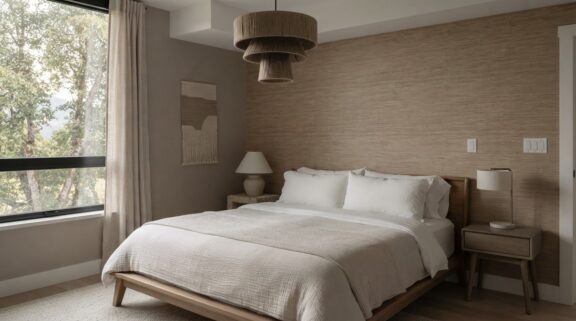
A photo-ready master bedroom feels calm, spacious and easy to imagine living in. Master bedroom staging to sell starts with a neatly layered bed, coordinated furniture and clear surfaces, then finishes with thoughtful lighting and a careful clean before listing photos. The goal is polished, not overdone.
It’s natural to focus on the bed first: crisp bedding and well-placed pillows can bring the room together. But camera-ready presentation also depends on what’s around it, from balanced bedside tables to uncluttered floors and open window coverings. Small distractions can pull attention away from the room’s best features.
Here’s how to style the bed, choose furniture that feels cohesive without matching perfectly, and edit personal belongings so the space feels welcoming. You’ll also find a practical photo-prep routine to help the bedroom look bright, tidy and composed in listing images.
Key Takeaways
- Layer neutral bedding, keep the headboard visible and add pillows and a throw with a light, considered touch.
- Choose furniture that feels cohesive rather than perfectly matched, and preserve clear paths around the bed.
- Edit personal items and closet contents so the room feels calm, open and easy for buyers to picture as their own.
- Before listing photos, open the blinds, switch on the lights and clean the fixtures and surfaces that may catch the camera’s eye.
1. Staging beds with crisp bedding and headboards
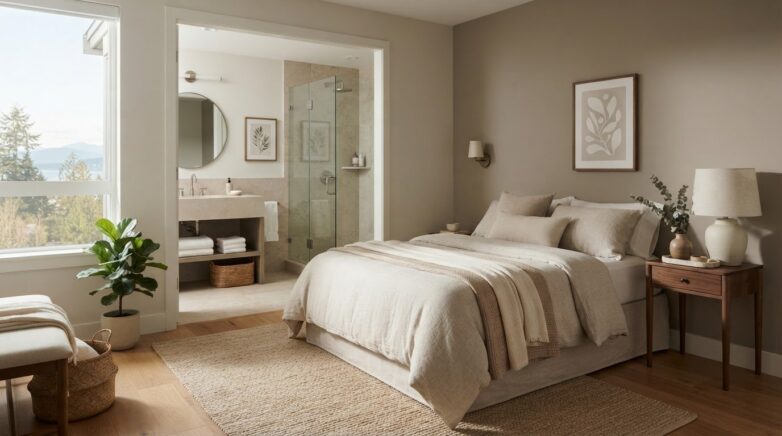
Begin with the bed, since it gives the bedroom its visual centre. Smooth the sheets, pull the duvet evenly across the mattress, and fold the top sheet over the comforter by about 8 inches. Choose clean, neutral bedding in beige, soft grey, pale blue or muted green. These colours create a calm base and help the bed look layered rather than busy.
Make the headboard visible instead of hiding it behind pillows. Add enough pillows to give the bed a finished, welcoming shape, but leave room for the headboard and bedding to show. Coordinate pillow covers with the room’s existing palette, then add a throw for a restrained accent colour. For example, a muted green throw can add a subtle note of colour to cream bedding without competing with the rest of the room.
Is hiring a professional home stager worthwhile, or should you stage the bedroom yourself? For a simple refresh, make the bed, edit its pillows and coordinate a throw yourself. A professional can help when furniture placement, room balance or several connected spaces need a more considered plan.
Do Canadian real estate agents recommend different staging for vacant and occupied bedrooms? The practical approach differs: a vacant room needs a bed and carefully selected furnishings to show its purpose, while an occupied room usually benefits from editing existing items and making its bed the focal point. Both should feel calm in listing photos.
For a budget-friendly refresh, start by using the cleanest neutral bedding you already own, then remove mismatched or excess pillows. Smooth the duvet, make the 8-inch sheet fold, and place a coordinating throw across the foot of the bed. Clear anything that hides the headboard, then check the arrangement from the doorway and adjust crooked corners or uneven layers. If the bedding looks worn or strongly patterned, prioritize replacing that one visible element rather than adding more accessories. The finished bed should look bright and composed, with buyers able to imagine themselves in the room.
2. Choosing cohesive furniture without matching sets
Choose bedside tables and a dresser that share a visual quality, not an identical finish. For example, a wood nightstand can sit comfortably beside an upholstered bed if their shapes feel similarly simple. In master bedroom staging to sell, a coordinated mix looks intentional and lets buyers focus on the room rather than a furniture set.
Place a nightstand on each side of the bed when the layout allows. If one side is tight, use one table and keep the other side open for movement. Limit each surface to a few accessories, such as a lamp and a book, so the furniture looks useful rather than crowded. A table lamp can brighten a shadowy corner, while a floor lamp adds light without taking up bedside space.
Keep only the pieces that show how the bedroom works: a bed, bedside tables and, if space allows, a dresser. Remove an oversized armchair, extra chest or bulky bench if it narrows the route from the doorway to the bed. Clear floor space makes the room easier to navigate and gives the furniture more appeal. Check the view from the doorway; if a large piece dominates the first impression, try moving it out.
How should you stage a small master bedroom or one with awkward features? Choose appropriately scaled furniture, keep the path around the bed clear and place a nightstand only where it fits. For a sloped ceiling or awkward corner, avoid forcing in a bulky piece; use the open area to emphasize floor space instead.
Common mistakes include crowding the room with extra furniture, choosing a perfectly matched set that feels heavy and leaving dark corners unlit. Before photos, remove an unnecessary piece, straighten the bedside tables and switch on the lamps. This quick edit reveals whether the layout feels balanced or needs another adjustment.
3. Decluttering and depersonalizing bedrooms
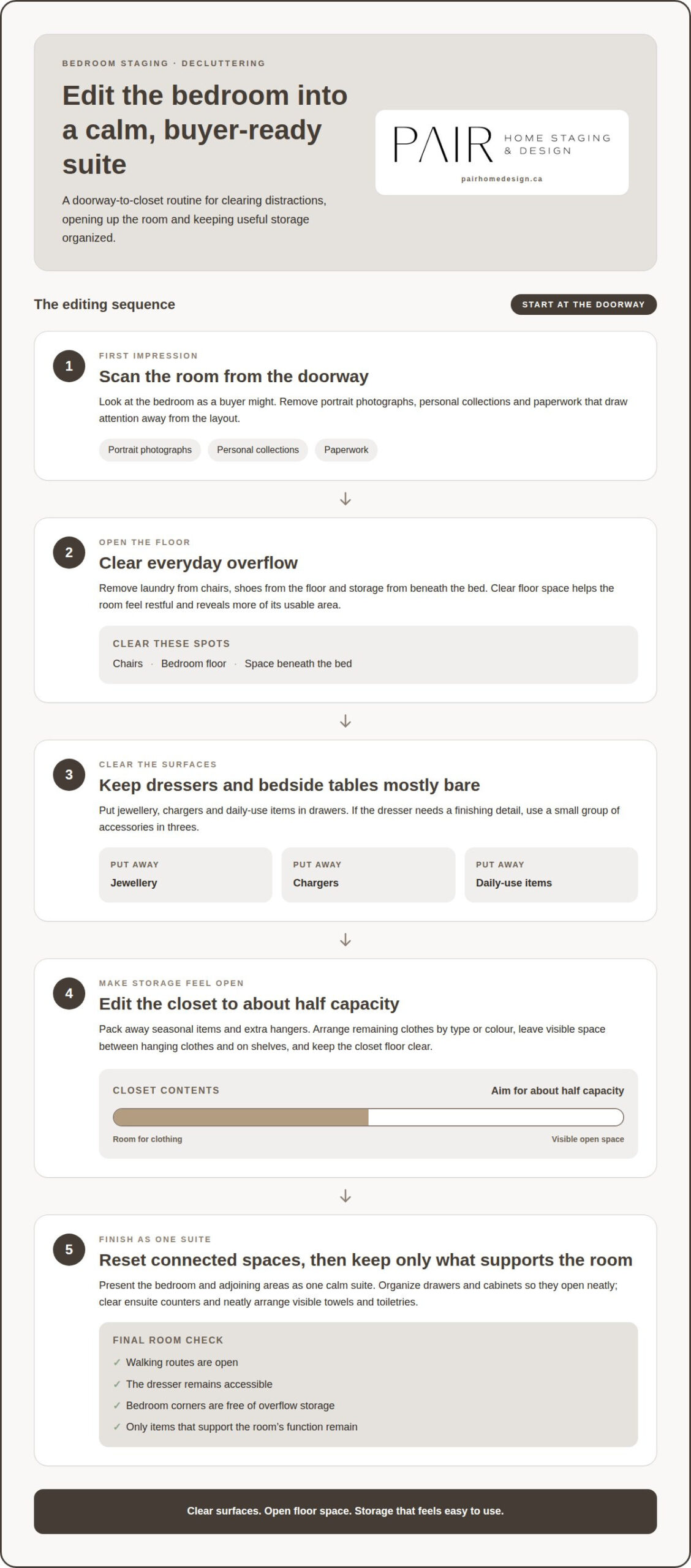
Start at the doorway and scan the room as a buyer might. Remove portrait photographs, personal collections and paperwork that draw attention away from the bedroom’s layout. Clear laundry from chairs, shoes from the floor and storage from beneath the bed. These edits reveal useful floor space and let the room feel restful, not like an extension of everyday storage.
Next, clear the dresser and bedside surfaces. Keep counters mostly bare; if a dresser needs a finishing detail, arrange a small group of accessories in threes. Put jewellery, chargers and daily-use items in drawers rather than leaving them visible. Then organize the drawers and cabinets so they open neatly during a viewing. Buyers may look beyond the photographs, so tidy storage supports the same composed impression.
Give the master closet a deliberate edit. Aim for about half capacity, leaving visible space between hanging clothes and room on shelves. Pack away seasonal items and extra hangers, then arrange the remaining clothing by type or colour. Keep the closet floor clear and remove boxes or bags stored beneath the bed. An open closet looks easier to use than one filled edge to edge.
What should you remove from a master bedroom before staging? Take out portraits, personal collections, laundry, excess accessories and anything stored under the bed. Clear the dresser, bedside surfaces and closet floor, then keep cabinets and drawers organized.
Should you stage the master bedroom closet, ensuite and adjoining spaces too? Yes, present each connected area as part of one calm suite. Keep closet contents near half capacity, clear ensuite counters, and neatly arrange visible towels and toiletries.
Finish by returning only items that support the room’s function. Keep the dresser accessible, walking routes open and bedroom corners free of overflow storage. This final edit makes the room easier to view in person and helps listing photos show its shape, storage and flow without personal distractions.
4. Preparing a home for professional photography
Listing photos capture details that can disappear during a quick walkthrough. Before the photographer arrives, stand at the bedroom doorway and scan the full frame. Straighten the pillows, smooth visible bedding, tuck away charging cables and move anything that interrupts a clear view. Then check the room from the foot of the bed, where uneven edges or cluttered corners may stand out.
Use daylight deliberately. Open the blinds to brighten the room, then turn on the bedroom lights and bedside lamps to make shadowy areas feel welcoming. If a corner still looks dim, add a lamp or adjust the bulb. Clean the window glass and windowsills first; dust or marks can become more noticeable when natural light crosses them.
Check visible surfaces and fixtures before the shoot. Wipe light switches, door handles, television screens and ceiling fans, then clean the light fixtures. A simple checklist helps catch missed details: inspect the ceiling, windows, furniture tops and floor from the camera’s likely viewpoints. Remove fingerprints from reflective surfaces and make sure lampshades sit straight.
Add one fresh accent, such as a potted plant or vase of flowers, only if it suits the room and leaves surfaces open. Avoid strong chemical scents to mask unpleasant odours; address the source instead. For a photo-ready master bedroom, finishing touches should support the room’s calm atmosphere, not compete with it.
Finish with a doorway-to-window check. Open the blinds, switch on the lights, straighten the pillows and remove anything that has reappeared on the floor or dresser. If you’d like help preparing a listing’s overall look, explore professional home staging to bring the bedroom and connected spaces into a cohesive presentation.
For showings, open the blinds to let light into the bedroom. If the lighting is dim, adjust the bulbs or add a lamp, and keep the lights on during the viewing.
Pair Home Design: Home Staging
Pair Home Design provides Home Staging to prepare properties for sale with a considered, cohesive presentation. If the bedroom feels difficult to arrange, or its furnishings and finishes don’t work together, a professional perspective can help you decide what to keep, edit or add. Home Styling can refine existing spaces, while a home consultation offers guidance if you’re preparing the property yourself.
For real estate agents seeking support with listing presentation, Pair Home Design also offers The Agent’s Edge. The right next step depends on the property’s needs, from focused bedroom styling to staging that brings the home together. Contact Pair Home Design to discuss preparing your home for sale.
Make the next step feel manageable
A listing marks a transition, and preparing a bedroom can help you see the space with fresh eyes. Before photos, pause at the doorway and consider what the room communicates about comfort, function and possibility. That perspective can guide the final decisions without making the home feel impersonal. The aim of master bedroom staging to sell is a room that feels inviting in images and still feels natural when someone steps inside.
If you’re ready to shape the overall presentation, Pair Home Design can help you consider the property as a whole. A thoughtful staging plan can connect the bedroom with the feeling buyers experience in adjoining rooms, creating a cohesive impression from one space to the next.
Contact Pair Home Design to talk about preparing your home for its next chapter. A considered plan can make the process feel clearer, and help your home meet the market with warmth and polish.
Frequently Asked Questions
How should you stage a master bedroom to sell a home?
Start by deciding what the room should communicate to a buyer: a comfortable primary retreat, not a storage area or workspace. Keep the room’s strongest feature visible, such as a large window, attractive ceiling detail or fireplace. If the bedroom doubles as an office, remove work equipment and show its main purpose clearly in the listing presentation.
What furniture layout makes a master bedroom look larger and more appealing?
Place the bed against the longest uninterrupted wall that doesn’t block a doorway, closet or window. This gives the room a clear anchor while preserving access to its features. Check the door swing and closet doors before settling on the layout. In an irregular room, align furniture with the main wall rather than forcing every piece into a symmetrical arrangement.
Which paint colours, bedding and decor work best for staging a master bedroom?
Choose paint and textiles that work with fixed finishes, such as flooring, trim and built-in cabinetry. Soft grey, beige, pale blue and muted green can create a restful impression; compare paint samples beside the floor and in daylight before choosing. For decor, use art sized to suit the wall, plus a natural accent such as a small plant.