Vancouver luxury staging: where sellers should invest

Luxury staging isn’t about filling every room with expensive furniture. For staging in Vancouver’s luxury market, prioritize an inviting flow, natural light and the spaces buyers use to picture daily life, especially the living room and primary bedroom. The right staging plan depends on the home’s condition, its presentation and the buyers it needs to reach.
It’s natural to want every detail polished when preparing a West Side property for sale. A thoughtful plan usually matters more than treating every room equally: uncluttered spaces, balanced furniture placement and considered finishing touches let the home’s architecture and atmosphere stand out.
This guide explains what to prioritize, how professional staging can prepare a Vancouver West luxury home for buyers, and how to assess the investment against your listing goals. You’ll also learn how tidying differs from creating a cohesive, considered presentation.
Key Takeaways
- Prioritize staging around the home’s strongest features and the buyers most likely to value them.
- Coordinate repairs, cleaning, furniture placement and photography so the property feels polished in person and online.
- Understand how removing clutter, personal details and adding purposeful furnishings each shape a buyer’s impression.
- Weigh staging against the home’s condition, comparable sales and listing goals rather than expecting a guaranteed return.
1. What should Vancouver West luxury sellers prioritize when working with a professional stager, and in what order?
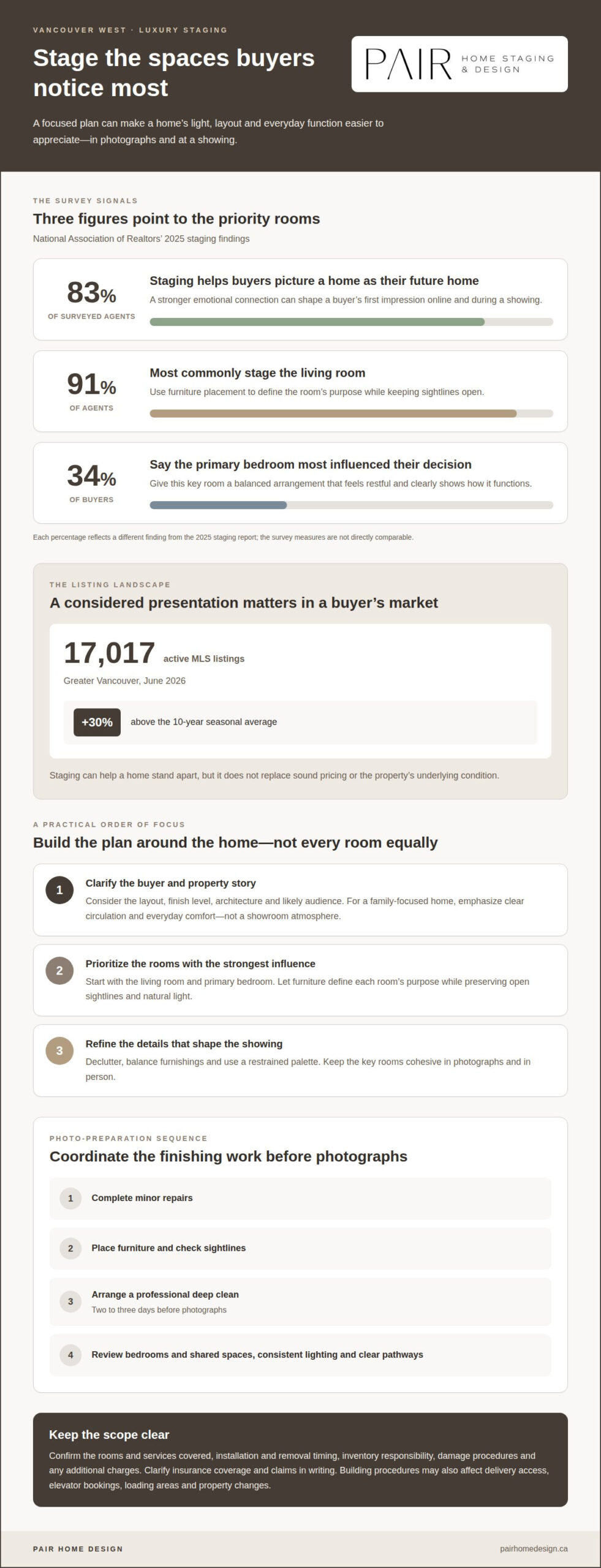
Start with the buyers most likely to value the home’s location, architecture and lifestyle. In Vancouver West, staging should make natural light, generous rooms and well-maintained finishes easy to appreciate. The National Association of Realtors’ 2025 survey found 83% of surveyed buyers’ agents believed staging helped buyers picture a property as their future home. That emotional connection can shape a buyer’s first impression, both online and during a showing.
- Clarify the buyer and property story. The stager considers the home’s layout, finish level and likely audience before selecting a visual direction. A family-focused home, for example, needs clear circulation and spaces that suggest everyday comfort, not a showroom atmosphere.
- Prioritize the rooms with the strongest influence. The National Association of Realtors’ 2025 staging report found 91% of agents most commonly staged living rooms, while 34% of buyers said the primary bedroom most influenced their decision. Furniture placement should define each room’s purpose while keeping sightlines open.
- Refine the details that shape the showing. Vancouver buyers often favour modern, well-maintained homes with natural light and open spaces. A stager can guide decluttering, balanced furnishings and a restrained palette, then ensure the key rooms feel cohesive in photographs and in person.
This order matters in a buyer’s market. Greater Vancouver recorded 17,017 active MLS listings in June 2026, 30% above the 10-year seasonal average. A considered presentation helps a Vancouver home stand apart without treating every room as equally important. Home staging supports visualization; it doesn’t replace sound pricing or a property’s underlying condition.
Strata, building and municipal requirements can affect staging logistics, including delivery access, elevator bookings, loading areas and changes to the property. Plan around applicable building procedures and secure any required permissions before furniture or materials arrive.
For a luxury staging agreement, define the rooms and services covered, installation and removal timing, inventory responsibility, damage procedures and any additional charges. Clarify in writing who carries insurance, what property or inventory it covers, and how claims are handled. These details align expectations before staging begins.
2. How Professionals Stage Luxury Homes in Vancouver West
Professional staging brings a property’s rooms, furnishings and photographs into a coherent whole. In a vacant home, selected furniture can show how a generous living area, dining room or bedroom functions without obscuring its proportions. In an occupied home, a consultation can assess existing furniture, identify pieces that support the desired look and recommend changes to improve flow. The goal is a polished space that still feels welcoming, not a collection of disconnected showrooms.
When assessing luxury staging companies in Vancouver, review portfolios featuring homes with comparable architecture, finishes and layouts. Look for examples where furniture complements the property rather than competing with its features. For an occupied home, a consultation should address existing furniture, room arrangement, visual priorities and photo preparation. These details establish a clear scope before staging begins.
Staging can include decluttering, furniture selection and placement, décor, cleaning recommendations and priorities for minor repairs. In a vacant home, the plan may furnish key rooms; in an occupied home, it may make better use of the seller’s existing pieces. Staged furniture isn’t automatically included in the home sale. If furniture is to be included, address it clearly in the sale terms.
Pricing the property is a separate decision. A real estate agent considers comparable sales, current market conditions and the home’s condition when recommending a listing price. Staging shapes presentation, but it doesn’t determine market value. Renovations also require separate consideration: a staging plan can identify presentation concerns, while major renovation decisions involve a different scope.
For an open house, coordinate the finished arrangement with the photography schedule and showing plan. A Vancouver preparation sequence might include completing minor repairs, placing furniture, checking sightlines and arranging a professional deep clean two to three days before photographs. In the final review, check that bedrooms and shared spaces look orderly, lighting is consistent and pathways are clear for visitors.
3. What is the difference between decluttering, depersonalizing, and genuinely staging for a luxury buyer?
Decluttering removes visual and physical distractions. A professional stager might edit a crowded console, clear excess items from a kitchen counter and open the walkway around a dining table. The goal is to make a room’s size, finishes and function easier to understand in listing photos and during showings, not simply to make the home look empty.
Depersonalizing helps buyers picture their own lives in the home. Family portraits, children’s artwork and highly personal collections can draw attention away from the architecture. A stager can suggest what to put away while preserving the home’s character. For example, a carefully chosen ceramic piece can add warmth without making the room feel personal to one household.
Staging goes further by creating a deliberate relationship between furniture, lighting, colour and how each room is used. In a large living room, furniture can define a conversation area while leaving a clear path to the windows. In a bedroom, a balanced arrangement can create a restful feel and show how the space functions.
For Vancouver listings, a professional stager can approach the work as a sequence: assess the room, edit distracting items, organize what remains and adjust furniture placement. This helps avoid competing focal points, such as a crowded bookcase drawing attention away from a fireplace or distinctive view. Each change should support the home’s appeal, not impose a generic look.
Before listing, a consultation for an occupied home can turn a broad request to “tidy up” into room-specific guidance. A stager can identify what to store, what to keep visible and where existing furnishings interrupt sightlines. That matters in luxury homes, where considered finishes and architectural details deserve attention. Decluttering clears the view; depersonalizing helps buyers imagine living there; staging gives each space a cohesive, purposeful impression.
4. Assessing the return on a staging investment
Assess the investment against the listing goals, not just a hoped-for sale price. Before staging, note the home’s condition, its strongest interior features and the rooms that need attention. Then identify the intended changes: clearer photos, better room function or a more cohesive visual impression. For example, a seller might prioritize the living area and primary bedroom while leaving rooms that already show well largely unchanged.
The National Association of Realtors’ 2025 staging report offers useful context, though it reflects a U.S. survey. It found 49% of agents said staging reduced days on market, and 29% reported buyers offered 1–10% more for staged homes. These are agent-reported outcomes, not a forecast for an individual Vancouver listing. They show why sellers can assess both buyer response and time on market.
Separate presentation decisions from larger property investments. A kitchen with sound finishes may benefit more from considered styling than extensive renovation, while visible damage can distract from carefully selected furnishings. A staging plan helps focus resources on changes that improve presentation instead of treating every room as a renovation project. Compare the proposed scope with the property’s condition and the agent’s pricing strategy.
After listing, review feedback in context: showing comments, buyer questions and the quality of online engagement. If visitors repeatedly misunderstand a room’s purpose, the furniture arrangement may need adjustment. If photos draw attention to the wrong feature, revising the presentation can address that specific issue. This makes the assessment practical by connecting each decision to a clear purpose for buyers.
For a considered plan tied to the property’s rooms and existing furnishings, explore professional home staging. A focused scope can help connect the home’s strongest features with a polished, emotionally engaging presentation.
Pair Home Design: Home Staging
Pair Home Design helps sellers prepare properties for market with staging plans that balance visual appeal and everyday warmth. For a vacant home, staging gives key rooms a clear purpose; for an occupied home, a home consultation can identify how existing furnishings and décor can better support the presentation. Home Styling can further refine the feel of lived-in spaces.
This is a natural next step when preparing a Vancouver West listing and deciding what to prioritize. The Agent’s Edge supports real estate agents preparing properties for sale. Each approach is shaped around the home’s layout, features and presentation needs, rather than adding changes without a clear purpose.
To discuss preparing your home for buyers, contact Pair Home Design.
Prepare your home for its next chapter
When considering staging in Vancouver’s luxury market, start by giving the property a clear point of view. Decide what you want buyers to remember after they leave: the calm of a private retreat, the ease of entertaining or the way natural light moves through the home. That guiding idea keeps presentation choices focused and intentional.
Before listing, align the staging plan with your real estate agent’s strategy and the showing schedule. Consider how the entrance, main living areas and quieter rooms connect as buyers move through the property. A cohesive experience should feel polished without seeming staged for its own sake. Distinctive architectural details and the comforts of daily living can both have a place.
The strongest next step is a conversation about your property, priorities and the impression you hope to create. Discuss your staging plans with Pair Home Design, and move toward a presentation that feels considered, welcoming and true to the home.
Frequently Asked Questions
Home Staging in North & West Vancouver: Is It Worth It?
Home staging is worthwhile when presentation helps buyers understand a property’s layout, scale or lifestyle. For staging for the luxury market in Vancouver, consider whether the current presentation makes the home’s distinctive features clear. A formal dining room that feels underused, for example, may benefit from a clearer furniture arrangement. Weigh the home’s condition, target buyer and pricing strategy together. Staging can make a property easier to understand and remember.
How Do Professionals Stage a Luxury Home for Sale in Vancouver West?
Professionals begin by assessing the property’s architecture, condition and intended audience, then create a consistent presentation across rooms. They might choose furnishings that complement the finishes while keeping distinctive millwork visible. Coordinate the final arrangement with photography and showing access so the online presentation reflects what visitors experience. A clear scope helps everyone understand which rooms and details receive attention.
Staging, Repairs or Price: Where Should the Budget Go?
Address issues that affect buyer confidence or the home’s function before focusing on presentation and pricing. A loose cabinet hinge or damaged floorboard may need attention before styling. A dated but functional kitchen calls for a different decision from one with visible defects. The real estate agent’s comparable-sales analysis guides pricing, while the property’s condition and intended buyer shape other priorities.
What is the difference between decluttering, depersonalizing, and genuinely staging for a luxury buyer?
Decluttering reduces visual excess, depersonalizing softens personal cues, and staging gives rooms a purposeful, cohesive look. For example, removing stacked magazines clears a side table; putting away family photographs makes the room feel less tied to one household; arranging seating around a fireplace creates a welcoming focal point. Each action serves a different purpose, and staging brings the overall presentation together.
What should Vancouver West luxury sellers prioritize when working with a professional stager, and in what order?
Start by agreeing on the likely buyer and the home’s defining features. Set the staging scope around rooms that need clearer function or stronger visual balance. Then coordinate access, installation and photography with the listing schedule. In the final review, consider the property from the entrance onward: each room should connect naturally to the next, with no striking feature obscured or overshadowed.
How does luxury staging affect sale price and time on market in Vancouver?
Staging for the luxury market in Vancouver can shape how buyers perceive a home’s quality, function and atmosphere. Sale price and time on market also depend on condition, pricing, competition and buyer demand. A well-presented room can make its use and proportions easier to understand, supporting a better viewing experience. Staging is one part of a listing strategy, not a substitute for market-aligned pricing or addressing property concerns.