Room refresh styling package ideas for a layout that works
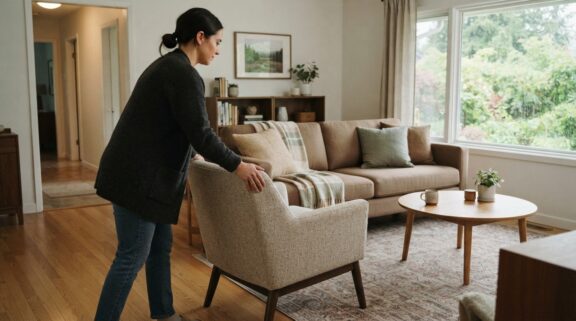
A room can feel thoughtfully refreshed without replacing everything in it. A room refresh styling package gives a stylist the chance to assess how the space looks and works, refine the layout, rearrange existing furniture, and recommend updates to pillows, curtains, or throws. The aim is a more balanced, comfortable room that still works for everyday life.
If a room feels crowded, lacks a clear focal point, or no longer suits your routine, you may want a change without starting from scratch. A stylist can consider how you use the space, identify what disrupts its flow, and shape a practical plan around the furnishings you already own. This article explains what that assessment can involve, how furniture placement can improve the layout, and how a few well-chosen textiles can bring warmth and cohesion.
Key Takeaways
- A stylist can identify the room’s focal point and reposition existing furniture to create a more considered arrangement.
- Thoughtful choices in pillow shapes, curtain feel and throw textures can bring warmth and cohesion without overwhelming the space.
- Assessing clutter, worn pieces and areas that feel out of place helps direct attention to the updates that matter most.
- A layout works best when it supports the room’s everyday uses and allows people to move through it comfortably.
1. How a stylist can rearrange furniture
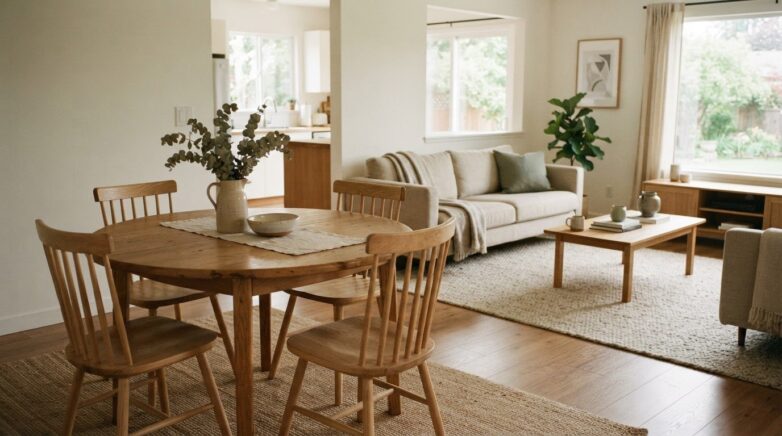
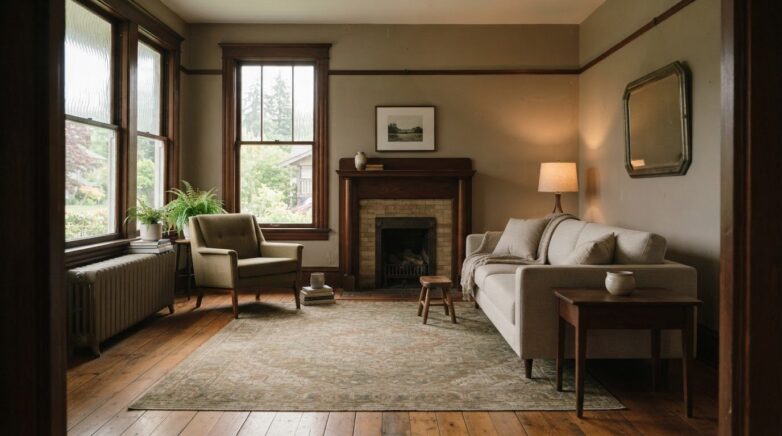
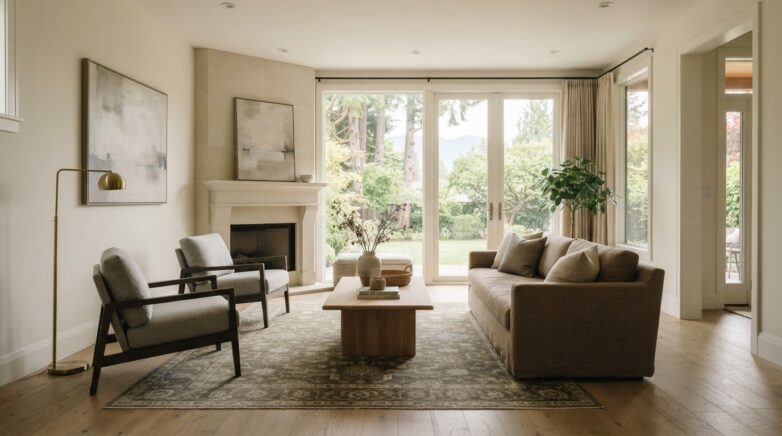
A stylist begins by identifying the room’s focal point, such as a fireplace, large window, or television. In a living room, the sofa and chairs can then be arranged to draw attention to it while keeping conversation comfortable. The stylist also considers how people enter, sit, and move through the space. A bookcase from another room might create a useful display, while shifting a coffee table can open up a clearer path.
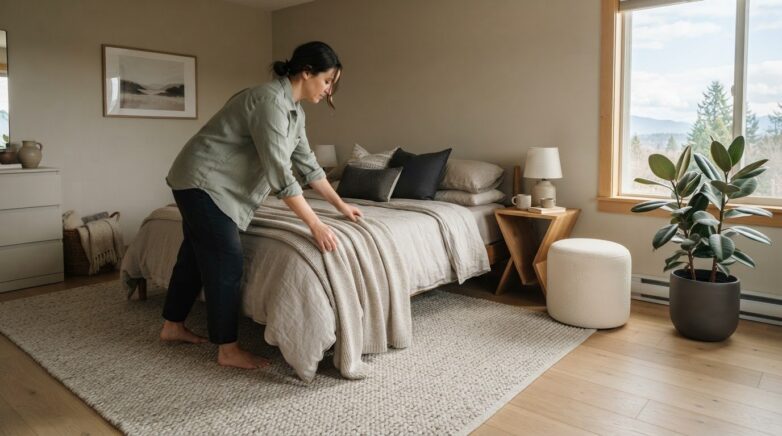
Industrial bedroom furnishings often feature strong lines, metal accents, and substantial wood pieces. A stylist can give them room to breathe by editing the arrangement and avoiding competing accents. For example, a metal bed frame might remain the visual anchor, paired with a streamlined side table instead of another bulky piece. If a wall or wooden table feels tired, a stylist can advise whether a paint colour or finish would suit the room. A new piece of furniture makes sense when it solves a practical problem, not simply because the layout feels unfinished.
Room refresh styling focuses on improving an existing space through layout and decor; full-service interior design may cover a broader project. To compare packages, look at the room assessment, furniture rearrangement, recommendations and follow-up included. Review a stylist’s portfolio and relevant training or credentials, then compare examples of work similar to your room.
Furniture and decor purchases aren’t automatically part of a styling service. The agreed scope should distinguish recommendations from purchasing or supplying items. Travel, shopping, installation, and revisions may also be handled differently, so clarify which tasks are included and how additional work will be approached.
Canadian stylists may work in person or virtually. An in-person visit lets the stylist assess furniture and circulation directly; a virtual session can use room photos, video and measurements to discuss placement.
Most rooms with movable furnishings, from compact bedrooms to open living rooms, can benefit from a refresh. It’s less suited to problems that require structural work or extensive repairs. A stylist can point out when existing furniture limits the layout or a proposed addition might crowd the room.
2. How a stylist can update pillows, curtains, and throws
A stylist considers how textiles work with the room’s existing colours, furnishings, and finishes. On a neutral sofa, textured pillows can add warmth without changing the broader palette. A subtle pattern brings interest, while pillows in different sizes and shapes add dimension. Placement matters too, so the arrangement feels composed rather than crowded. A folded throw over a chair arm can soften clean lines and make the seating area more inviting.
Texture adds layers to a room, even when the colour scheme stays calm. Linen, wool, and cotton can bring natural variation to a Scandinavian-inspired bedroom. In a cottage-style space, a quilt and crocheted throw can create a softer, collected feel. For a rustic look, pair plaid with solid textures so the pattern doesn’t dominate. In a black-and-white room, tactile fabrics can keep the contrast from feeling flat. Each choice should support the room’s character rather than compete with it.
Curtains shape a window’s visual presence and contribute to the room’s overall balance. A stylist may recommend light, airy window treatments for a Scandinavian-style bedroom, where they complement natural textures. In a coastal room, restrained patterns and tactile fabrics can suggest a relaxed mood without relying on too many motifs. The stylist considers how curtains relate to nearby upholstery, rugs, and wall colour, then recommends an update that connects with the existing pieces.
Adding new textiles isn’t always necessary. A stylist can edit what’s already there, move a throw from a sofa to an accent chair, or suggest new pillow covers while keeping the inserts. These choices can refresh the room without changing its layout completely. A professional home styling assessment can help connect those details to the room’s wider presentation, so pillows, curtains and throws feel intentional together.
How a stylist assesses what needs improvement
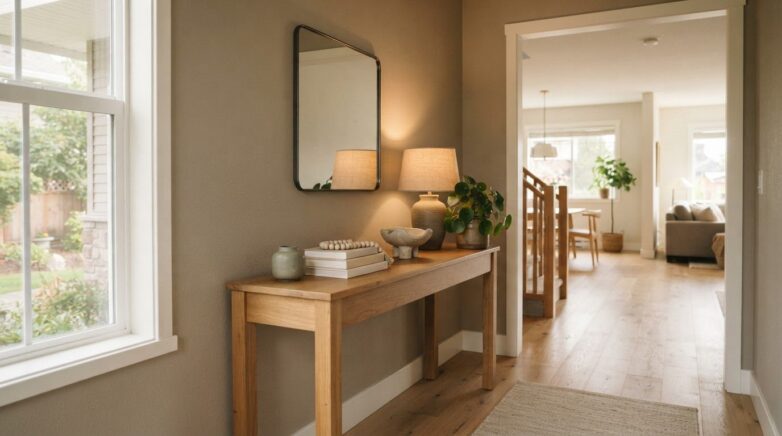
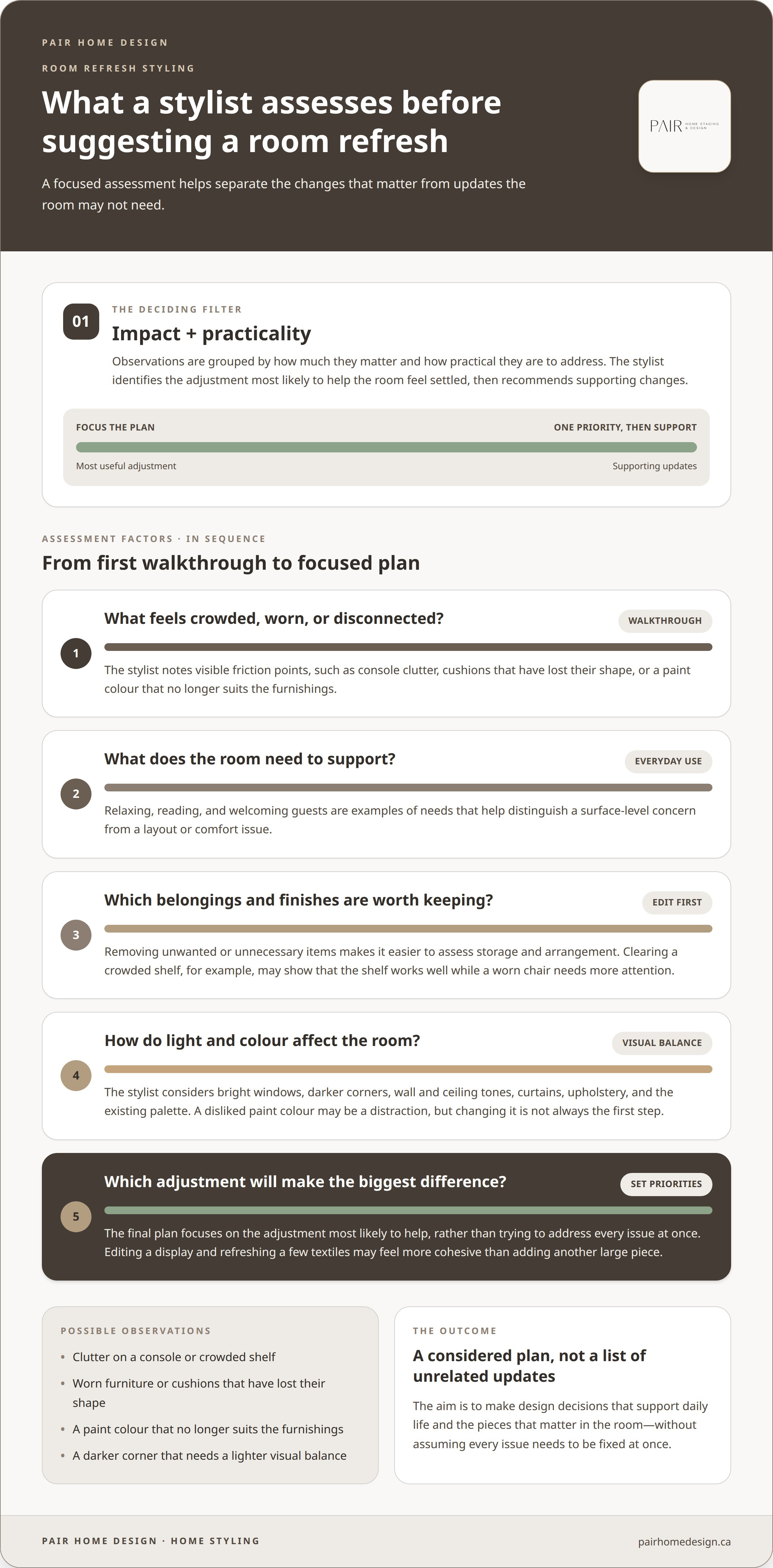
A stylist starts with a walkthrough, noting what feels crowded, worn, or disconnected. In a living room, that might mean clutter on a console, cushions that have lost their shape, or a paint colour that no longer suits the furnishings. The stylist also considers what the room needs to support, such as relaxing, reading, or welcoming guests. These observations help distinguish a surface-level concern from a layout or comfort issue.
Next, the stylist takes stock of belongings and finishes, which help shape the room’s visual character. Removing unwanted or unnecessary items can make it easier to assess storage and arrangement, so edit first, then organize what remains. Clearing a crowded shelf, for example, may show that the shelf works well, while a worn chair needs more attention. This assessment keeps design decisions grounded in the pieces that matter in daily life.
Light and colour also deserve a close look. A stylist considers how a bright window affects nearby fabrics and whether a darker corner needs a lighter visual balance. Wall colour, ceiling tone, curtains, and upholstery all influence how the room feels as a whole. A disliked paint colour may be the main distraction, but changing it isn’t always the first step. The stylist weighs it against furniture condition, natural light, and the existing palette.
Finally, the stylist groups observations by impact and practicality. A room with clutter, faded cushions, and a mismatched accent chair may not need every issue addressed at once. The stylist can identify the adjustment most likely to make the space feel settled, then recommend supporting changes. Editing a display and refreshing a few textiles, for instance, may feel more cohesive than adding another large piece. The result is a focused plan, not a list of unrelated updates.
4. How a stylist chooses a layout based on function and flow
A stylist starts with the room’s everyday purpose, not an arrangement chosen only for appearance. In a living room used for conversation, seating should support interaction and leave a comfortable route through the space. If people regularly cross between the entrance and a patio door, keep that path clear. Function and flow guide the decisions; colour and visual balance refine them.
Next, the stylist identifies 1-3 additional areas for sitting, spending time or frequent use. An open living room might include a main conversation area, a reading chair near a window and a compact spot for board games. These zones help determine which pieces belong together and where clutter disrupts movement. A side table beside the reading chair, for example, gives that area a clear purpose without crowding the main seating group.
The stylist then considers how each area relates to the focal point and circulation. A television-focused arrangement may centre seating toward the screen, while a fireplace-focused layout can orient chairs toward the hearth. Doorways, windows, and access to shelves also affect placement. In a narrow room, moving a chair away from a doorway may improve the route without removing useful seating.
Once the layout supports the way you live, the stylist refines the room’s visual character. A gallery wall can define the conversation area, while coordinating colours across nearby cushions and artwork can connect separate zones. The stylist also considers whether a rug anchors the seating or decorative pieces crowd a walkway. Each choice should support the room’s use rather than create another obstacle.
A room refresh styling package can bring these decisions together through a considered assessment of the space and its furnishings. For professional guidance on a layout that feels practical and cohesive, explore room styling support.
Pair Home Design: Home Styling
Pair Home Design’s Home Styling brings a room’s layout, furnishings, and finishing details together more cohesively. It’s a natural next step when you know what feels off but would like a professional to turn those observations into a considered plan. Styling can make better use of existing pieces and guide updates that support the room’s everyday purpose.
If you’re preparing a home for sale, Home Staging offers a presentation-focused approach; Home Consults can provide guidance on a specific property or styling question. The right fit depends on whether you’re refining a lived-in space or preparing a listing. Each service starts with the home’s needs and the outcome you’re working toward.
Contact Pair Home Design to discuss your room and the support you’re looking for.
Give your room a thoughtful next chapter
A refresh can help your home better suit the way you live now. Before getting started, consider how you want the room to feel: calmer, more welcoming, easier to share, or simply more like you. That intention gives a stylist a useful starting point and helps keep choices connected, rather than letting individual updates pull the room in different directions.
A room refresh styling package can turn that direction into a considered plan for your space. Share your priorities, including what you value about the room and what no longer feels right. Professional guidance can then help shape a cohesive, personal result without losing sight of everyday comfort.
Ready to talk through your room and possible next steps? Contact Pair Home Design to start the conversation and explore a fresh approach to your space.
Frequently Asked Questions
What is included in a room refresh styling package in Canada?
A room refresh styling package can include a room assessment, furniture arrangement recommendations, and guidance on decorative updates. For example, a stylist may consider how an existing sofa and chairs support the room’s use, then suggest pillow, curtain or throw changes to bring the look together. The exact scope depends on the service agreed upon. Pair Home Design’s Home Styling supports homeowners seeking a more polished, comfortable everyday space.
How long does a room refresh styling project take?
Styling details can be adjusted over time, as your needs and preferences evolve.
What steps are involved in booking and completing a room refresh styling package?
Compare the package’s assessment, furniture rearrangement, recommendations, and follow-up, and review the stylist’s portfolio and relevant training. Confirm in writing what is included, including any purchasing, travel, shopping, installation, or revisions. The stylist then assesses the room’s use and layout, recommends changes, and helps refine furniture placement and decor.
What should I prepare before a room refresh styling consultation?
Remove unwanted or unnecessary belongings and, where practical, clear away decor so the room’s layout and furnishings are easier to assess. For a virtual consultation, prepare room photos, video, and measurements.