Using Your Own Furniture to Stage a Home for Sale
Your furniture can work for staging, but it should help the home feel spacious, calm, and easy to imagine living in. Using your own furniture for staging works best when each piece suits the room, its colour and condition don’t distract from the space, and windows, doors, and walkways remain clear.
Start with what you already own. Familiar pieces can make rooms feel warm and purposeful, while removing oversized or highly personal items can make those same spaces feel more open and welcoming.
This article will help you decide which furniture to keep, how to choose neutral pieces and accessories, and how to arrange everything to preserve the home’s flow. You’ll also learn when your existing furnishings may benefit from professional styling or a more considered staging plan.
Key Takeaways
- Choose calm colours and a few simple accessories to let the room, rather than personal belongings, hold buyers’ attention.
- Edit furniture by scale and purpose; removing pieces that crowd a room can make its layout easier to understand.
- Use existing furnishings to show how each room could function, adding thoughtful styling where a space feels unfinished.
- Arrange furniture and window treatments to preserve clear routes through the home and keep natural light visible.
1. Choosing neutral decor from belongings you already own
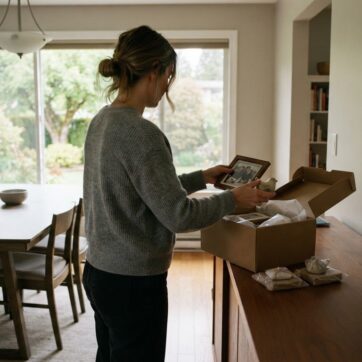
Begin with a simple edit: remove family photographs, children’s artwork, and personal collections before showings. Keep a few books, a small plant, or one carefully chosen object on a shelf. This adds warmth without directing buyers’ attention to the owner. For example, replace a crowded mantel with a framed print and a ceramic bowl you already own.
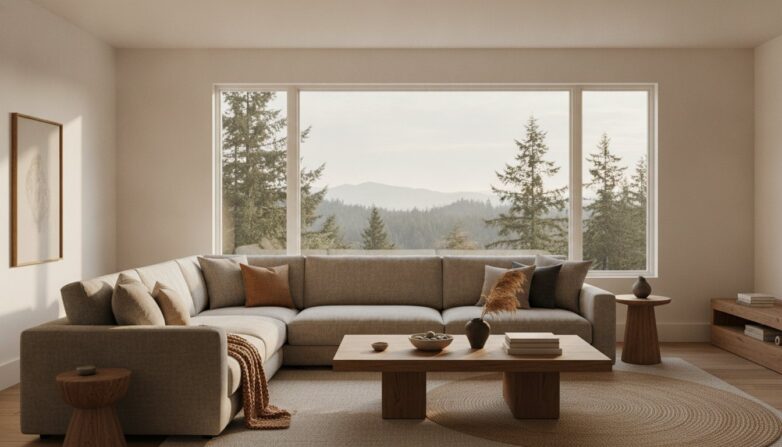
Build a calm colour palette from your existing pieces, such as grey, cream, or white upholstery paired with natural wood. A neutral sofa keeps attention on the room’s light, flooring, and proportions. If a chair has a dated colour or a small stain, a clean slipcover can create a more cohesive look without replacing it. Keep pillows and throws within the same palette, since competing patterns can make a small room feel busy.
Scale matters as much as colour. A large sectional can overwhelm a compact living room, while a tiny loveseat may leave a generous space feeling empty. Measure the room and check how furniture fits around doorways and walking routes before settling on a layout. In a small bedroom, a suitably sized bed and one bedside table show the room’s purpose while preserving usable floor space.
For practical updates, start with cleaning, editing, and rearranging rather than renovation. A fresh slipcover or simplified bookshelf can soften a dated impression without changing the room itself. Review the listing photos with your realtor and choose one consistent theme, such as calm neutrals with natural textures—an approach frequently recommended by real estate specialists like DeFeo Luxury Properties to ensure online listings capture buyers’ attention. Repeat that palette in the living room and bedroom, and put personal items away for showings. Thoughtful use of your own furniture for staging makes each piece feel intentional, not simply left behind.
2. Can I Use My Own Furniture For Staging?
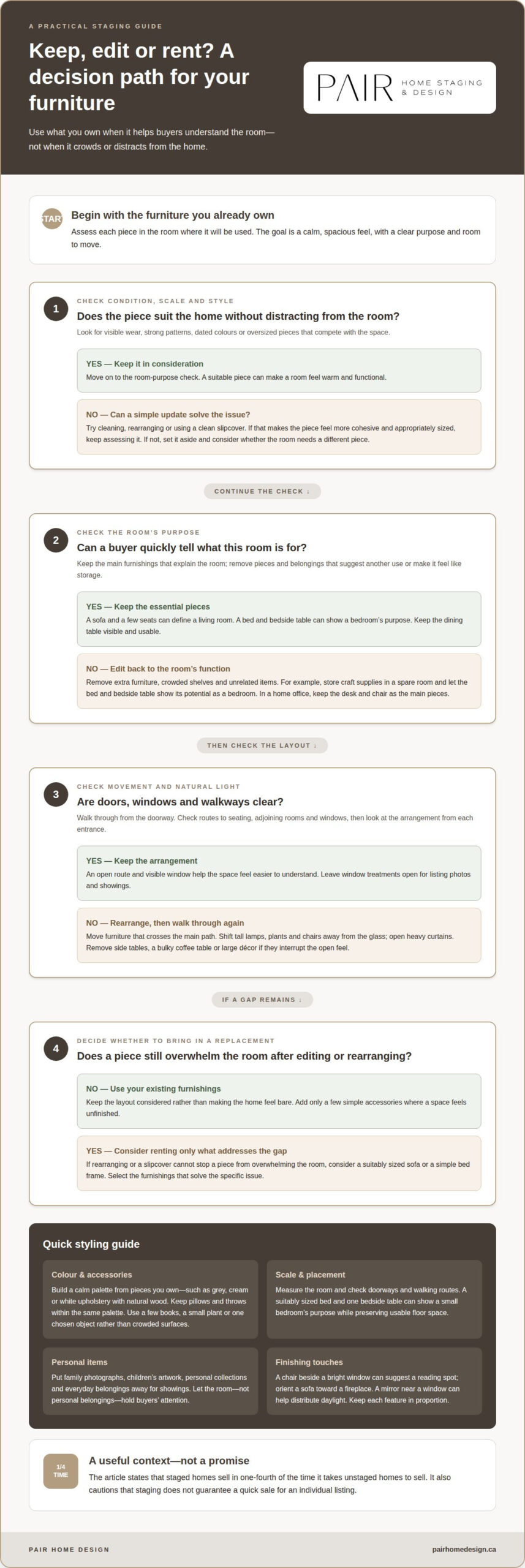
Yes, you can stage with furniture you already own when its condition, scale, and style suit the home. Using your own furniture for staging works best when each piece helps buyers understand the room without crowding it. A worn chair or oversized sectional can distract from the home’s features, even if it’s comfortable for everyday living.
Prioritize the living room and bedroom, where buyers look for familiar, practical uses. Keep a sofa and a few seats in the living area, and make the bedroom read clearly as a place to rest. For listing photos, clear crowded shelves and surfaces, and remove anything that obscures the room’s shape. Put everyday belongings away before showings so the spaces are easy to take in.
Edit according to each room’s function. Remove side tables, a bulky coffee table, or large decor that interrupts the open feel. A storage ottoman can offer seating and hold belongings without adding another cabinet. In a home office, keep the desk and chair as the main pieces; move extra furniture that makes the room seem designed for storage rather than work.
Add height without filling the floor by using one or two vertical elements, such as a tall floor lamp or narrow bookcase. A mirror near a window can help distribute daylight, while a curtain rod mounted closer to the ceiling draws the eye upward. Keep each feature in proportion so it doesn’t dominate the room.
Should you rent staging furniture if yours is outdated or too large? Consider it when rearranging or using a slipcover won’t stop a piece from overwhelming the room. Select only furnishings that address the specific gap, such as a suitably sized sofa or a simple bed frame.
Personal furniture may also show visible wear, strong patterns, or a layout shaped around your daily routines. These details can draw buyers’ attention away from the home or make room dimensions harder to judge. Before photos, look at each space from the doorway and remove anything that competes with its purpose.
3. Using existing furniture when staging a home for sale
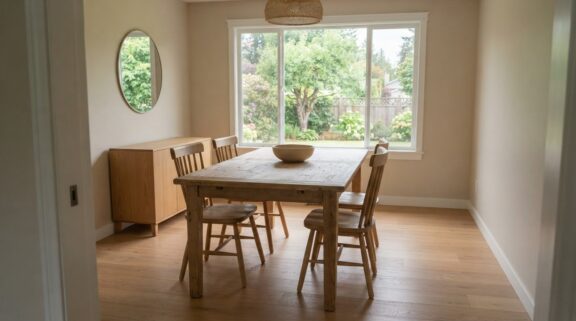
Start with the furniture that supports each room’s purpose, then edit around it. In the living room, position seating to create a clear conversation area. In the dining room, keep the table visible and usable. A few books or one accent on a shelf can add warmth without making the room feel like storage. Aim for a considered layout, not a bare house.
For a more competitive real estate listing, use existing pieces to highlight features that similar homes may also have. Arrange a chair beside a bright window to suggest a reading spot, or orient the sofa toward a fireplace. Add a lamp, artwork, or a small number of pillows where they help the room feel finished. Each item should support the home’s presentation rather than compete with its architecture.
Give each room a clear, familiar function. If a spare bedroom is currently a craft room, store the supplies and use the bed and bedside table to show its potential as a bedroom. Buyers can then picture how the space might work for them. Furnish it enough to show its scale, but keep unrelated items off the floor and shelves.
Allow several weeks to prepare the home for sale, if possible. Use the time to sort belongings, clean furniture, plan layouts, and make simple changes before listing photos. A room-by-room plan can make preparation manageable: identify each room’s purpose, the pieces that support it, and what needs to be stored.
Staging can help a home make a strong first impression, but it doesn’t guarantee a quick sale. Staged homes sell in one-fourth of the time it takes unstaged homes to sell. Treat that claim as context, not a promise about an individual listing. In practical terms, thoughtful staging helps buyers understand a room, notice its useful features, and imagine daily life there—a standard that experienced property agencies like Cornerstone prioritize when preparing listings for prospective buyers.
4. Avoiding blocked windows, doors and walkways
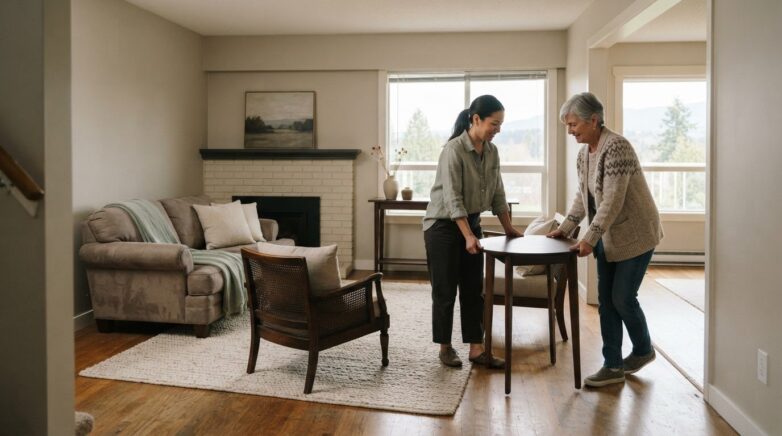
Walk through each room from its doorway before settling on a layout. In the living room, keep a clear route from the entrance to the seating area, adjoining rooms, and windows. A sofa angled across the main path can make the room feel awkward, even if it looks balanced from one viewpoint. Shift it and check the route from each entrance.
Keep windows visible and accessible. Move tall lamps, plants, and chairs away from the glass, and open heavy curtains for listing photos and showings. If the window treatment feels bulky, reduce it to two panels, one on each side, where possible. Frame the window without hiding daylight or crowding the wall.
Check each door’s swing before placing a side table or chair nearby, so it can open fully. Keep paths to key features clear, including a fireplace, built-in shelves, or patio door. In an open-concept space, the back of a sofa can define the living area, but shouldn’t block the route between the kitchen and dining area.
Small adjustments can improve both flow and photos. Move a coffee table closer to the seating group while leaving room to walk around it. If pillows spill onto a walkway, edit the arrangement rather than narrowing the path. For a final check, carry a laundry basket along the main routes; if it catches on furniture, adjust the layout.
Clear circulation helps buyers understand how the home connects, from the front entry to the living room and beyond. For a tailored furniture arrangement that keeps windows, doors, and walkways open, get help planning a clear staging layout.
Pair Home Design: Home Staging
Pair Home Design provides Home Staging to prepare properties for sale with a thoughtful, cohesive presentation. If your home has a mix of useful pieces and furnishings that feel too large, dated, or difficult to arrange, a considered staging plan can help determine what best supports each room.
Home Consults can help clarify how to prepare your existing spaces, while Home Styling can refine the look and feel of rooms. For a listing, Home Staging brings those decisions into a broader presentation plan, so furniture, accessories, and room purpose work together. The right next step depends on how much guidance and staging your home needs.
If you’re preparing a property for sale and would like help deciding how to present it, contact Pair Home Design to book a consultation.
Shape a welcoming first impression
Preparing a home for sale is a chance to see familiar rooms with fresh eyes. The aim isn’t to erase the life you’ve built there; it’s to make room for a new possibility. Ask of each design choice: does this piece help a visitor understand the room, or draw attention away from what makes the home distinctive? This perspective can guide your final decisions without turning preparation into a search for perfection.
Using your own furniture for staging can be a thoughtful starting point, while a professional perspective can help bring the overall presentation into focus. Pair Home Design can help you consider the next steps for your property and create a setting that feels composed, welcoming, and ready to be seen.
To talk through staging support for your home, contact Pair Home Design. A clear plan can help you move towards listing day with greater ease and confidence.
Frequently Asked Questions
Can I Use My Own Furniture For Staging?
Yes. Using your own furniture for staging can work when pieces are clean, sound, and suited to the home’s scale. A coordinated dining set can anchor an eating area, while damaged or markedly mismatched items may distract. Pair Home Design provides Home Staging in Chilliwack and throughout the Fraser Valley and Greater Vancouver, including Abbotsford, Mission, Langley, Surrey, Coquitlam, Burnaby, Maple Ridge, Vancouver, and surrounding communities. Book at least two weeks ahead, especially during busy seasons.
Can you stage a home using your own furniture?
Yes. An occupied home can be staged using its existing furnishings, with selections made to support a cohesive presentation. For example, a dining table might stay in place while duplicate accent chairs are moved elsewhere. A staging plan can also combine your pieces with curated furnishings and accessories, helping the listing feel intentional in photos and in person.
Does using your own furniture affect a home’s sale price or time on market?
Furniture does not determine a home’s sale price or time on the market. Its role is to help buyers understand room size, function, and care through the listing presentation. Sale outcomes also reflect the property’s location and condition, asking price, and buyer demand. Treat furniture choices as one part of preparing a home, not as a measure of its market value.
How much does professional home staging cost in Canada compared with DIY staging?
DIY staging can use furniture you already own, but no DIY cost estimate is provided.