DIY staging mistakes: What to remove before a home showing
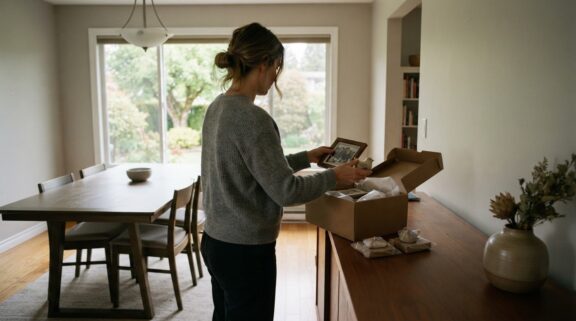
DIY staging can work well when the main tasks are decluttering, cleaning and rearranging the furniture you already own. The DIY staging mistakes to avoid include overcrowding rooms, leaving personal décor on display and styling for your own taste instead of the buyers likely to view the home. Professional support can help when a property is vacant, has an unusual layout or needs a more cohesive presentation.
It’s natural to want your home to feel welcoming while giving buyers room to picture their own lives there. This guide will help you decide whether to stage it yourself, which personal items to put away and how to tailor the presentation to likely buyers. You’ll also learn what to remove, where to focus your effort and how thoughtful furniture placement and lighting can show off a home’s space and flow.
Key Takeaways
- Rearrange furniture to open clear walking routes and help buyers see how each room functions.
- Edit personal décor and bold accents so the home feels welcoming without competing with its features.
- Layer natural and artificial light to make rooms feel brighter and present well in photos and showings.
- Consider the lifestyle of likely buyers when choosing which spaces and details to emphasize.
1. What Home Staging Mistakes Should I Avoid?
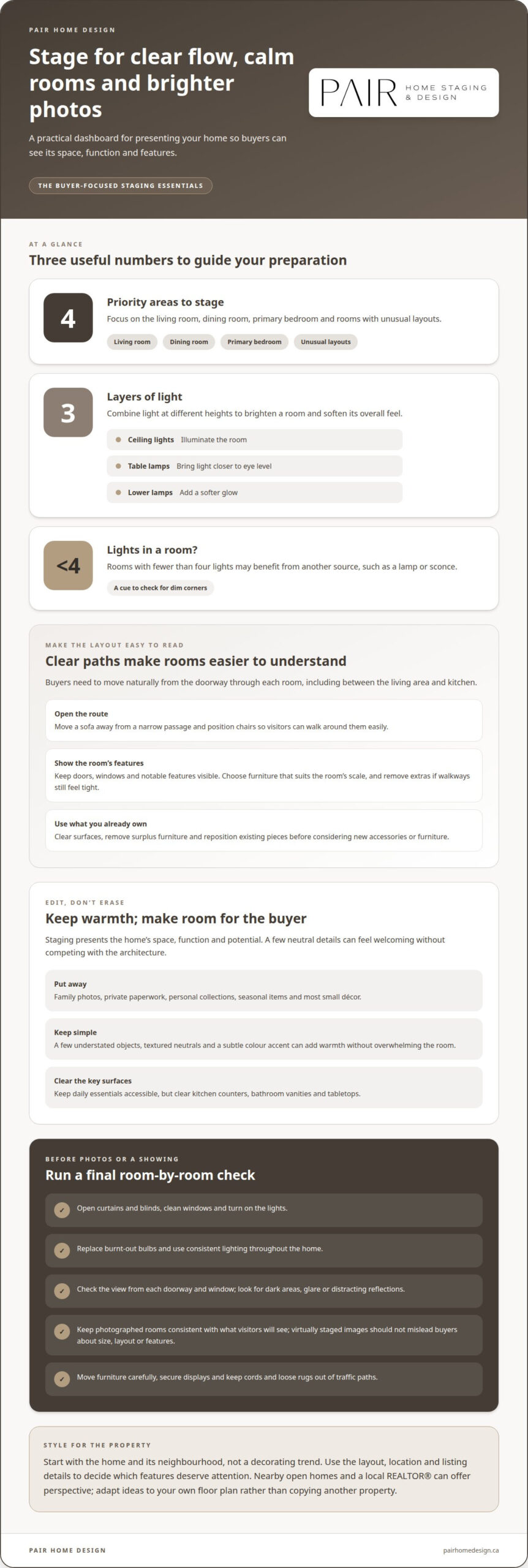
One of the DIY staging mistakes to avoid is arranging furniture without considering how visitors will move through the home. Buyers need clear paths from the doorway through each room, including between the living area and kitchen. Move a sofa away from a narrow passage, and position chairs so visitors can walk around them easily. Keep doors, windows and notable features visible.
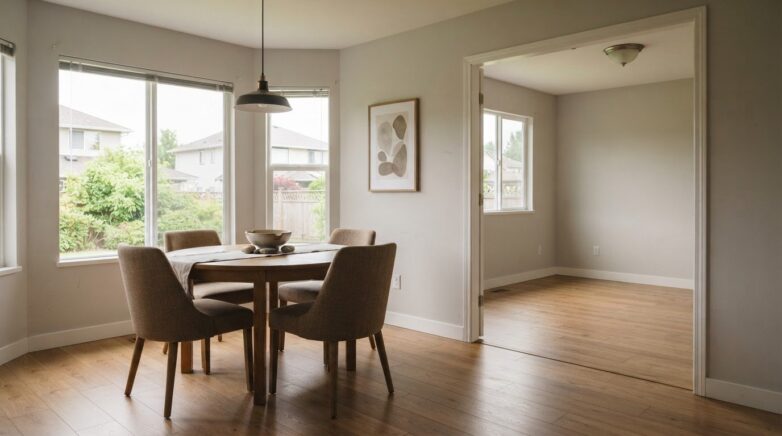
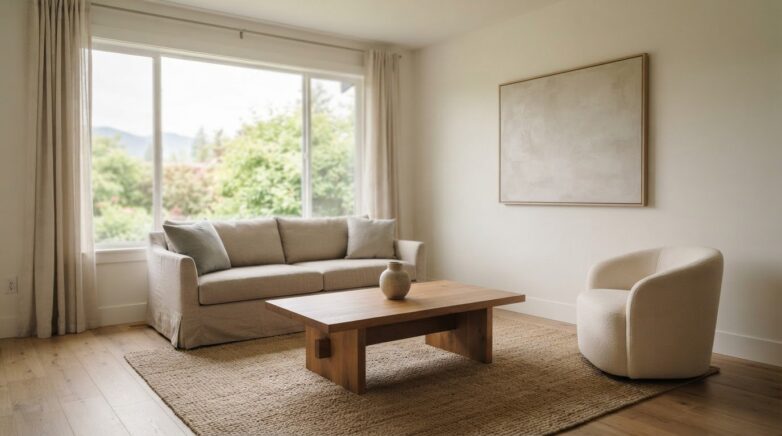
Oversized furniture can make a living room feel smaller and obscure how its layout works. Choose pieces that suit the room’s scale, and remove extras if walkways still feel tight. In a vacant home, a few appropriately sized pieces can show a room’s purpose without filling every corner. Prioritize the living room, dining room, primary bedroom and rooms with unusual layouts.
For Canadian listing photos, accuracy is the practical standard: a virtually staged image should not mislead buyers about a room’s size, layout or features. Keep the photographed space consistent with what visitors will see, and follow the instructions for your listing and photography process. Homeowners managing their own listings can also look to direct sales platforms like sellingmyplace.com.au to see how residential spaces are photographed and marketed directly to buyers.
To stage a small home or condo on a budget, start by editing what you already own. Remove surplus furniture, clear surfaces and reposition a chair or table to open up the route through the room. More accessories won’t fix a cramped layout; selectively using existing pieces can make the available space easier to understand.
DIY staging can cause damage or create hazards if you drag heavy furniture across floors, stack unstable items, or block exits and walkways. Lift and move pieces carefully, secure displays, and keep cords and loose rugs out of traffic paths. If an arrangement feels awkward to walk through, change it before showings.
2. Removing or simplifying personal décor
For a sale, aim for a warm room that still lets buyers notice its features. Put away family photos, personal collections and crowded shelf displays. A mantel crowded with keepsakes can distract from a fireplace; a few simple objects can highlight its shape instead. Decluttering isn’t about erasing every sign of life. It’s about making the home easier for someone else to picture as their own.
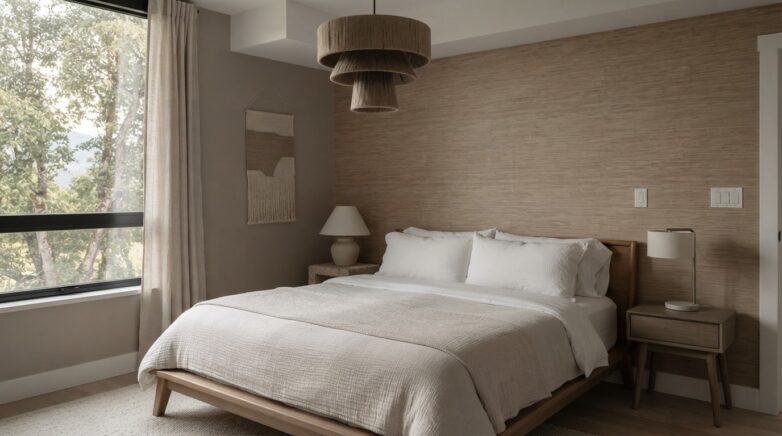
Use neutral colours and coordinated accents to create a calm impression. For example, replace vivid throw pillows with textured neutrals, then add a subtle touch of colour with a blanket or rug. Choose artwork that complements the room rather than dominating it. A consistent palette across adjoining rooms helps the home feel connected, while varied textures keep it from looking flat.
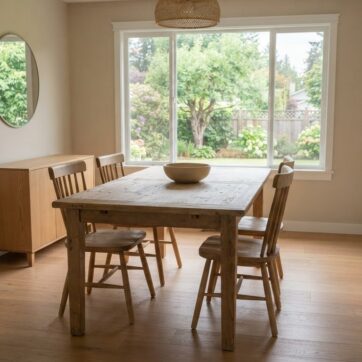
Staging your home differs from decorating for personal enjoyment. Decorating expresses your taste; staging presents the space, function and potential to a broad audience. Skip elaborate table settings, clusters of small accessories and themes that compete with the architecture. One vase on a dining table can suggest everyday use; several decorative arrangements may make the room feel busy.
To avoid overspending, first remove excess décor and rearrange what you already own. Before buying furniture or accessories, identify a specific gap, such as a bare dining table or a room that feels impersonal. For decluttering, pack away seasonal items, papers, family photos and most small décor. Keep daily essentials accessible, but clear kitchen counters, bathroom vanities and tabletops.
Neutral doesn’t mean empty. A textured cushion, a folded throw and a single piece of understated art can add warmth without overwhelming the room. If choosing what to keep feels difficult, a thoughtful home staging approach can help balance personal character with a buyer-focused presentation.
3. Should I remove all personal items before showing my home?
No. Edit rather than erase every sign of daily life: put away family photos, private paperwork and large personal collections, while keeping a few simple, neutral details. A clear bedside table or neatly arranged dining surface helps buyers focus on the room, not its current occupants.
Lighting shapes the impression both in person and in listing photos. Open curtains and blinds, clean the windows, and turn on the lights before photography or a showing. On a darker Canadian winter afternoon, natural light may be limited, so use it alongside lamps and ceiling fixtures. Replace burnt-out bulbs and use consistent lighting throughout the home.
Build layers at different heights: ceiling lights illuminate the room, table lamps bring light closer to eye level, and lower lamps add a softer glow. For example, pair a ceiling fixture with a table lamp beside the sofa. Rooms with fewer than four lights may benefit from another source, such as a lamp or sconce.
A neutral paint palette can make rooms feel calmer and bring their features forward. Consider repainting a boldly coloured wall in a more subdued shade, especially if it dominates the listing photos. Coordinated colours help rooms feel connected; thoughtful lighting then shows them clearly instead of leaving corners in shadow.
Before the photographer arrives, check the view from each doorway and window. A staged room should look bright from multiple angles, not only from the spot beside a lamp. Turn on each light, open the window coverings and review the photos for dark areas, glare or distracting reflections. These small adjustments help buyers see the room’s space and purpose.
4. Researching likely buyers and styling for them
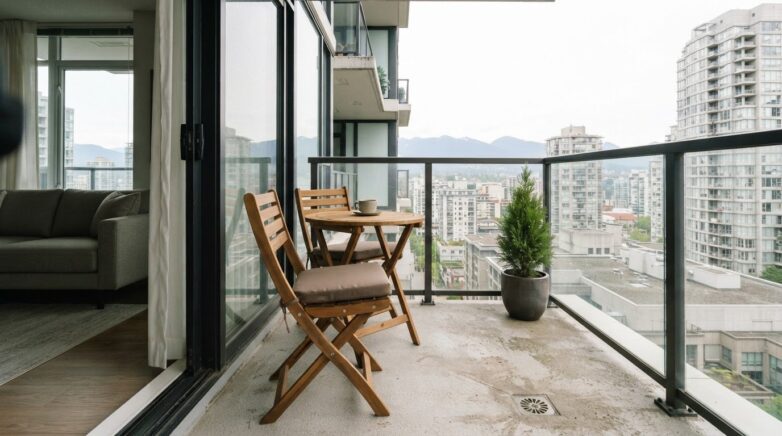
Start with the property and its neighbourhood, not a decorating trend. A compact condo near transit may appeal to buyers seeking a low-maintenance home, while a detached house may attract people looking for flexible family spaces. These are possibilities, not assumptions. Use the home’s layout, location and listing details to decide which features deserve attention.
Visit nearby open homes to see how comparable properties present their rooms and storage. A local REALTOR® can also offer an objective perspective on likely buyers and presentation priorities, while reviewing property presentations from experienced real estate agencies like eliteagents.net.au can help you see how professionals market homes to appeal to target buyers. Use those observations to guide your choices, not to copy another home’s style: your staged dining area should suit your floor plan, not crowd it to resemble a larger property.
Then walk through the home as a potential buyer. Does the entry lead naturally into the living area? Can someone see where a desk might fit or how a spare room could function? Clear clutter from closets and cabinets so storage is easy to assess. In the bathroom, keep the counter simple and make the room feel clean and usable.
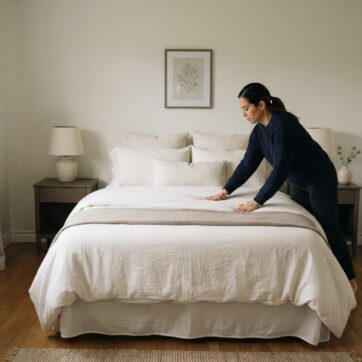
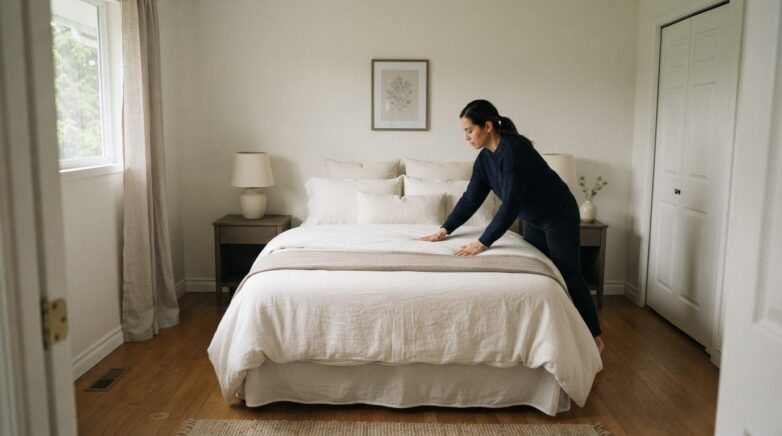
Suggest a plausible lifestyle without making the home feel designed for only one kind of buyer. A small desk can indicate a work area; a neatly made bed and clear floor can help visitors picture themselves living there. Keep children’s rooms tidy and adaptable, and let the room’s size and natural features remain the focus. The aim is to show how the home functions, not dictate how buyers should live.
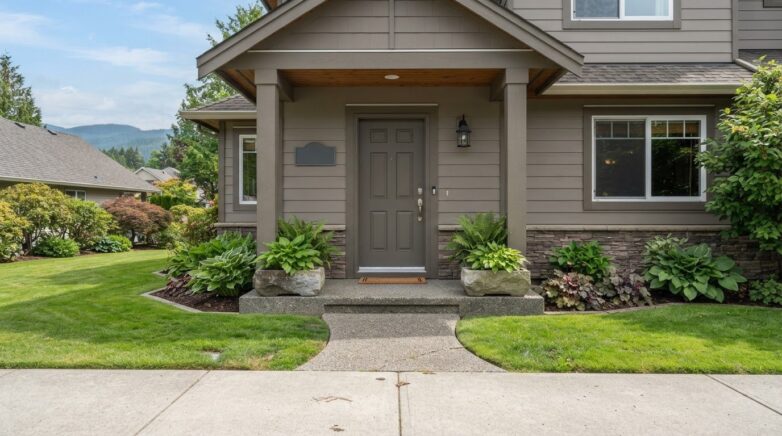
Should you stage differently by season or region in Canada? Yes. Adapt the presentation to local conditions and the season. Clear leaves or snow from the entry, keep walkways tidy, and make outdoor spaces feel usable in the weather shown in listing photos.
If you want a cohesive plan tailored to your property and its likely audience, explore a tailored home styling plan.
Pair Home Design: Home Staging
Pair Home Design provides Home Staging to present your property with thoughtful furniture placement and a cohesive feel. It can be especially helpful when a home is vacant, has an unusual layout or needs a coordinated look for listing photos and showings.
If you’re preparing the home yourself but want direction, Home Consults can help clarify which spaces and details deserve attention. Home Styling can also refine an occupied home’s presentation, balancing its existing character with the needs of likely buyers.
Choose the level of support that suits your property and the work ahead. For guidance preparing your home for buyers, contact Pair Home Design.
Prepare a home that feels ready for its next chapter
Before your next showing, take one final walk through your home as a visitor might. Notice whether each room feels easy to enter, understand and move through, rather than judging it by whether every detail looks perfect. A considered presentation can still feel warm and lived-in; the aim is to make room for buyers to imagine their own routines.
Keep the DIY staging mistakes to avoid in mind as you make last adjustments, but don’t let the checklist become the whole experience. Your home has its own character, and thoughtful preparation can help that character come through clearly. If you’d like a design-minded perspective on getting ready for buyers, contact Pair Home Design for staging help.
Take the next step at a pace that feels right. A calm, intentional approach can help your home welcome its next chapter.
Frequently Asked Questions
Can I stage my home myself, or should I hire a professional?
You can handle straightforward preparation yourself, especially if your rooms are furnished and the layout is easy to read. Professional support may help with a vacant property, an unusual floor plan or a listing that needs a more cohesive presentation. Pair Home Design offers Home Staging and Home Consults. For staging, book at least two weeks in advance, especially during busy seasons. Service covers Chilliwack and throughout the Fraser Valley and Greater Vancouver, including Abbotsford, Mission, Langley, Surrey, Coquitlam, Burnaby, Maple Ridge, Vancouver, and surrounding communities, as well as Hope.
Should I remove all personal items before showing my home?
No. Keep a few items that add warmth without making a room feel specific to your household. For example, a simple ceramic bowl or neutral landscape print can soften a console table. Put away valuables, private documents and items that invite close inspection, such as collections displayed across a whole shelf. The goal is a welcoming impression that feels easy for a visitor to enter.
What Home Staging Mistakes Should I Avoid?
Avoid making decorative changes before deciding what the property needs to communicate. If a room’s best feature is a built-in bookcase, don’t cover it with oversized accessories or busy displays. Avoid copying an online look without considering your home’s proportions and existing finishes. First identify the feature each room should emphasize, then remove anything that distracts from it.
Why Does DIY Sometimes Go Wrong?
DIY staging can lose direction when you style each room separately without a shared plan for the home. A dramatic living room beside a sparse dining area may make the listing feel inconsistent. Personal attachment can also make it difficult to notice what dominates a space. Review the home as one sequence, from the entry to the main rooms, to spot places where the presentation feels disconnected.
What are the most common DIY home staging mistakes to avoid?
Common missteps include buying décor before deciding what to keep, choosing pieces that compete with the home and overlooking visible wear. A new centrepiece, for instance, won’t distract from a scuffed wall or a loose cabinet handle. Start by identifying each room’s strongest features and distractions. Focus on those priorities before adding decorative touches.
What home staging mistakes make rooms look smaller or cluttered?
Rooms can feel cramped when too many small objects break up surfaces or large wall art overwhelms a compact space. A cluster of framed photos, desk organizers and souvenirs can crowd a tabletop. Group a few related objects together and leave some of the surface clear. This creates visual breathing room and makes the room’s dimensions easier to read.