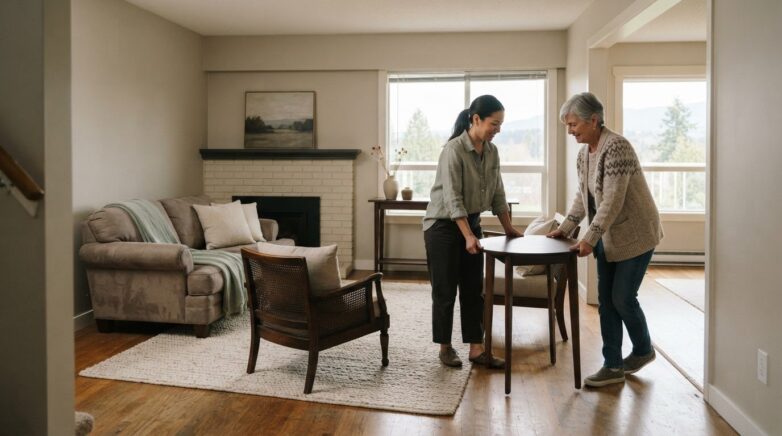
Staging a home with pets: Clean, clear and protect your rooms
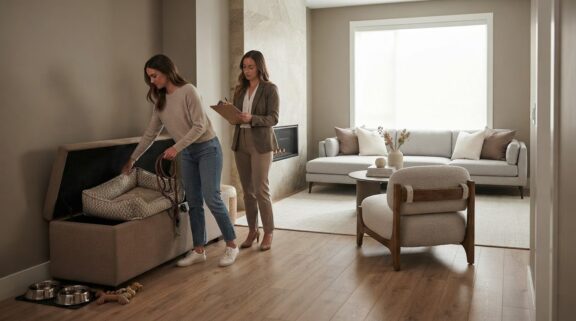
A clean, inviting showing is possible without pretending pets were never part of the home. Staging a home with pets means addressing odours and allergens at their source, putting bowls, toys, bedding and litter out of sight, arranging for pets to be elsewhere during photography and showings, and shielding staged furniture and décor from claws, fur and curious noses.
It’s understandable to want your home to feel welcoming to buyers while keeping daily life manageable for your pets. The aim isn’t to erase every sign of an animal; it’s to help buyers notice the rooms, light and flow first, rather than odours, loose hair or supplies. A practical plan can cover deep cleaning carpets, upholstery and surfaces, organizing pet items, coordinating pet-free appointments and protecting selected furnishings. Don’t overlook the entry and yard: they should feel as considered as the rooms inside.
Key Takeaways
- Address lingering smells where they start, and include carpets, upholstery, vents and overlooked surfaces in the cleaning plan.
- Use a stager’s eye to keep everyday pet gear out of listing photos while preserving useful storage and room flow.
- Coordinate pet arrangements around photography and showings to create a calmer visit for animals and buyers.
- Choose which staged pieces need protection or removal so furnishings and décor stay polished while you’re still living at home.
Professional deep cleaning of carpets, upholstery and surfaces to address odours and allergens
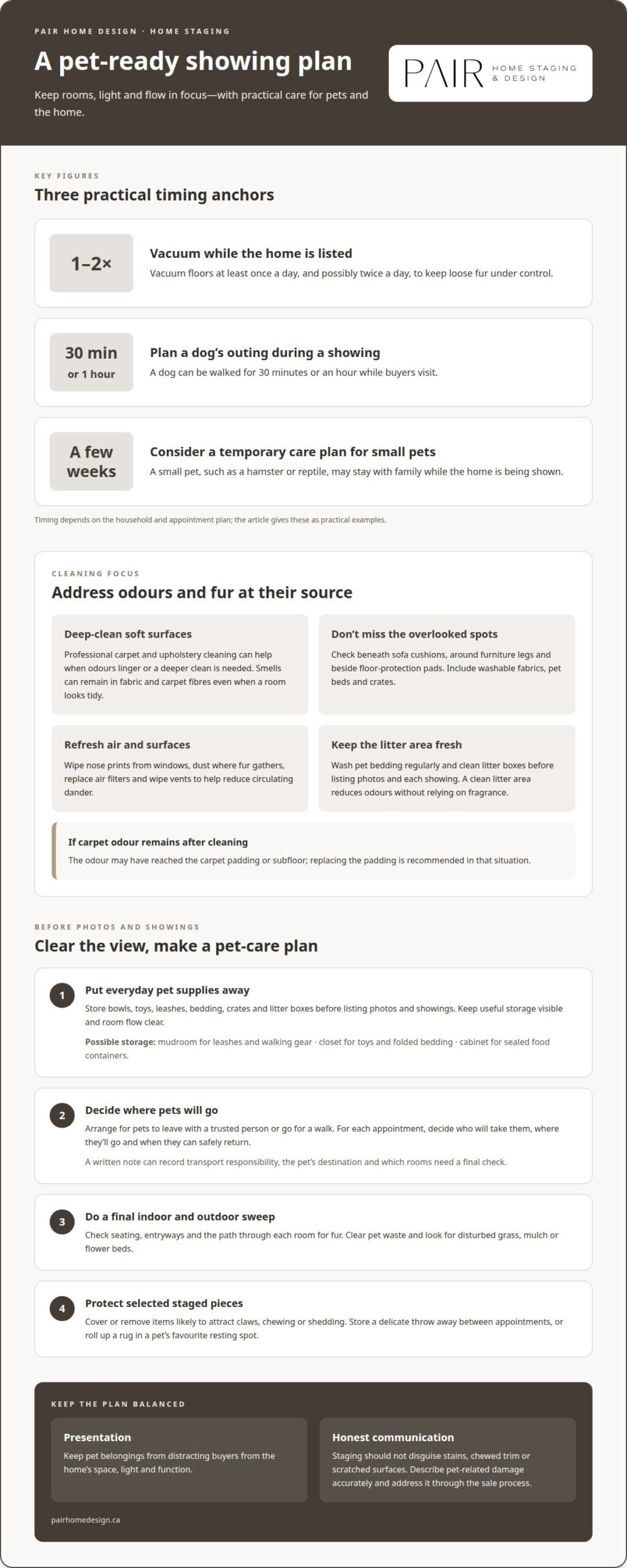
When staging a home with pets, cleaning odours at their source matters more than covering them with candles or air fresheners. DIY cleaning can help with fresh, accessible messes, but professional carpet and upholstery cleaning is useful when odours linger or the home needs a deeper clean. Smells can remain in fabrics and carpet fibres even when a room looks tidy.
Professional cleaners can vacuum pet hair from floors and upholstery, treat visible stains and clean affected materials. They can also address overlooked spots, including beneath sofa cushions, around furniture legs and beside floor-protection pads. Add washable fabrics, pet beds and crates to the cleaning plan. Wipe nose prints from windows and dust surfaces where fur gathers. Replacing air filters and wiping vents can help reduce circulating dander.
Keep up with loose fur while the home is listed: vacuum floors at least once a day, and possibly twice a day. Wash pet bedding regularly and clean litter boxes before listing photos and each showing. A clean litter area reduces odours without relying on fragrance. If smells remain after carpets are cleaned, the odour may have reached the carpet padding or subfloor; replacing the padding is recommended in that situation.
Give the backyard the same attention as the interior. Clear pet waste so buyers can walk through comfortably, and refresh grass, mulch or flower beds disturbed by digging. Tile, hardwood and vinyl are easy-to-clean flooring options that can suit homes with pets. If replacing flooring isn’t practical, professional cleaning and careful presentation can help existing floors look cared for. These steps prepare indoor and outdoor spaces without masking pet smells or leaving hair and stains for buyers to notice.
Getting professional staging advice on putting away pet supplies for listing photos and showings
A professional stager can assess each room and suggest where pet supplies can go without interrupting the home’s storage story. Before listing photos and showings, bowls, toys, leashes, bedding, crates and litter boxes are typically put away. The goal isn’t to hide the pets themselves; it’s to keep their belongings from distracting buyers from the room’s space, light and function.
Choose storage that suits each item and the home. A mudroom may work for leashes and walking gear, a closet for toys and folded bedding, and a cabinet for sealed food containers. These choices keep counters and entryways clear while showing buyers useful storage. If a crate needs to stay, clean it and cover it with neutral fabric, or move it to the garage during appointments.
Food and water can be handled thoughtfully. A kitchen feeding station can look orderly when dishes are arranged neatly, but bowls can be put away for photos and showings when practical. A plan that considers the room’s layout and household routine gives everyday supplies a designated place instead of shifting them from surface to surface.
For cats, keep the litter box clean and out of the main sightlines. If it can’t be removed, a remote area such as the garage may work, provided the cat can still access it. A stager can also identify storage buyers will notice, then help present a closet, cabinet or mudroom as a functional place for pet essentials. A considered home staging plan from Pair Home Design can bring that balance to listing photos and showings.
Planning with a professional stager to have pets out during photography and showings
Plan photography and showings around a clear pet-care arrangement. A stager can coordinate room access and presentation, while the seller arranges for animals to leave with a trusted person or attend a walk. Dogs can be walked for 30 minutes or an hour during a showing. A small pet, such as a hamster or reptile, may stay with family for a few weeks while the home is being shown.
Having pets out of the home during appointments helps buyers focus on its rooms and features. Animals may distract visitors with barking or accidents, and an open door can create concern. Their absence can also make visits calmer for the pets. Experienced real estate professionals like The Kombrink Team note that having clear showing protocols ensures prospective buyers stay focused entirely on the property. For each appointment, decide who will take them, where they’ll go and when they can safely return.
Before a showing, do a final sweep for fur, checking seating, entryways and the path through each room. Give the yard a quick inspection too: clear pet waste and look for freshly disturbed grass, mulch or flower beds. On photography day, keep animals away from the areas being photographed and make sure their care plan doesn’t interrupt access.
In Canada, include pet access and care in the showing plan with the listing representative. If the home has pet-related damage, describe it accurately and address it through the sale process. Staging should not disguise stains, chewed trim or scratched surfaces. A tidy presentation and honest communication serve different purposes, and both matter.
Keep the routine practical for repeat appointments. A written note can identify where the pet will go, who is responsible for transport and which rooms need a final check. For cats, include cleaning the litter area in the departure routine; for dogs, confirm the yard is clear before visitors arrive. These details help arrange pet-free viewings without leaving an animal unattended or disrupting the home’s presentation.
4. Protecting staging furniture and décor from pets
Staged furniture, rugs and decorative pieces need protection while pets remain at home. A professional stager can identify items likely to attract claws, chewing or shedding, then recommend covering or removing them between appointments. A delicate throw on a sofa, for example, can be stored away, while a rug in a pet’s favourite resting spot can be rolled up. Protecting selected pieces helps preserve the composed look buyers see in photos and in person.
Room flow matters too. Removing excess furniture can open walking paths and reduce the number of pieces pets can brush against or bump. A stager can arrange the remaining furnishings to keep fragile décor out of reach. Neutral shades such as soft white, greige and muted blue create a calm backdrop, while uncluttered surfaces make fur and wear easier to spot before a showing.
Pet-friendly décor can still feel polished. A durable, easy-to-clean accent piece may suit a living room better than a fragile object within reach. Keep pet-themed details subtle: one neatly placed basket can feel considered, while scattered toys or several animal-patterned accessories can draw attention away from the room. The goal is a welcoming space, not one dominated by pet items.
During the listing period, a stager can tailor the protection plan to the home’s layout and the pets’ habits. If a cat scratches one sofa corner, cover or move that furniture; if a dog noses a low table, relocate delicate décor. Cover or remove vulnerable staging pieces while pets are home, then restore the intended arrangement for photography and showings.
For a considered room-by-room approach, plan furniture and décor for showings with professional staging support.
Pair Home Design: Home Staging
Pair Home Design can shape a Home Staging plan around your property, its furnishings and the realities of living with pets. This can include arranging rooms for clear flow, selecting suitable pieces from its curated inventory and planning how to protect them between showings.
A Home Consult can provide focused guidance on preparing your existing rooms, while Home Styling can refine the look and feel of everyday spaces. For a coordinated presentation before selling, Home Staging is a natural next step, with thoughtful choices that help buyers focus on the home rather than pet-related distractions.
To discuss preparing your home for sale, contact Pair Home Design.
Make the next step feel manageable
Preparing a property for sale doesn’t mean daily life has to stop. Shape the presentation plan around how you and your pets use the home, so rooms feel composed without making your routine harder than necessary. That balance is at the heart of staging a home with pets: thoughtful choices support the property’s appeal while respecting the life unfolding inside it.
With a clear plan, you can move from uncertainty about what to change toward a space that feels considered and ready for buyers. Pair Home Design can help you decide how to present the home in a way that suits its character and your selling goals.
Contact Pair Home Design for staging help, and take the next step toward a welcoming presentation.
Frequently Asked Questions
How does a professional stage a home for sale when the owners have pets?
A professional stager plans the presentation around the property, its existing furnishings and the pets’ routines. A living room used for family time, for example, may need a different furniture arrangement than a rarely used formal space. The aim is to help buyers understand each room’s purpose while keeping the home practical for its owners. A staged home can still feel warm and lived-in, never rigid.
How do professional cleaners remove pet odours from a home before showings?
Professional cleaners identify affected materials and use methods suited to carpets, upholstery or washable fabrics. A smell concentrated near a pet’s usual resting place may call for attention to that area and nearby soft furnishings, rather than fragrance throughout the home. If odour persists after surface cleaning, the carpet padding may also need attention. Air fresheners can mask smells instead of addressing their source.
Should pets be removed from the home during open houses and showings?
Yes. Arranging for pets to be out during visits helps buyers view the home without animal-related distractions and can make the visit calmer for the pets. Coordinate where the animal will go and when it can return with the appointment schedule, including open houses where visitors arrive over a longer period. For a small pet that cannot travel easily, a temporary stay with a trusted family member can be practical.
How does a professional stager help protect floors and furniture from pets while staging a home?
A professional stager considers how pets use each room, then recommends which vulnerable furnishings, rugs or decorative pieces to cover or remove while the household remains in the home. A rug beneath a favourite resting spot, for example, can be stored between appointments. The plan should preserve clear paths through rooms and keep existing damage visible for appropriate disclosure, rather than concealing it with décor.