Home staging services and prices for BC estate sales
For home staging for estate sales in BC, timing depends on the property’s condition, the staging scope and how much furniture and decor the space needs. A home that’s ready for photos may need a different plan from one where belongings still need sorting. The key is to align staging with the listing schedule.
Preparing an estate home for sale involves practical decisions that can also feel personal. A thoughtful staging plan creates clear, welcoming rooms while respecting the home and its contents. This article explains how staging works, what affects timing and scope, how to prepare for listing photos, and how furniture and decor shape the presentation. You’ll also learn when a consultation, styling or full staging may be the right fit.
Key Takeaways
- A clear plan for decluttering, cleaning and curb appeal can help a home feel more inviting before it reaches the market.
- Learn how a professional stager coordinates the property’s preparation with listing photos and the sale timeline.
- Understand which project details shape staging package costs, without relying on a one-size-fits-all price.
- See how thoughtfully chosen furniture, art and decor can define a room’s purpose and create a welcoming impression.
What is home staging and why is it important?
Home staging prepares a property for buyers by improving its flow, presentation and sense of possibility. For an estate, it also involves thoughtful decisions about belongings and the home’s existing furnishings.
Decluttering, Cleaning and Curb Appeal
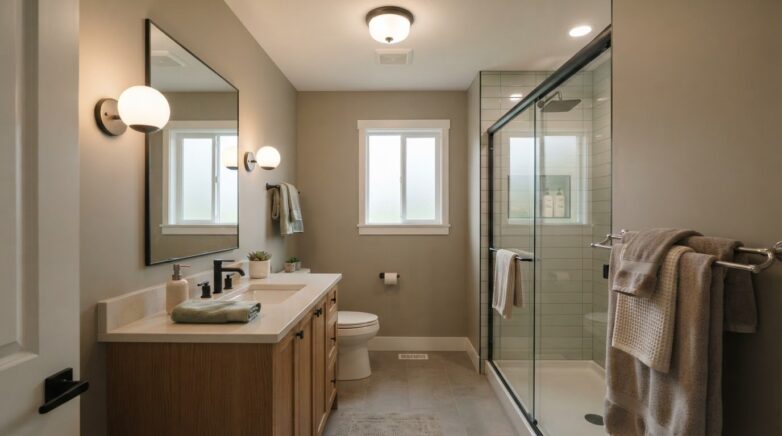
A stager assesses each room, entryway and exterior, then identifies what distracts from the home’s features. Recommendations may include clearing crowded surfaces, cleaning windows, airing rooms and tidying the front entrance. A swept porch, clear walkway and uncluttered foyer make a welcoming first impression before buyers reach the living areas.
Staging can also involve tying back curtains to welcome natural light and choosing a focal point, such as a fireplace or large window. Clear sightlines help buyers and photographers understand how each space works.
Removing Belongings and Choosing Neutral Décor
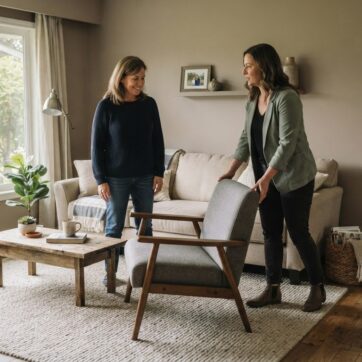
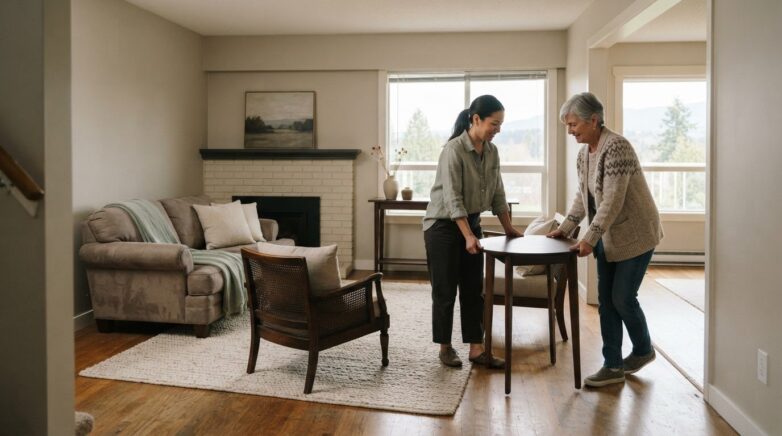
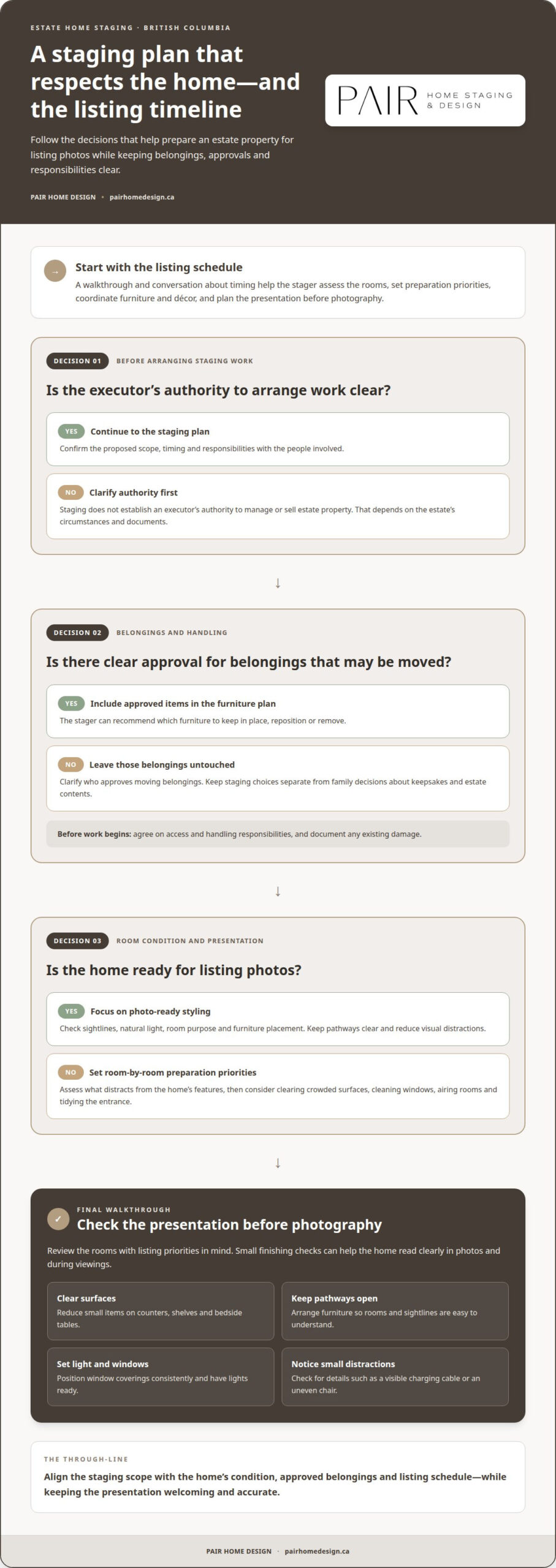
For an estate property, a stager can work with the executor or family to distinguish personal belongings from items that support the presentation. They can recommend which furniture to keep in place, reposition or remove, while leaving decisions about keepsakes and estate contents to the family. A room-by-room plan helps keep staging choices separate from decisions about ownership.
Neutral decor, such as simple bedding, restrained artwork and coordinated cushions, gives rooms a cohesive look. It softens a strongly personal style without making the home feel empty.
Professional and DIY Staging
DIY staging can make use of furnishings already in the home. A professional stager brings an experienced eye for room function, scale and how spaces will look in photos. This can be especially useful in an estate home where mismatched furniture or personal belongings make a room’s purpose harder to see.
Staging may be worthwhile when it helps buyers understand a property’s layout and potential. Before proceeding, clarify the proposed scope, furniture plan, timing and fees so the executor can judge whether the work suits the home’s needs.
Preparing and Staging the Home
The process typically starts with a walkthrough and a discussion of the listing schedule. The stager assesses the rooms, sets preparation priorities, coordinates furniture and decor, then arranges the presentation before photography. Executors should clarify who approves moving belongings and document any existing damage before work begins.
Staging does not establish an executor’s authority to manage or sell estate property. That depends on the estate’s circumstances and documents, so clarify authority before arranging work. To address damage or liability concerns, agree on access and handling responsibilities, and record existing damage before staging begins. For a property in Chilliwack, Abbotsford, Hope, Mission, Langley, Maple Ridge, Coquitlam, Surrey, Burnaby or Vancouver, choose a staging scope and process suited to the home.
How professional staging prepares a home for listing and photography
Before a listing goes live, a professional stager considers how each room will appear in photos and during viewings, including sightlines, natural light, room purpose and the listing schedule. For an estate property, coordination matters: belongings approved to remain can stay, while personal details and visual distractions are reduced. The presentation should feel inviting and reflect the home accurately.
Preparation is more than tidying. A stager may recommend organizing closets and cupboards, wiping shelves and airing enclosed spaces. Family photos and notes on the refrigerator can be put away so buyers can picture themselves in the home. Clean windows and open curtains welcome natural light. Arranging each room around a focal point, such as a fireplace, window or distinctive piece of furniture, makes its purpose easier to see.
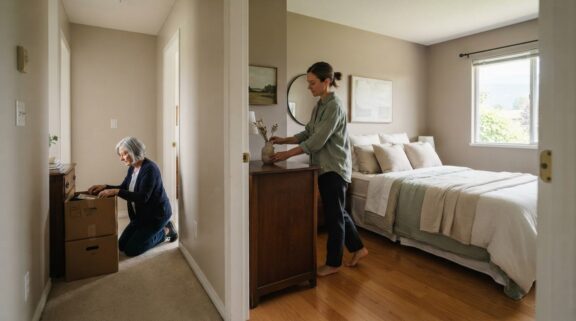
Photo-ready styling considers what the camera captures from the doorway and across the room. A stager adjusts furniture to keep pathways clear, balances accessories and removes small items crowding counters or bedside tables. In a bedroom, a simply dressed bed and clear nightstands make the layout easier to read. These finishing touches show scale, function and atmosphere without making the home feel impersonal.
Online listing photos are often a buyer’s first view of a property, so the stager prepares the rooms as a connected sequence. A consistent palette and considered furniture placement help the living room, dining area and kitchen feel cohesive. The stager can also note details that should remain visible, such as built-in storage or a distinctive architectural feature. For a property that needs a coordinated visual finish, a photo-ready styling plan can help bring the presentation together.
Before photography, the stager completes a final walkthrough with the listing priorities in mind. They check that surfaces are clear, cushions are arranged, lights are ready and window coverings are positioned consistently. This review catches small distractions, such as a visible charging cable or an uneven chair, before they show up in listing photos.
Staging consultation and package prices
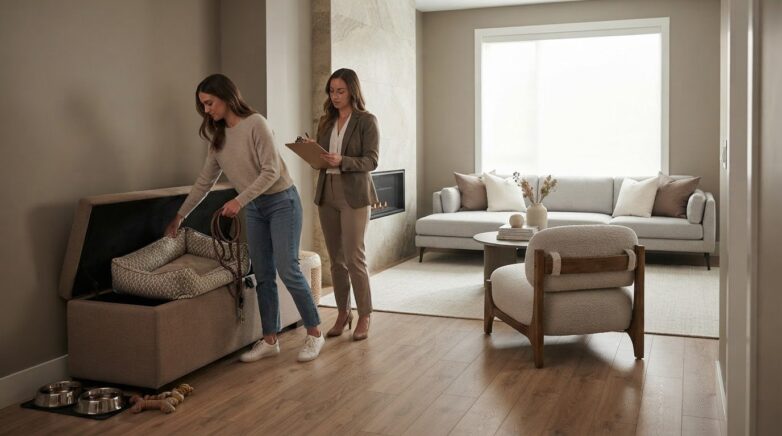
A consultation turns listing goals into a defined staging scope. The stager reviews the home’s condition, existing furniture, rooms needing attention and photography schedule. For an estate, the executor can identify belongings that must remain untouched. These details shape a practical plan suited to the property. A consultation for home staging for estate sales in BC can also clarify how staging fits the listing timeline.
An on-site visit lets the stager assess room dimensions, natural light, access and furniture in person. The walkthrough may reveal a crowded living room, an empty dining area or a bedroom that needs a clearer purpose. A written scope can outline recommended rooms, furnishings, decor and preparation tasks, giving the executor a practical basis for planning.
Remote e-consultations can review a property through photographs, a floor plan or a video walkthrough. For out-of-town properties or distant executors managing a local estate, this format can help assess layout and styling priorities when an in-person visit isn’t practical. Clear images of each room, entry and exterior help Pair Home Design make useful recommendations, though they can’t show every detail a site visit reveals.
A home staging consultation focuses on preparing a property for real estate marketing, such as identifying rooms that need furniture or a clearer layout. A styling consultation may focus on improving the look and feel of existing furnishings and decor. A furnished home may need selective editing, while vacant rooms may call for a broader staging plan.
The cost of home staging for estate sales in BC depends on the property, scope, furnishings and location, and is provided after a quote request. Package costs can vary with the number of rooms, whether the home is vacant or occupied, furnishings required and preparation involved. A useful quote separates the consultation from staging services, clarifies the rooms covered and describes the package’s scope, helping estate representatives assess it against listing priorities.
Furniture, art and decor for staging
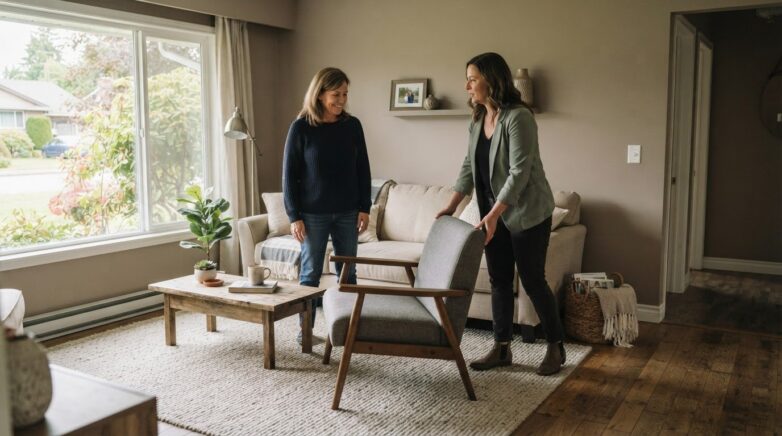
Furniture gives buyers a sense of scale and shows how each room can function. In a vacant home, a sofa, coffee table and pair of chairs can define a living area without filling every corner. In a furnished property, a stager may reposition existing pieces to open pathways, reveal windows and show the room’s proportions. The aim is to make the space feel open while keeping the home believable.
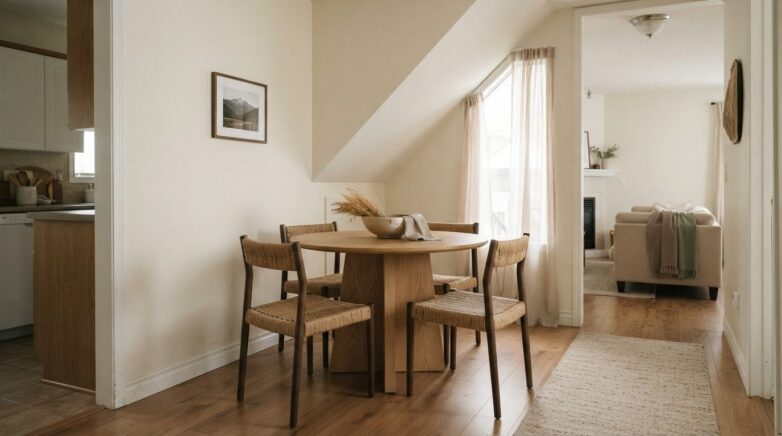
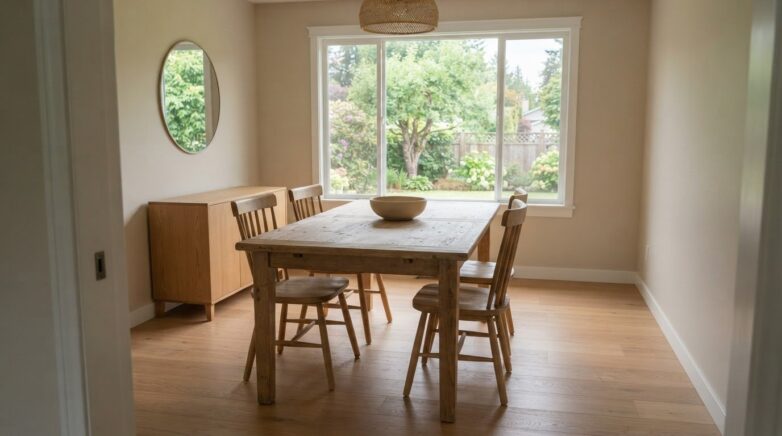
Artwork and decor add warmth and visual balance. A large, simple artwork above a sofa can anchor the seating area, while a bowl or a few books can make a dining table feel intentional. A restrained palette helps rooms connect, especially when buyers move from the living room to the kitchen. Accessories should complement the property, not compete with its architectural details or views.
How do estate sale companies in BC handle staging, furniture and household contents? Their role may focus on sorting and selling household items, while a stager plans the property’s presentation for listing. The executor can identify belongings to retain, sell or leave in place, then coordinate those decisions with the staging plan.
That distinction matters in an estate home. A dining set may be part of the household contents, but it could also show the dining room’s purpose in listing photos. Before items are moved or offered for sale, the executor and relevant professionals should agree on what remains for staging, what is being sold and when rooms need to be clear. A room-by-room inventory helps keep decisions organized.
For a vacant property, the furniture plan can focus on key rooms and pieces suited to their size. In an occupied home, editing and rearranging may make better use of the furnishings already there. The stager considers scale, colour, circulation and camera angles, then selects art and decor to create a cohesive finish.
For a considered furniture and decor plan, explore staging for your property.
Pair Home Design: Home Staging
Pair Home Design helps prepare estate properties for sale with a considered staging plan. When furnishings, layout or presentation need attention before listing, professional staging brings rooms into focus while keeping them welcoming and true to the property.
A Home Consult can clarify which areas need the most attention and how existing furniture may fit the plan. For a furnished home that needs a lighter touch, Home Styling can refine its look. A listing that calls for a broader transformation may benefit from Home Staging. The right approach depends on the home’s condition, contents and sale priorities.
For realtors, The Agent’s Edge offers another way to support property presentation. Each project starts with the home and its goals, giving executors and representatives a practical next step as they prepare an estate sale. Contact Pair Home Design to discuss staging for your property.
Move forward with a clear plan
Preparing an estate property involves practical decisions alongside family memories. Start by deciding who will guide the home’s presentation and how the work fits the sale timeline. For home staging for estate sales in BC, a shared plan can help executors, family members and realtors stay aligned on the property’s priorities.
Before work begins, identify who will approve changes and which belongings must remain undisturbed. This gives the staging conversation a clear starting point and keeps decisions focused on the property. Pair Home Design helps prepare homes with a thoughtful presentation shaped around the space and its sale goals.
When you’re ready to discuss the property and its next steps, contact Pair Home Design. A calm, considered start can make the path to listing feel more manageable.
Frequently Asked Questions
How long does the staging process take?
The timeline depends on the home’s condition, the staging scope and how quickly estate decisions are settled. A vacant condo needing a focused plan differs from a house where furniture and contents still need sorting. Coordinate staging with the realtor’s listing and photography dates. We recommend booking at least two weeks in advance.
Ready to Sell Faster & for More?
Staging helps present a property clearly to buyers, but it can’t promise a faster sale or a higher price. Sale outcomes also reflect the home’s condition, asking price, location and market demand. In Chilliwack and other BC communities, a buyer-focused presentation can help show how rooms function and what makes a property distinctive.
Should I choose the cheapest staging option?
Choose a staging scope that addresses the property’s needs rather than comparing only the lowest fee. A vacant home may need furnishings to establish each room’s function, while an occupied home may benefit more from focused styling. Compare the rooms covered, proposed furnishings and preparation work to understand what each approach includes.
WHAT’S INCLUDED?
What’s included depends on the service and the property’s needs. Home Staging can involve arranging furniture and selecting and placing furnishings, art and accessories for listing photography or open houses. A Home Consult provides advice on flow, function and aesthetic improvements. Home Styling refines the look of an occupied home. Review the proposed scope to understand which rooms and tasks it covers.
How much does home staging cost in BC, and what are typical price ranges?
Home staging in BC is tailored to the project, so a single typical range may not reflect an estate property’s needs. Factors include the home’s size and condition, whether it’s occupied, which rooms need staging, the furnishings required and the project location. A consultation and a broader staging plan have different scopes. Consider these details when assessing what the property needs.
Should heirs remove, sell, or keep furniture before staging an estate property?
Heirs should decide which pieces are keepsakes, intended for sale or available for staging before furniture is moved. A dining table or bed may help show a room’s function, while personal or disputed items may need to remain untouched. A room-by-room inventory helps heirs and the executor record decisions and coordinate the staging plan with the household contents.