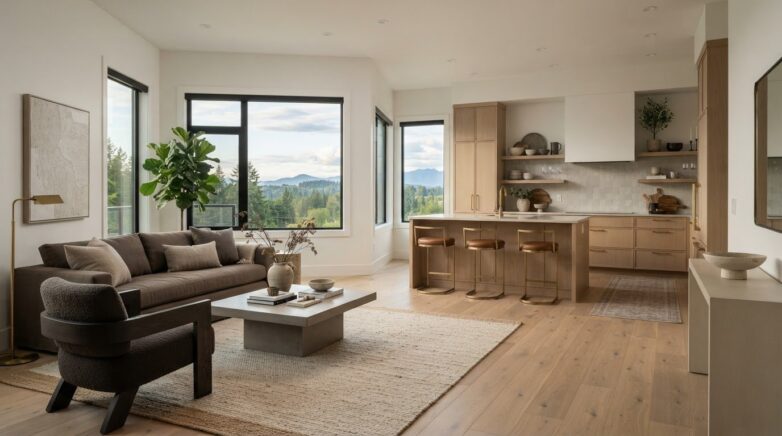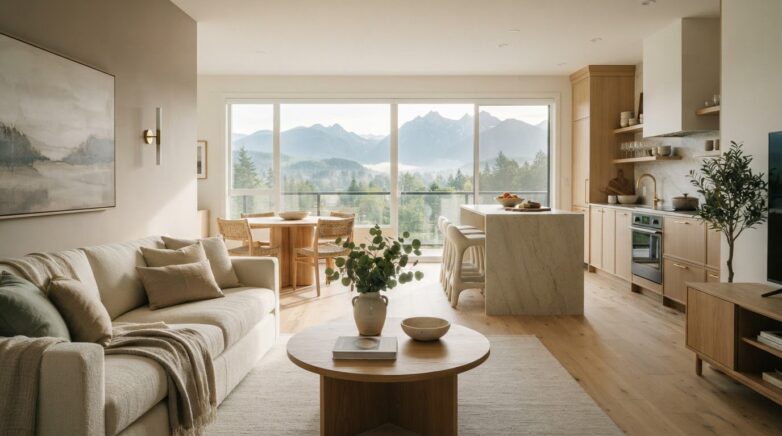
Interior Styling for Everyday Living: A Home That Feels Like You
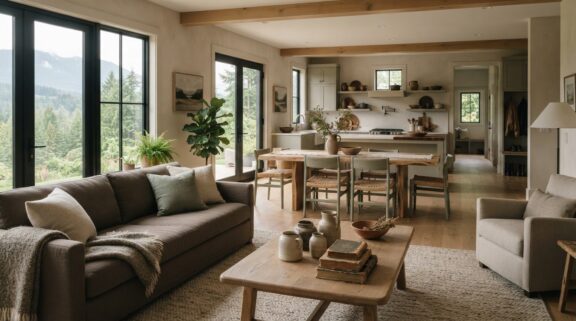
What if a more polished home didn’t mean keeping everyday life out of sight? Interior styling for everyday living makes daily routines feel considered without making rooms feel staged. If a space seems unfinished or your furniture and decor don’t quite work together, it can be hard to know what to change and what’s worth keeping. Comfort and character can belong in the same room.
This article will help you create a warm, cohesive, personal home that supports the way you live. Learn how to build on the furniture and objects you already own, connect rooms visually, and make practical choices that suit your routines. We’ll also cover how everyday styling differs from preparing a property for sale, and when a tailored home consultation could help. The goal isn’t showroom perfection. It’s a considered home that feels like yours.
Key Takeaways
- Interior styling for everyday living starts with how you use each room, so comfort and function guide your choices.
- Thoughtful furniture placement, clear pathways, and natural light can help a room feel more welcoming and put together.
- Repeat a few colours, textures, or materials to create cohesion without making every item match.
- Observe and edit what you have before deciding whether to bring anything new into a room.
- A home consultation with Pair Home Design can provide tailored guidance on comfort, flow, and visual cohesion in a permanent residence.
Interior Styling for Everyday Living Starts With How You Use Each Room
Interior styling for everyday living is the thoughtful arrangement of furnishings, colour, texture, and accessories to make a home comfortable, cohesive, and personal while supporting daily routines. It isn’t about keeping every surface untouched. A lived-in home can feel polished and welcoming, with useful objects close at hand and meaningful pieces on display.
What does interior styling for everyday living mean?
Styling works with the home you have. It might mean moving a chair to create a better conversation area, grouping accessories you already own, or bringing colours and textures into closer harmony. It differs from renovation, which changes the home itself, and from furnishing an empty space or staging a property to appeal to potential buyers. For a broader overview of the design profession, Interior design offers useful background. Start with what you own, then decide whether anything truly needs to change.
Start with the feeling and function you want
Before making visual choices, think about what you want to do in each room and how you’d like it to feel. A living room might support relaxed evenings and easy conversation, while a dining area could be used for meals, homework, and gatherings. Consider the room’s size, natural light, storage needs, and the habits of everyone who uses it.
When a room has a clear purpose, furniture and decor choices are easier to assess. A soft throw might add warmth and get used daily; a table within reach of the sofa could make reading or relaxing easier. Even attractive pieces can feel out of place if the room’s look doesn’t suit the way you use it.
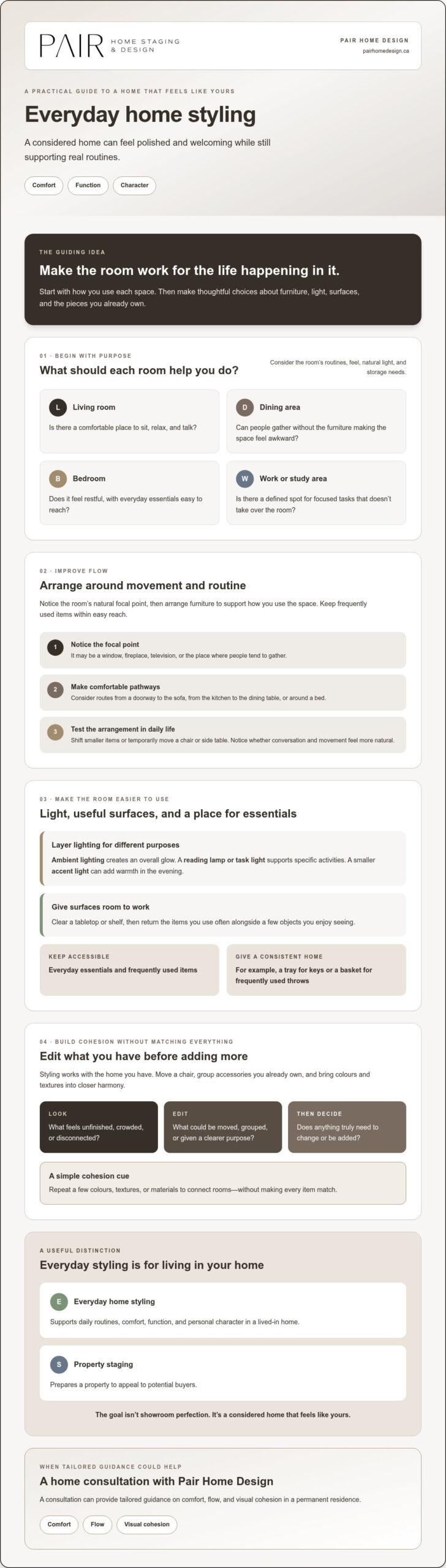
Try this quick room-purpose checklist. Note what you want each space to do, then look for any mismatch:
- Living room: Is there a comfortable place to sit, relax, and talk?
- Dining area: Can people gather without the furniture making the space feel awkward?
- Bedroom: Does the room feel restful, with everyday essentials easy to reach?
- Work or study area: Is there a defined spot for focused tasks that doesn’t take over the room?
If a space feels unfinished, identify what’s missing before adding decor. If it feels crowded or disconnected, consider what could be moved, edited, or given a clearer purpose. These observations help you make choices that suit real routines instead of copying a look that only works in a photograph.
Build Everyday Room Flow With Furniture, Light, and Clear Surfaces
A room can have beautiful pieces and still feel awkward if you have to step around a chair or reach across a crowded table. Layout affects how a space works and how it feels when you enter. For interior styling for everyday living, begin with movement and routine, then refine the visual details.
Arrange furniture around real routines
Before shifting large pieces, notice the room’s natural focal point. It might be a window, fireplace, television, or the spot where people tend to gather. Arrange seating to support how you use the room: face one another for conversation, turn towards a screen, or place a reading chair near good light. Keep frequently used items within easy reach.
Circulation means having comfortable, unobstructed routes through a room. Consider the path from a doorway to the sofa, from the kitchen to the dining table, or around a bed. If furniture interrupts that movement, try another position or remove a piece that isn’t earning its place. Arrange furniture around the room’s everyday purpose and natural movement to make the layout more usable and considered.
Test an arrangement before committing to a major change. Move smaller items first, or temporarily shift a chair or side table and live with the layout through your usual routines. Notice whether conversation feels easier, pathways feel more natural, and the focal point remains visible. For more ideas, The Way We Live Now collects ideas from The New York Times’ Home section for contemporary homeowners.
Use light and clear surfaces to create ease
Use lighting for different purposes. Ambient lighting creates an overall glow, while a reading lamp or task light supports specific activities. A smaller accent light can add warmth in the evening. Notice how natural light shifts through the day, then place seating and lamps where they support your routine. The aim is flexibility, not one bright source for every moment.
Surfaces need room to work. Clear a tabletop or shelf, then return the items you use often alongside a few objects you enjoy seeing. Keep everyday essentials accessible, but give them a consistent home, such as a tray for keys or a basket for frequently used throws. Grouping a few considered pieces can feel calmer than spreading decorations across every available surface.
Start with one room and notice what catches, blocks, or feels crowded during an ordinary day. If you’d value another perspective, Pair Home Design’s home styling can help you explore more comfortable flow and visual cohesion in your home.
Choose Colours, Textures, and Decor That Feel Cohesive, Not Showroom Perfect
A room feels connected when a few visual cues appear more than once. A colour from a favourite artwork might reappear in a cushion, while wood tones or woven textures can link pieces that don’t match exactly. In interior styling for everyday living, cohesion comes from thoughtful relationships between objects, not from making every item identical.
Create a flexible colour and texture story
Start with something you already value, such as a painting, patterned rug, treasured cushion, or piece of pottery. Notice its colours and choose a small group to echo elsewhere. For example, repeat a soft green in a throw and plant pot while keeping the rest of the room neutral. Treat these as starting points, not rules. A colour that feels calming in one home may feel too strong in another.
Texture adds depth without relying on more colour. Pair smooth surfaces with tactile ones, such as a glazed vase beside a woven basket or a linen cushion near a leather chair. Keep the mix selective so each material has room to stand out. Before committing, try fabric or colour samples beside your existing furnishings and view them at different times of day. Natural and artificial light can change how a colour appears, so judge combinations in your own space.
Make decor personal without making rooms feel crowded
Personal objects bring warmth, but displaying every keepsake at once can make their stories harder to notice. Choose a few pieces that matter, group related items, and leave breathing room around them. A framed photograph beside a small travel memento may feel more intentional than a shelf packed edge to edge.
Balance decorative pieces with useful belongings that naturally belong in the room. A bowl can hold keys, a basket can keep blankets close, and a favourite mug can have a place on an open shelf. Editing doesn’t remove your home’s personality. It helps the pieces you keep feel considered.
| Cohesive layering | Matching every item |
|---|---|
| Repeats a few colours, materials, or shapes across different pieces. | Uses the same colour or finish throughout, even when it feels less personal. |
| Mixes meaningful belongings with practical objects and varied textures. | Can make a room feel coordinated but overly uniform. |
| Leaves space for the home to evolve as needs and tastes change. | May make new or treasured pieces harder to incorporate. |
Use the comparison as a prompt, not a formula. The right balance depends on your belongings, the room, and what feels like you. A collected home can feel polished without looking untouched.
Refresh Your Home in Manageable Steps That Fit Everyday Life
A home refresh doesn’t need to happen all at once. For interior styling for everyday living, work through one room at a time, starting with what you notice and already own. This helps ensure changes respond to real needs instead of becoming a shopping list.
A simple order for styling one room
Use this sequence at your own pace. You can pause after any step and live with the change before moving on.
- Observe the room. Notice what feels comfortable, what feels awkward, and what the space needs to support. Pay attention to moments that frustrate you, such as having nowhere to set down a book or a corner that rarely gets used.
- Edit before adding. Put away items that belong elsewhere and temporarily remove objects that crowd surfaces or interrupt movement. Keep useful, well-loved belongings close. The aim is to make the room easier to use, not strip away its character.
- Review placement and light. Consider whether existing furniture supports the room’s main activities. Check whether a lamp, chair, or small table would work better elsewhere, and notice whether the room has comfortable light for everyday tasks.
- Finish with intention. Bring back a few meaningful details, useful accessories, or varied textures. Choose only what adds comfort, function, or personal connection. There’s no need to fill every open spot.
Let comfort and usefulness set your priorities. If your family gathers in the living room each evening, start there rather than spending time on a rarely used corner. A small change, such as moving a side table beside the seat where it’s most needed, may make the room more supportive without requiring a bigger overhaul.
Give the new arrangement time to fit your routine. Review it when the season changes or household habits shift. For example, you might reconsider where you keep throws as evenings get cooler, or rethink a work area when it’s no longer used regularly. Keep what works and adjust what doesn’t. Styling can evolve with your life.
When tailored styling advice could help
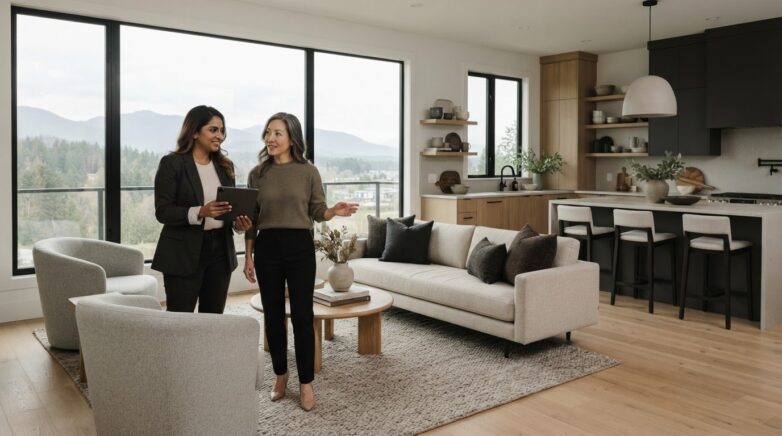
An outside perspective may help if you’ve tried rearranging a room but still can’t find a comfortable layout, or if your belongings feel disconnected across the home. A home consultation can provide tailored, actionable styling guidance based on your rooms, existing furnishings, and routines. It’s a way to explore aesthetic and layout improvements, not a commitment to renovation.
If you’d like a professional perspective on your next steps, explore professional home styling in the Fraser Valley with Pair Home Design.
Bring Your Everyday Home Styling Vision Together With Pair Home Design
You can make meaningful progress by noticing how you use each room, improving its flow, and bringing together colours and objects you already enjoy. If you’re still unsure what to keep, move, or emphasize, tailored guidance can help turn those observations into a cohesive plan. Pair Home Design offers home styling and consultations for permanent residences, with attention to comfort, function, and the character of your home.
What a home styling collaboration can address
Every home has its own routines and points of friction. A styling collaboration can consider how furnishings are arranged, whether textures and decor feel connected, and how rooms support the people who live there. The aim is to enhance the home while respecting your preferences and making practical use of existing belongings.
That differs from staging a property specifically for sale. Everyday styling considers how you want to live in the space, from where you read to how family and friends gather. Sale-focused staging has a different purpose: preparing a property to appeal to prospective buyers. Both approaches can respect a home’s individuality, but their goals shape the styling choices.
Pair Home Design is led by Rita, a professional stager and member of the Real Estate Staging Association (RESA). Her staging experience informs a considered eye for presentation, while home styling and consultation keep the focus on the homeowner’s needs and the home’s distinctive qualities.
Explore styling support across the Fraser Valley
Pair Home Design is based in Chilliwack and serves homeowners across the Fraser Valley and Greater Vancouver, including Abbotsford, Hope, Mission, Langley, Maple Ridge, Coquitlam, Surrey, Burnaby, and Vancouver. If you’re looking for personalized guidance, learn about a home staging consultation in Chilliwack and consider whether a home consultation could help clarify priorities for your space.
A helpful starting point is to identify what you’d like to feel different. Perhaps a room feels disconnected, a layout doesn’t suit your routine, or cherished furnishings need a more cohesive arrangement. Bringing those goals to a conversation can keep advice grounded in your home, belongings, and daily life. Styling is collaborative. The intention isn’t to impose a look, but to help you make thoughtful choices that feel natural to live with.
To learn more about the available home styling and consultation services, explore Pair Home Design’s services.
Make Your Home Feel More Like You
A home can feel polished without setting aside the routines and belongings that make it yours. Start by noticing how you use each room, then make thoughtful adjustments to the layout and edit what’s on display. Repeating a few colours, textures, or meaningful details can connect spaces without making them overly matched.
That’s the heart of interior styling for everyday living: shaping rooms around comfort and personal character, one considered choice at a time. If you’d like help seeing what could work in your home, Pair Home Design offers home styling and consultation services for permanent residences. Led by Rita, a professional stager and Real Estate Staging Association member, the business serves Chilliwack and communities across the Fraser Valley and Greater Vancouver.
Explore home styling with Pair Home Design to learn more about tailored support for your space. Your home doesn’t need to be perfect to feel considered. Begin with what matters to you, and let each change bring it closer to the way you want to live.
Frequently Asked Questions
What is interior styling for everyday living?
Interior styling for everyday living is the intentional arrangement of furnishings, layout, colour, texture, and decor to support daily routines. It shapes how a room works and feels through thoughtful choices, without requiring renovation. Unlike home staging, which prepares a property to appeal to prospective buyers, everyday styling is for the people who live there. The result can feel polished and personal without becoming formal or impractical.
How can I make my home look more cohesive without buying new furniture?
You can often bring existing pieces together without buying new furniture. Begin by editing: move misplaced belongings and set aside items that crowd surfaces. Then look for colours, materials, or shapes that already repeat, and create visual links by rearranging furniture or grouping related decor. Even turning a chair towards the sofa can change how a room feels. Make adjustments gradually, keeping belongings that serve a purpose or hold personal meaning.
Can a home be stylish and still feel comfortable for everyday life?
Yes. Considered design and everyday comfort can work together. Arrange furniture to support how you use the room, keep useful belongings accessible, and choose lighting that suits activities such as reading or relaxing. Practical materials can also help a space feel ready for regular use. Rather than copying a look that doesn’t suit your household, let your routines guide choices so a room feels both welcoming and polished.
How do I choose colours and textures that work together?
Start with colours already present in furnishings or artwork you value, then consider which tones you’d enjoy seeing elsewhere in the room. Test samples beside existing pieces in the room’s actual lighting, since daylight and lamps can affect how colours appear. Woven, smooth, or soft surfaces can add depth through texture. A cohesive room doesn’t require every object to match; your preferences and the home’s existing features matter.
What is the difference between interior styling and home staging?
Everyday interior styling aims to improve a home’s comfort, function, and appearance for the people living there. Home staging prepares a property to appeal to prospective buyers, with presentation in mind for listing photography and viewings. Some principles overlap, including thoughtful layout and visual balance, but the purpose shapes the choices. The furnishings, level of editing, and length of time a setup is needed may differ.
When should I consider hiring a home stylist?
Consider professional guidance if rooms feel unfinished, a layout remains difficult to resolve, or furnishings seem disconnected after you’ve tried your own adjustments. Pair Home Design offers home styling and home consultations, led by Rita, a professional stager and RESA member. The business serves Chilliwack, Abbotsford, Hope, Mission, Langley, Maple Ridge, Coquitlam, Surrey, Burnaby, and Vancouver. Ask the provider to confirm service scope and current local availability.
Can a home styling consultation help if I want to keep most of my furniture?
Yes. A home styling consultation can help you consider how existing furnishings might work better through arrangement, editing, or carefully chosen additions. Useful advice should reflect your routines, preferences, and rooms, rather than assume you need to replace everything. Pair Home Design offers home consultations, but the scope can vary, so ask what guidance is included. Don’t assume a consultation includes purchases, installation, or a particular result.