Lived-In Home Styling: Create a Home That Feels Like You
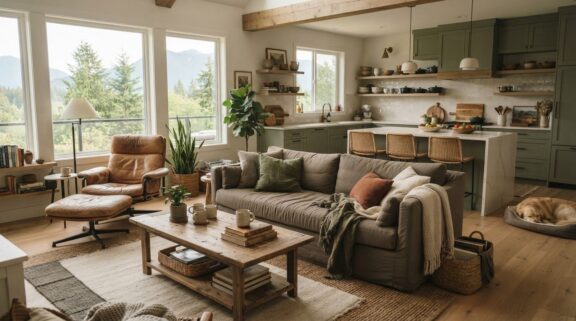
What if your home could feel beautifully put together without asking you to live around the décor? That’s the promise of lived-in home styling: a thoughtful, personal look that welcomes real routines, whether that means quiet mornings, family dinners or a well-loved reading chair.
If your rooms feel unfinished, cluttered or disconnected, it’s easy to assume you need new furniture or a major overhaul. But styling doesn’t have to come at the cost of comfort. Often, the most effective changes help your existing space feel more cohesive and distinctly yours.
In this guide, you’ll find practical ways to make decisions about furniture, lighting, colour and accessories, so your home feels intentional without becoming precious or difficult to use. We’ll look at how to build warmth and personality in manageable steps, when a home consultation could help you decide what to change, and how everyday styling differs from staging a property for sale. The goal isn’t a showroom. It’s a home that feels like you and works for the life happening in it.
Key Takeaways
- Use lived-in home styling to create a space that feels personal and cohesive without making it too precious for daily life.
- Start with how each room is used, then arrange furniture to support easy movement, conversation and everyday routines.
- Choose home styling for your own comfort and personality; consider home staging when preparing a property for photography, showings and buyer appeal.
- Refresh one area at a time by observing, editing, arranging, layering and reviewing how the room works in use.
- Consider a professional home consultation if you’re unsure about layout, struggling to connect rooms or finding it hard to finish a space.
What Is Lived-In Home Styling, and How Should It Feel?
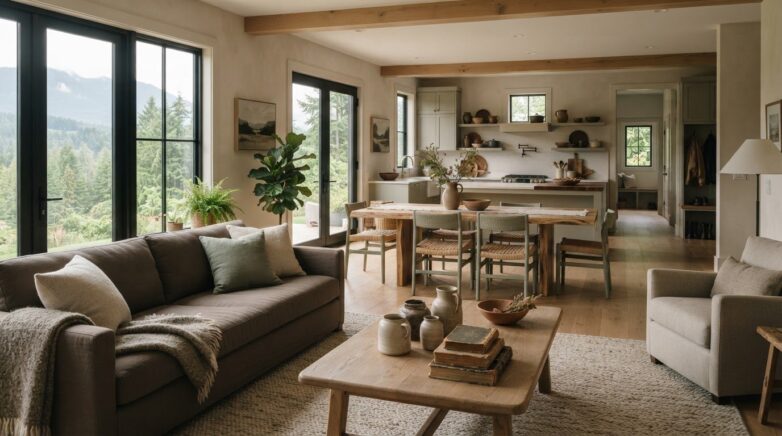
Lived-in home styling is the thoughtful arrangement and refinement of a home so its rooms feel cohesive, personal and practical. It isn’t about making every surface look untouched. The aim is a space that feels welcoming and considered, with room for the people, habits and belongings that make it yours.
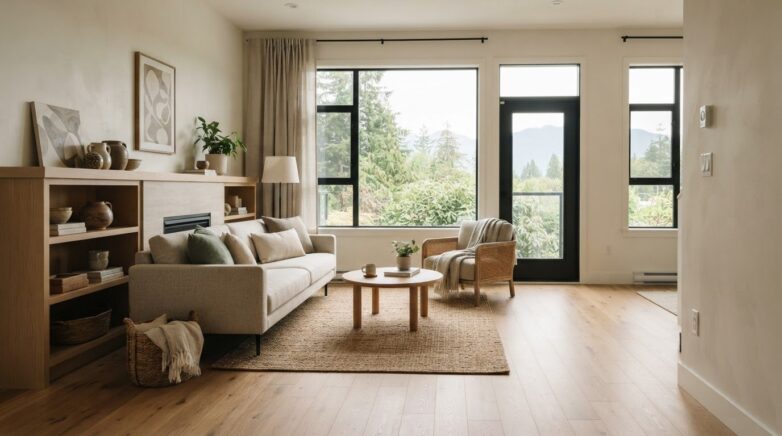
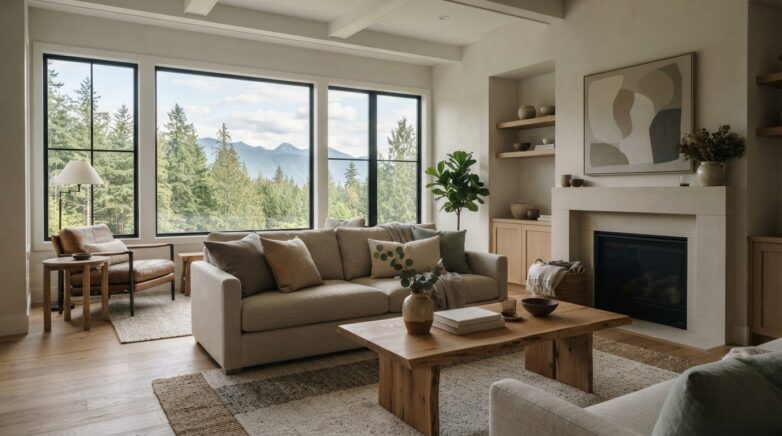
Good styling starts with the home as it is: the furniture you use, the routines you follow and the needs of everyone who shares the space. It can help a room feel more settled without replacing everything. For example, in a living room, try shifting the sofa and chairs to create a comfortable conversation area, moving a lamp beside your reading seat and grouping a few meaningful objects. These changes give the room a clearer purpose and a stronger sense of connection.
Lived-in styling makes a home feel thoughtfully put together while leaving it comfortable for everyday life. Clear pathways and useful surfaces matter just as much as finishing touches. Repeating a colour, texture or shape in a few places can also connect a room without making every detail match.
How Is Lived-In Styling Different from Decorating?
Styling often focuses on arranging and refining what’s already in a room, including furniture, lighting, colour and personal objects. Decorating may involve a broader range of design choices, depending on the project. The terms aren’t used in exactly the same way by every homeowner or professional, and their meanings can overlap. For a wider overview of the field, Interior design offers context on how space planning and decoration fit within the discipline.
What Does a Comfortable, Well-Styled Room Have in Common?
A comfortable room supports what happens there. You can walk through it easily, reach the surfaces you need and use the seating for its intended purpose. Those practical foundations make a room more enjoyable to live in, not just more pleasing to look at.
Visual connection helps, too. A warm wood tone echoed in a frame, a soft fabric repeated in cushions, or rounded shapes appearing in both a lamp and a side table can give a room a gentle rhythm. With lived-in home styling, these details create cohesion while leaving space for collected pieces and everyday life.
How Lived-In Home Styling Balances Function, Personality, and Visual Flow
A room can look beautiful and still feel awkward if it doesn’t support what happens there. Begin by noticing its main purpose and the routines around it: where people sit, what they reach for and how they move through the space. In a living room used for conversation, seating might face one another, with a table nearby for drinks. If the room doubles as a play area, preserve a clear spot for toys and easy pathways rather than arranging every piece around a formal focal point.
Test the layout in real life. Can people walk through without squeezing past furniture? Is there a useful surface beside the seats where it’s needed? In a home with children or pets, leave room for play and movement, and place delicate or easily knocked-over objects where they’re less likely to interrupt daily routines. In shared spaces, flexible seating or a clear area that serves more than one purpose may be more useful than a rigid arrangement.
Choose a Layout That Works for the Way You Live
Before shifting furniture, ask what the household actually does in the room. A dining area may need to accommodate homework as well as meals; a living room might be where one person reads while others gather. Arrange the main pieces around those activities, then check that routes between entrances, seating and frequently used surfaces feel natural. The best layout isn’t simply the one that looks balanced from the doorway. It’s the one people can use comfortably.
Layer Colour, Texture, and Personal Details
Once the arrangement works, use a few repeated colours or materials to link different parts of the room. A tone in a cushion might appear again in artwork, while wood finishes or woven textures can connect furniture and smaller accents. Textiles add softness, and well-placed lighting can make a reading corner or gathering area feel more inviting.
Keep the details personal. A framed photograph, a book you reread or an object collected on a meaningful trip can bring more character than a collection of generic accessories. Give each item a considered place, and leave some surfaces open. Editing is part of the styling: it lets the pieces you value stand out and keeps the room from feeling crowded.
For a fresh perspective on how furniture, finishes and personal pieces can work together, explore Pair Home Design’s home styling as one source of guidance.
Lived-In Home Styling vs. Home Staging: Which Approach Fits Your Goal?
Home styling and home staging can both improve a room’s flow and presentation, but they serve different immediate goals. Lived-in home styling is for the people who live in the home: it helps everyday spaces feel more personal, cohesive and comfortable. Home staging prepares a property for prospective buyers through photography and showings, with decisions shaped by how the home will be viewed as a listing.
That doesn’t mean a styled home has to feel formal, sparse or difficult to maintain. A home can be thoughtfully arranged and still have books within reach, a comfortable place to put your feet up and objects that carry personal meaning. The distinction is who the choices are for and what the space needs to achieve right now.
| Consideration | Everyday home styling | Home staging |
|---|---|---|
| Purpose | Support daily comfort, cohesion and personal expression. | Present the property clearly to prospective buyers. |
| Personal objects | Meaningful pieces can remain part of the room. | Personal items may be edited to keep attention on the property. |
| Function | Reflect household routines and practical needs. | Help rooms read clearly in listing photos and during showings. |
| Intended audience | The people who live there. | People considering the property for purchase. |
When Everyday Home Styling Is the Better Fit
Choose styling if you want your home to feel more settled, comfortable or connected, rather than preparing it for a sale. It can work with existing furnishings and the routines you want to preserve, whether that means keeping a favourite chair, making a shared room more adaptable or bringing disconnected spaces into visual harmony. For tailored ideas, explore professional home styling in the Fraser Valley.
When Home Staging Is Designed for a Listing
If you’re preparing to list, staging takes a different view of the same rooms. The aim is to present the property clearly for photography and showings, so decisions about furniture placement, personal items and room use may differ from what suits your household day to day. Staging and styling both consider presentation, but the listing goal guides the choices. If you’re getting ready to sell, learn more about a home staging consultation in Chilliwack.
How to Style Your Home for Real Life: A Room-by-Room Starting Plan
Make changes gradually. Lived-in home styling works best when you can see how each adjustment feels during ordinary routines, not just when the room is tidy and quiet. Start with the spaces that feel least comfortable or most visually unsettled, then choose one practical improvement and one visual refinement for each.
Start with the Rooms You Use Most
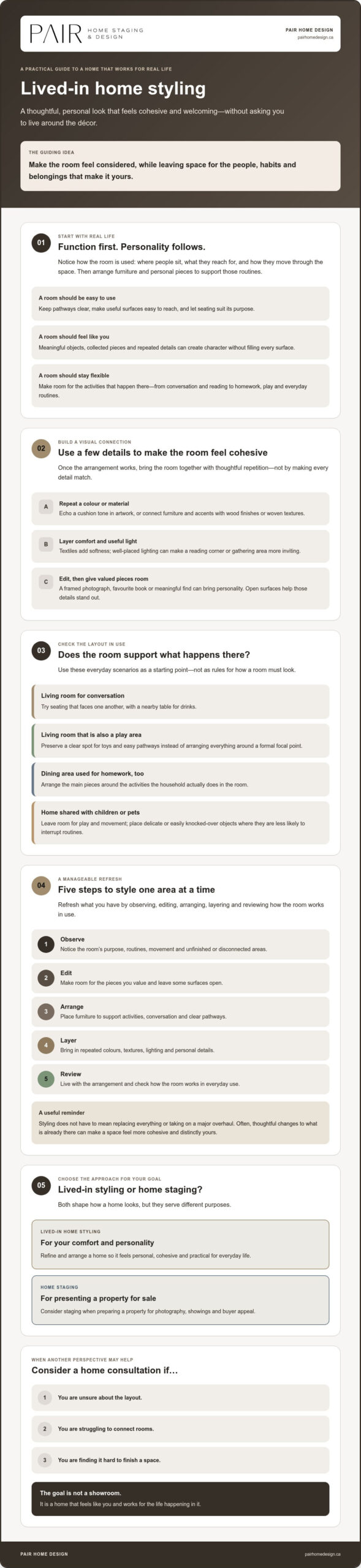
Take a quick before photo of a priority room. It gives you a fresh view of the layout and makes it easier to notice what feels crowded or disconnected. Then try this sequence, one area at a time:
- 1. Observe: Notice where people walk, sit, gather belongings and pause. Ask what feels awkward during a typical day.
- 2. Edit: Remove items that aren’t useful in the room or make its purpose harder to see. Keep the objects you enjoy and use.
- 3. Arrange: Test furniture positions to improve movement and make seating or work surfaces easier to reach.
- 4. Layer: Add or reposition lighting, textiles and personal details to bring warmth and visual connection.
- 5. Review: Use the room as usual, then decide what’s working and what still needs adjusting.
Make Small Changes, Then Live with Them
Let function lead, with the finish suited to your household. In a living room, test whether moving a chair creates a better conversation area. In a bedroom, check whether the bedside surface and lighting support your evening routine. A dining area might benefit from clearing the table or making room for a frequently used work surface. In a Fraser Valley entryway, consider where everyday outerwear and footwear can be stored without obstructing the route in and out.
Try rearranging existing furniture before deciding that a major piece needs replacing. As you test the room, check whether its lighting works for different activities, whether storage catches the items that tend to collect there, and whether useful surfaces are easy to reach. If a change makes the space look better but harder to use, it may not be the right adjustment.
A styling choice earns its place when it feels right in the rhythm of everyday life. Give each room time to show whether the new arrangement supports both comfort and flow. If you’d like tailored guidance, explore home consults with Pair Home Design before making further changes.
Professional Lived-In Home Styling in the Fraser Valley
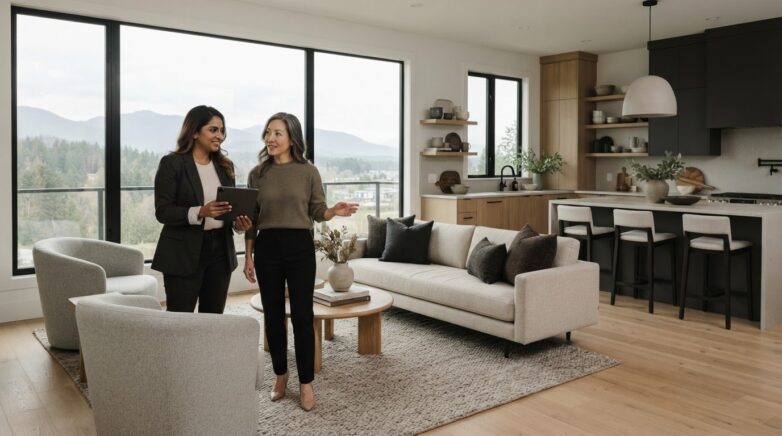
Sometimes a home feels close to finished, but the rooms still don’t quite belong together. You might be unsure how to arrange furniture, find that one space feels out of step with the rest, or keep moving objects around without settling on a look. Professional guidance can help you see possibilities in the space you already have and decide which refinements could make daily life feel easier and more cohesive.
For lived-in home styling, the starting point is your household, not a showroom ideal. A useful conversation considers what feels awkward, which routines matter most and what you want the home to feel like. That context keeps suggestions practical and personal, whether the challenge is an unfinished room, a tricky layout or a sense that nearby spaces don’t flow together.
What a Home Styling Consultation Can Clarify
A consultation can offer a fresh perspective on room flow, function and opportunities to refine the existing space. A professional may help you consider how furnishings work together, where a layout could feel more comfortable, or which aesthetic adjustments might bring greater cohesion. The recommendations are guidance to consider, not a requirement to change everything at once. You can decide what suits your priorities and make adjustments at your own pace.
Pair Home Design offers home styling and home consultations, with a focus on improving the appeal, flow and presentation of everyday spaces. Learn more about Pair Home Design’s home styling services to see how professional input could help bring a room together.
Finding a Styling Approach That Feels Like Home
Before styling begins, share what a typical day looks like in your home, what you enjoy and what you’d like to improve. Mention practical priorities such as shared spaces, storage needs or furnishings you want to keep. The more clearly you describe how you live, the easier it is to shape ideas around your preferences rather than imposing a look that feels unfamiliar.
Led by Rita, Pair Home Design provides home styling, consultations and home staging from Chilliwack across the Fraser Valley and Greater Vancouver. Styling guidance can help make sense of disconnected rooms, layout questions and finishing decisions that are hard to resolve alone. If you’re ready to explore a more personal, functional direction for your home, consider discussing your home styling needs with Pair Home Design.
Shape a Home That Feels Like You
Lived-in home styling is about making thoughtful choices that bring comfort, personality and visual connection into your everyday spaces. Start with how you use each room, then adjust the layout and details in manageable steps. A room can feel more cohesive without becoming formal or difficult to live in.
Keep your goal in view, too. Styling supports the people who call your home theirs, while staging prepares a property to connect with prospective buyers. If you’re unsure how to bring rooms together or where to focus first, a professional perspective can help clarify what to refine while respecting your routines and preferences.
Pair Home Design, led by Rita, offers home styling and consultation services in the Fraser Valley and Greater Vancouver. Rita is a professional stager and a member of the Real Estate Staging Association. For a collaborative starting point, explore home styling with Pair Home Design.
Your home doesn’t need to be perfect to feel considered. With a few intentional choices, it can become more welcoming, functional and unmistakably yours.
Frequently Asked Questions
What is lived-in home styling?
Lived-in home styling is the thoughtful arrangement of a home to make it feel cohesive, personal and comfortable for everyday use. It considers how you use each room, then refines elements such as furniture placement, lighting, colour and meaningful objects. The result doesn’t need to look pristine or match a showroom. It should feel welcoming and considered while still supporting your routines and household needs.
How do I make my home look styled but still comfortable?
Start with the room’s purpose and make sure the layout supports it before adding decorative details. Keep pathways clear, place useful surfaces where you need them, and choose lighting and textiles that suit how the room is used. Repeat a few colours or materials for visual connection, then edit rather than filling every surface. Leave favourite, frequently used items within reach so the room remains easy to live in.
Is lived-in home styling the same as home staging?
No. They share an interest in flow and presentation, but serve different goals. Lived-in styling shapes spaces around the comfort, routines and personality of the people who live there. Home staging prepares a property to present clearly to prospective buyers through listing photography and showings. As a result, staging may involve editing personal belongings or arranging rooms differently, while everyday styling can keep meaningful objects and household habits central.
Can I style my home without buying new furniture?
Yes, you can make a room feel more intentional by working with what you already own. Try repositioning a sofa or chair, moving a lamp to a more useful spot, or grouping a few personal objects together. Editing items that don’t serve the room can also create a clearer sense of space. Live with each change before deciding whether anything needs to be replaced or added.
How can I make a small room feel more put together?
Give the room a clear purpose and keep its main pathways open. Arrange furniture to support that use, and avoid crowding surfaces with objects that don’t add function or meaning. A repeated colour, material or shape can create visual connection without introducing more décor. Check whether lighting and storage suit your routines, then make changes gradually so you can tell which adjustments genuinely improve the room.
When should I hire a home stylist in the Fraser Valley?
Consider a stylist if rooms feel disconnected, you’re unsure how to arrange your furnishings, or you can’t quite finish a space despite trying different ideas. A home consultation can provide tailored guidance on flow, function and aesthetic refinements. Pair Home Design, led by Rita, a professional stager and member of the Real Estate Staging Association, offers home styling and consultations in Chilliwack, Abbotsford, Hope, Mission, Langley, Maple Ridge, Coquitlam, Surrey, Burnaby and Vancouver.