Professional Staging vs DIY: Which Is Right for Your Home?

The most polished listing doesn’t always require handing every decision to a professional. The real question in professional staging vs DIY is how much distance there is between your home’s current presentation and the way buyers need to experience it. A few focused edits may be enough; other homes benefit from coordinated furniture placement and styling.
If you’re unsure which rooms deserve attention, or how to fit decluttering, furniture placement and photography preparation into a busy schedule, you’re not alone. Doing it yourself offers flexibility and lets you use furnishings you already own, but it also means making design decisions while managing the practical work of getting ready to sell.
This guide compares DIY preparation with professional staging, including the time, expertise, flexibility and consistency each approach can offer. You’ll also learn how a pre-listing consultation can provide a useful middle ground: expert direction on the rooms and details that matter, while you carry out the plan yourself. The goal is a welcoming, buyer-facing presentation that suits your Fraser Valley home, your schedule and the furnishings available to you.
Key Takeaways
- Choose professional staging vs DIY by weighing your listing timeline, design confidence and the gap between your home’s current look and its potential.
- A fresh perspective can help identify visual distractions and create a more consistent presentation from room to room.
- Even with furniture in place, thoughtful editing and placement can help buyers understand each room’s purpose.
- Review your home’s condition, available furnishings and the rooms that need the most attention before deciding where to focus.
- A consultation provides expert direction while you handle the preparation. Full staging offers broader support for listing photos and open houses.
Professional Staging vs DIY: What Changes in a Home’s First Impression?
Buyers begin forming an impression before they’ve explored every room. They need to understand how the home flows, what each space can be used for and whether it feels comfortable to live in. In the professional staging vs DIY comparison, the goal is the same, but who makes the presentation decisions and how they’re coordinated can differ.
DIY staging is owner-led preparation for the listing, from decluttering and rearranging furniture to adding finishing touches. Professional staging takes an expert-led view of the home as a whole and presents its rooms for a broad buyer audience. Both can make a space feel inviting. Decorating reflects the people who live there, while staging helps prospective buyers imagine how they might use the home. For a general overview, see What is Home Staging?
| Consideration | DIY staging | Professional staging |
|---|---|---|
| Time | The homeowner plans and completes the preparation around other responsibilities. | Expert direction shapes the presentation, with support tailored to the project. |
| Design decisions | The owner edits and arranges using their own judgement. | A stager considers flow, focal points and the purpose of each room. |
| Furniture and decor | Primarily uses belongings already in the home. | Can include curated furniture and decor to support a cohesive look. |
| Coordination | The homeowner organizes the tasks and finishing details. | Presentation is planned around the listing, including photography and open houses. |
What does DIY staging ask the homeowner to do?
Start by editing: clear surfaces, remove excess items and open up walkways and doorways. Then assess furniture placement. A dining table crowded with everyday items, for example, can make the room’s purpose harder to read. Existing furnishings are useful, but personal collections or strongly themed decor may draw attention away from a room’s size and function. You’ll also need to organize the work around listing preparations and daily life.
What does professional staging add to the process?
A stager takes an outside view, assessing how people move through the home, where the eye naturally lands and whether each space has a clear purpose. Furniture and decor are selected and placed to create a connected presentation, rather than a series of rooms styled independently. This can help a lived-in home feel considered without making it feel impersonal.
Professional staging is the considered arrangement of a home’s spaces and furnishings to help buyers see its function, flow and atmosphere. It’s not about erasing a home’s character. It’s about making its appeal easier to see.
Where Professional Staging Adds Expertise DIY Sellers May Miss
Living in a home makes certain details fade into the background. A bulky chair that narrows the path through a room, a collection that competes with a window view or furniture that no longer suits the room’s purpose can feel normal to the owner. A stager brings fresh eyes, helping identify what might interrupt a buyer’s sense of space and how the home could feel with a few considered changes.
That outside perspective also helps create continuity. A living room, dining area and adjoining kitchen should feel connected, not like separate decorating projects. Repeating a restrained colour palette, balancing furniture scale and removing visual clutter can help the eye move naturally through the home. The National Association of Realtors shares agent perspectives on the Benefits of Home Staging, a useful reference for understanding why presentation matters to buyers and sellers.
How an expert eye helps clarify room purpose and flow
Room by room, a stager can assess whether furniture fits, whether walking paths feel clear and which feature deserves attention. In a smaller living room, for instance, shifting a sofa away from a doorway may make circulation easier and reveal more usable floor area. Editing extra accessories or surplus furniture can also make a room feel calmer and easier to understand.
A room’s purpose becomes easier to understand when its furniture placement supports the way people can move through it. This helps rooms feel inviting and functional, whether buyers are viewing them in person or in listing photographs.
When a consultation can bridge DIY and full staging
A consultation can be a practical middle ground in the professional staging vs DIY decision. You can take on selected preparation while using expert direction to decide what deserves attention first. A room-by-room plan can help prioritize key spaces, refine the placement of existing furniture and flag distractions that are easy to miss after living with them for years. Pair Home Design’s home staging consultation guide explains how this kind of guidance can support pre-listing preparation.
Staging guidance focuses on visual presentation, furniture arrangement and how spaces read together. It isn’t a substitute for repairs, renovations or cleaning, and it doesn’t set a listing price. These are distinct parts of sale preparation.
For expert direction as you prepare your home, Pair Home Design’s staging support offers consultation, styling and staging options.
DIY or Professional Staging? Compare the Fit for Your Fraser Valley Listing
The right choice depends less on whether your home is in Chilliwack, Abbotsford, Langley or Vancouver, and more on what it needs before buyers see it. Consider your available time, confidence making design decisions and whether your furnishings present each room clearly. The professional staging vs DIY decision is about matching the level of support to the property, not following a rule that applies to every listing.
A furnished home isn’t automatically ready to show at its best. Familiar furniture may be oversized for a room, arranged around everyday routines or competing with a feature worth highlighting. Editing and repositioning can make a difference without replacing everything. By contrast, an empty or sparsely furnished home may leave buyers guessing about scale. A bare bedroom doesn’t show how a bed fits, and an unfurnished living area can be difficult to interpret.
When DIY may be a comfortable fit
DIY can suit owners who have enough time to prepare, furnishings that fit the spaces and confidence setting aside personal decor. Focus on the basics: keep pathways clear, make each room’s purpose easy to understand and carry a simple visual story from one space to the next. For example, you could remove extra pieces from a family room, edit personal collections and arrange seating to make conversation feel natural.
Keep the task in perspective. Decluttering and thoughtful furniture placement can help a home feel more open and cared for. Detailed preparation for listing photography may require more attention, and neither approach guarantees a particular listing response or sale result.
When professional staging may better suit the property
Professional support can be a stronger fit when the home needs coordinated furniture, clearer definition between spaces or a more unified look throughout. That may apply to a vacant condo in Greater Vancouver, where buyers need help reading an open-plan living area, or a Fraser Valley home with furnishings that don’t work together in listing photos. The property’s condition and your priorities still matter. Location alone doesn’t decide.
Curated inventory can furnish vacant or partially furnished spaces with pieces selected to suit the home and create a cohesive presentation. Rather than filling every room, the aim is to make key areas feel purposeful and give buyers a sense of scale. For a closer look at how staging inventory fits into property preparation, explore the 2026 home staging rental guide.
As you weigh the options, ask yourself: can I prepare the rooms that need attention with the time and furniture I have, or would expert coordination make the process more manageable? Your answer can point towards a self-led plan, professional staging or a combination tailored to the listing.
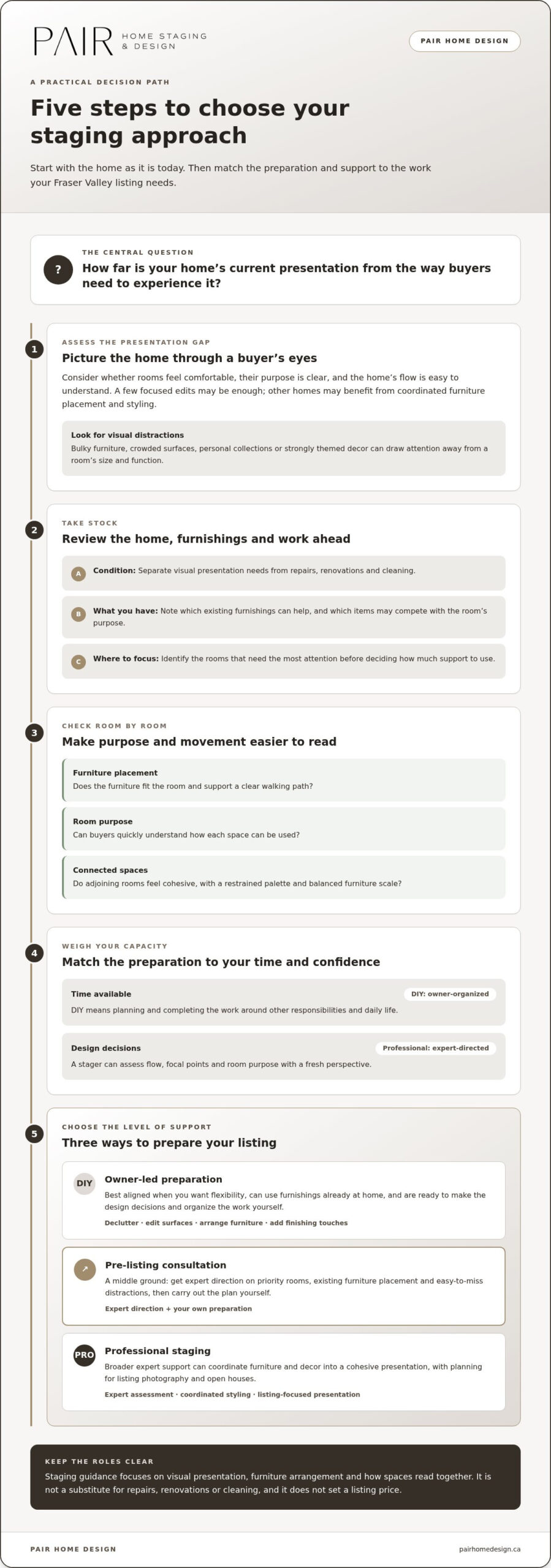
How to Choose Between DIY and Professional Staging Before Listing
A useful staging decision starts with the home as it is, not with an assumption that every room needs a full makeover. Look at its current condition, the time available before listing and the difference between its everyday setup and the presentation you want buyers to see. This simple framework can help you choose a practical level of support without taking on more work than the property needs.
Assess the home, timeline and resources you can realistically commit
Walk through the home as if you’re arriving for the first time. Notice where your eye lands, how easily you move between rooms and which spaces feel unclear. Then factor in the time needed to prepare, alongside the other steps involved in listing.
- Review the current presentation. Consider the entry, main living area, kitchen and primary bedroom, along with the paths connecting them. Are the rooms easy to understand and move through?
- Set the listing timeline. Allow for the time you can realistically devote to sorting belongings, moving furniture, sourcing pieces and coordinating preparation around photography and other listing tasks.
- Take stock of furnishings. Identify which pieces fit the rooms and support their purpose. Note where a room may feel crowded, unfinished or difficult to define.
- Gauge your design confidence. Can you make clear editing and placement decisions, or would an outside perspective help you decide what to keep, move or change?
This isn’t a checklist that demands every room be transformed. It’s a way to pinpoint where focused effort may have the most value for the presentation.
Choose a level of support that matches the presentation gap
Use your answers to select an approach that fits your home and capacity. The professional staging vs DIY choice can also be a blend, with an expert helping set priorities while you handle selected tasks yourself.
- Independent preparation may fit when you have suitable furniture, time to edit and confidence making practical choices about room use and flow.
- A consultation can offer direction if you want to stay hands-on but would benefit from help prioritizing rooms, refining furniture placement or spotting distractions.
- Full staging may suit a vacant or partially furnished property, or a home that needs coordinated furnishings and a more unified listing presentation.
Each route can be tailored to the home rather than applied room by room as a fixed formula. If you’re weighing the investment against your goals, Pair Home Design’s home staging value and ROI guide offers a separate discussion of value. To explore the right level of preparation for your property, discuss your home staging needs with Pair Home Design.
How Pair Home Design Helps You Prepare a Fraser Valley Home for Sale
There isn’t one right answer to the professional staging vs DIY question. Some homeowners want expert direction while they take care of the preparation; others need a more complete, coordinated presentation. Pair Home Design offers different levels of support, so the approach can reflect your property, furnishings and priorities rather than follow a one-size-fits-all plan.
From expert direction to a curated listing presentation
A pre-listing consultation gives you tailored guidance on how your home flows, how each space functions and which aesthetic enhancements could help it feel more considered. Use that direction to decide what to edit, where to adjust furniture and which rooms to focus on, while completing selected tasks yourself.
For owners who want a fuller presentation, home staging brings curated furniture and decor into the home. Considered placement can define a living area, clarify how an open space might be used and create a cohesive feel from room to room. This helps prepare the property for listing photography and open houses, where buyers encounter the home both in images and in person.
Home styling offers another way to refine a space for sale. It focuses on the visual details and furnishings that help a home feel balanced and welcoming. The right level of support depends on what’s already in place: a well-furnished home may call for thoughtful editing and styling, while a vacant or partially furnished property may benefit from more extensive staging.
Rita brings professional staging experience to this work and is a member of the Real Estate Staging Association. Her perspective supports a buyer-facing presentation that feels intentional and inviting while respecting the character of the property.
Take the next step for your property
As you prepare to list, consider what would make the process most manageable. If you want a clear plan but prefer to stay hands-on, a consultation can guide your own preparation. If you want the home’s rooms furnished and presented as a cohesive whole, full staging may be a better fit. If your furnishings are already there but need a more polished arrangement, home styling can refine the look.
Pair Home Design serves homeowners and realtors in Chilliwack, Abbotsford, Hope, Mission, Langley, Maple Ridge, Coquitlam, Surrey, Burnaby and Vancouver. The goal is a presentation that feels right for your home and helps buyers understand its possibilities. Explore Pair Home Design’s staging services.
Make Your Next Step Feel Manageable
Your listing presentation doesn’t have to begin with a complete transformation. Start by deciding what would make the biggest difference to how your home feels to someone seeing it for the first time, then choose the level of support that fits your time and comfort. The professional staging vs DIY decision isn’t about achieving perfection. It’s about presenting your home with care and helping its possibilities come through.
If you’re still weighing your options, you don’t need to map out every detail alone. A conversation about your property can help turn a broad to-do list into a clearer plan, whether you want to take the lead or bring in more support. Small, intentional choices can help a space feel welcoming, balanced and ready for its next chapter.
Explore Pair Home Design’s home staging services to find a starting point that feels right for your home. With a considered plan in place, you can move towards listing day with greater clarity and confidence.
Frequently Asked Questions
Is professional staging worth considering if my home is already furnished?
Yes. Professional staging can still be useful in a furnished home because the question isn’t simply whether furniture is present, but whether it suits the rooms and supports the listing presentation. In the professional staging vs DIY decision, a stager may recommend keeping key pieces and adjusting their placement while editing items that make spaces feel crowded. For example, removing an extra chair may make a narrow living area easier to navigate.
Can DIY staging work for a vacant home?
It can, especially if you can bring in suitable furnishings and arrange them to show the scale and use of important rooms. Before moving anything, measure doorways and spaces, then sketch a simple layout so furniture doesn’t block natural paths. If you have few furnishings, focus on the rooms that are hardest to understand when empty, such as the living area or primary bedroom. Curated inventory is another option for furnishing a vacant listing.
How much does professional home staging cost in British Columbia?
There isn’t one standard cost for staging in British Columbia. The project scope, whether the home is occupied or vacant, and the amount of curated furniture and decor needed can all affect the work involved. Rental inventory may also be charged monthly or by project. For a useful comparison, define which rooms need attention and whether you’re considering a consultation, styling or fuller staging before reviewing a project-specific estimate.
Does professional staging guarantee a faster home sale?
No. Staging can shape how a property is presented, but it can’t guarantee how quickly a home will sell. Buyer interest also depends on factors such as the property, asking price, market conditions and individual preferences. Treat staging as preparation, not a promise: it can help rooms read clearly in photos and during viewings, while the selling strategy and pricing are separate parts of the listing process.
Should I renovate before staging my home for sale?
Not automatically. Staging focuses on presentation, while renovation addresses physical changes to the property. Start by separating cosmetic distractions from issues that affect the home’s condition or function. A tired-looking room might benefit from editing and considered styling, while damaged finishes may call for repair. Discuss potential repairs or renovations with the appropriate real estate or renovation professional. Staging decisions can then be made around the home as it will be listed.
Can I use my own furniture alongside professionally selected staging pieces?
Yes. Your furniture can be part of a professionally staged presentation if its scale, condition and appearance suit the room and the overall plan. A familiar dining table might anchor the space, while selected pieces help define a sitting area or balance the room. The aim isn’t to replace everything, but to make choices that work together. A stager can consider what to retain and where additional inventory may help.
When should I decide between DIY and professional staging?
Decide before listing preparation is underway, so your plan can account for decluttering, furniture decisions and photography arrangements. The best timing depends on how much needs to change and how much time you can commit. For sellers in Chilliwack, Abbotsford, Hope, Mission, Langley, Maple Ridge, Coquitlam, Surrey, Burnaby and Vancouver, making the decision early can help organize the next steps without turning every room into a major project.