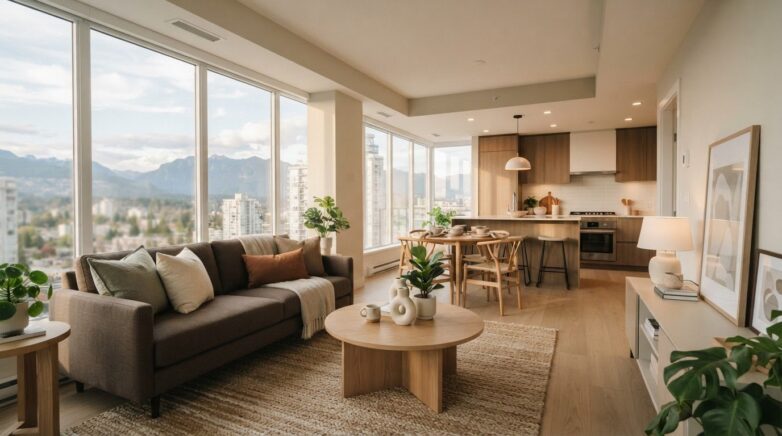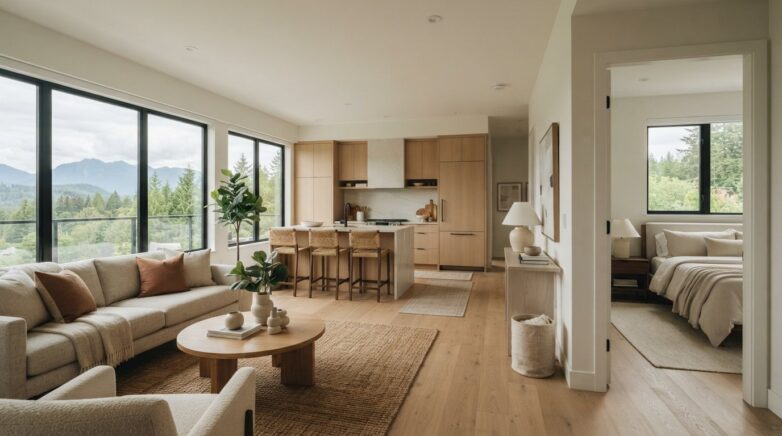
Home Refresh Styling: Make Your Space Feel New Without Renovating
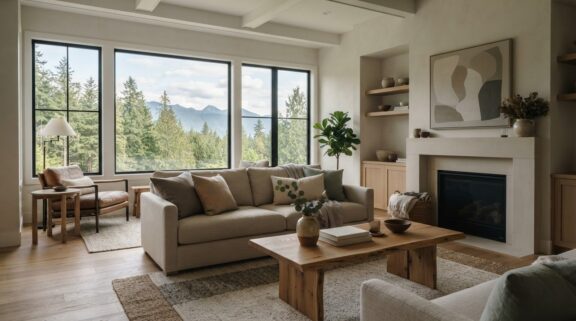
What if the most noticeable change in your home isn’t a new sofa, but a better place for the one you already own? When rooms feel dated, cluttered or disconnected, it’s easy to assume you need to replace everything. Thoughtful home refresh styling starts with simpler steps: edit what’s there, rethink the layout and add only the finishing touches the space needs.
You can make your home feel more cohesive, comfortable and functional without taking on a full renovation. The key is knowing which changes will have the greatest impact and what order to tackle them in. A considered furniture arrangement, a more intentional mix of colours and textures, or a few well-chosen accents can shift the feel of a room while keeping your personality at its centre.
This article offers a practical starting point for refreshing your space, from assessing what you own to refining furniture placement and choosing finishing details. You’ll also find guidance on which updates are manageable to try yourself and when a home consultation with a stylist can provide tailored, actionable advice.
Key Takeaways
- Home refresh styling focuses on intentional, non-structural changes, rather than renovation or preparing a property for sale.
- Let a room’s everyday purpose guide its layout, then use a considered colour palette to bring existing pieces together.
- Weigh the benefits of editing and rearranging against adding pieces that address a specific need.
- Use a room-by-room sequence to assess, edit, plan, arrange, layer and review your refresh.
- A home consultation can provide tailored guidance when you’re unsure how to improve a room’s flow, function or visual balance.
What Is Home Refresh Styling, and What Can It Change?
Home refresh styling improves a room’s appearance and feel through intentional, usually non-structural changes to its layout, furnishings, colour, lighting and decor. It’s a focused way to make a space feel more comfortable and cohesive without changing its structure. The goal isn’t to make your home look like someone else’s. It’s to help the rooms you already have better reflect how you live.
Home refresh styling is narrower than full interior design, which can involve a broader process of planning and executing a space. Interior design encompasses many facets, including how spaces are planned and used. A refresh draws on some of the same considerations but focuses on practical, visible adjustments to an existing room. Small choices work together: furniture placement can improve movement, editing can reduce visual clutter, and colour, lighting and finishing touches can create a more connected atmosphere.
How Is a Home Refresh Different from Renovation or Staging?
A refresh works with the room as it is. Renovation may involve construction, replacing materials or changing structural features, which are outside the scope of styling. Full interior design may also extend beyond a refresh, depending on the project. Staging has a different purpose: it prepares a property to appeal to potential buyers, while refresh styling supports the homeowner’s everyday comfort, routines and personal taste.
For a closer look at how styling can shape a lived-in space, explore professional home styling in the Fraser Valley. Styling can retain a home’s character while making its rooms feel more considered and inviting.
What Can Change Without Replacing Everything?
Start by asking what each item contributes. Is it useful, meaningful or helping create the atmosphere you want? Removing a few things from a crowded surface or shifting a chair away from a walkway can reveal space and give the room a clearer purpose. Editing isn’t about stripping a home bare. It’s about making room for the pieces that matter.
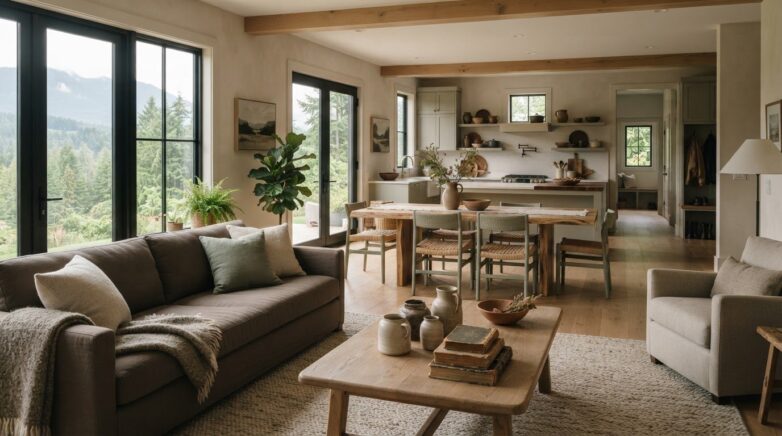
Next, consider how the elements work together. Turning a sofa towards a conversation area rather than a wall may make a living room feel more welcoming. Layered lighting, such as a table lamp alongside overhead light, can create a softer, more flexible feel. Textiles and selected decor can connect colours and textures across existing furnishings.
Personal items belong when they support the room’s function or atmosphere. A favourite artwork, well-used reading chair or collection of meaningful objects can make a space feel distinctly yours. The refresh comes from giving those pieces intention and balance, not automatically replacing them.
The Styling Elements That Make a Home Feel More Cohesive
A cohesive room doesn’t need to be perfectly matched. It feels connected because its layout, colours, lighting and textures support the way you use the space. For home refresh styling, start with function, then make decorative choices that bring the room together. A living room used for reading and conversation, for example, may need a clear seating area and comfortable light before it needs new accessories.
Start with Room Function, Flow and Furniture Placement
Ask what the room needs to support on an ordinary day. In a family room, that might mean relaxing, talking and moving easily between the seating and the rest of the home. Notice where people walk, which areas feel crowded and whether furniture blocks a doorway, window or useful surface.
Try rearranging what you own before shopping. Test the sofa facing the room’s natural focal point, or move a chair closer to a lamp to create a reading spot. Check that walkways feel clear and that furniture is suited to the room’s scale. Oversized pieces can make a small space feel crowded, while undersized groupings may seem disconnected in a larger one. A quick floor plan or a few temporary furniture moves can help you compare options.
Use Colour, Lighting and Texture with Intention
Build a restrained palette around the finishes and furnishings you plan to keep. Choose a few colours that appear in more than one place, such as a tone from an existing rug repeated in cushions or artwork. Repetition creates a visual thread without requiring every piece to match.
Lighting shapes how a room feels at different times of day. Where practical, combine ambient lighting for general illumination, task lighting for activities such as reading, and accent lighting to draw attention to a feature or artwork. This mix can make a space feel more adaptable than relying on one overhead fixture alone.
Texture adds warmth and dimension, especially alongside hard surfaces such as wood, glass or stone. A woven throw, soft cushions or natural-looking materials can provide contrast. Use them selectively so the room still feels open and easy to maintain.
A focal point gives the eye a place to land, helping the rest of the room feel visually organized. It might be a fireplace, a favourite piece of art or a view through a window. Arrange nearby furniture and accents to support that feature rather than compete with it. If you’d like an experienced perspective on bringing these elements together, explore Pair Home Design’s home styling.
Do You Need New Furniture to Refresh Your Home?
No. A considered home refresh styling project can begin with the furniture you already own. Before replacing a piece, consider how it functions, whether it fits the room and how it relates to the rest of the space. Sometimes an item seems wrong simply because it’s poorly placed or surrounded by decor that pulls the room in a different direction.
Editing and rearranging are useful first steps because they let you test what the room can do without committing to a purchase. But moving furniture won’t solve every problem: a worn-out chair may still be uncomfortable, and a room may genuinely lack storage or seating. Selective additions can fill those gaps, but buying without a clear need can add clutter or create a new mismatch.
When Existing Furniture Is Worth Keeping
Keep a piece if it works for your daily life, suits the room’s scale and supports the direction you want the space to take. Check its condition, too. A sturdy dining table that comfortably serves your household may be worth keeping, even if its finish doesn’t match every other surface.
Try placing the piece elsewhere or pairing it with different items before deciding it no longer belongs. If a useful armchair feels out of place, edit the decor around it: simplify competing patterns, repeat a colour elsewhere or adjust nearby accessories. A fresh context can help a familiar piece feel intentional again.
When a Selective Addition Can Help
Start with the need, not a shopping list. Ask what’s missing from the room’s function. Is there nowhere comfortable to sit when guests visit? Does the room need a dedicated reading light, or is everyday clutter difficult to put away? Naming the problem helps you choose an addition that supports the space instead of simply filling it.
Before bringing anything in, consider its scale, placement and relationship to what’s staying. A narrow console might offer a useful landing spot in an entry, while a bulky unit could obstruct the route through it. Measure the area and check that doors, drawers and walkways can still be used comfortably.
If you’re unsure which items to keep or what would make the clearest difference, a stylist can help you prioritize. A home consult can provide tailored guidance on layout, function and visual balance. Hands-on home styling can help bring the chosen direction together. Either approach can focus on practical changes without turning a refresh into a renovation.
How to Plan a Home Refresh Styling Project, Room by Room
Keep the project manageable by choosing one priority room first. Decide what you want to feel different: perhaps the living room should be easier to move through, or a bedroom should feel calmer at the end of the day. Whether you’re refreshing a condo in Greater Vancouver or a family home in Chilliwack, the room’s details will differ, but a clear purpose makes decisions easier.
Set a Clear Direction Before Moving or Buying Anything
Write down what already works, what feels unresolved and how you use the room. Choose a few reference images or descriptive words, such as “welcoming,” “lighter” or “less crowded,” to guide the look without trying to copy another home. Then note which furnishings and personal items you’ll keep, move, edit or reassess.
Work Through the Room in a Practical Order
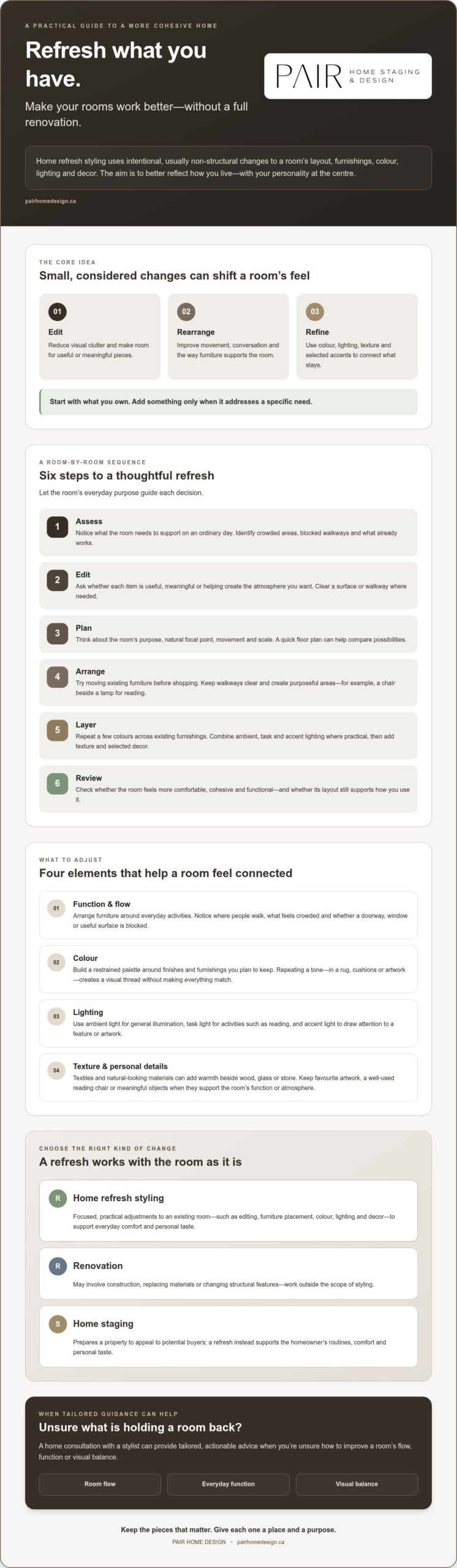
Use this sequence to move from assessing a room to its final styling:
- Assess: Observe how you use the room, where people walk and what feels out of balance.
- Edit: Clear items that aren’t useful or contributing to the atmosphere you want.
- Plan: Set a priority for the room and decide what should stay, move or potentially be added.
- Arrange: Test furniture placements before focusing on smaller decorative details.
- Layer: Add lighting, textiles and accessories where they improve comfort, function or cohesion.
- Review: Step back, consider the whole room and make one final edit for balance.
Begin with the larger decisions. If a living room feels awkward, for example, clear surfaces and test a new seating arrangement first. Make sure the route between the doorway and seating area feels comfortable. Then consider whether a lamp would make a reading spot more useful or a textile could connect colours already in the room.
Work in stages rather than styling every surface at once. After arranging the main furniture, live with the layout briefly and notice what still feels unresolved. Add only what responds to a specific need, then review the room from the doorway and from the places you use most. If your ideas aren’t coming together as a cohesive plan, a tailored home consult can help clarify your next steps. Explore home styling with Pair Home Design.
When to Bring in a Home Stylist for a Refresh
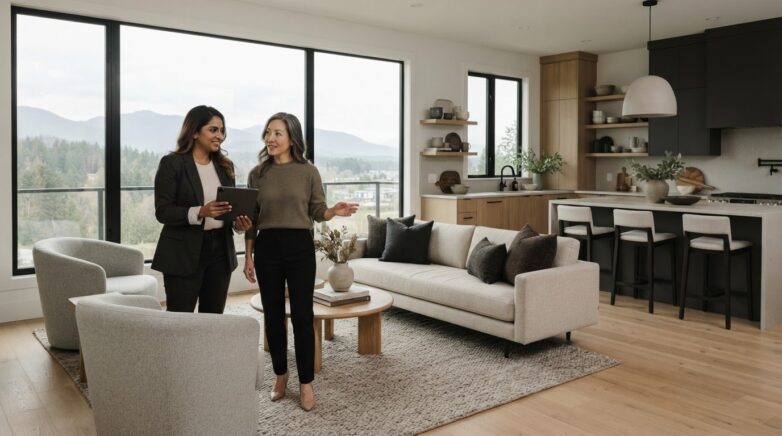
A fresh perspective can help when you know a room isn’t working but can’t pinpoint why. Perhaps the furniture feels difficult to arrange, the room serves several purposes, or your favourite pieces don’t seem to belong together. A stylist can consider how the space functions and feels, then help you identify practical possibilities you may have missed.
Consider getting guidance if you’ve tried rearranging and editing but still feel unsure what to prioritize. A home refresh styling consultation can be especially helpful when you want to make decisions before purchasing anything or would value an experienced eye on flow, function and visual balance.
What a Professional Home Styling Consultation Can Help With
A consultation offers tailored advice for your home and the way you use it. You can discuss what feels unresolved, explore furniture placement and consider aesthetic improvements that work with your existing furnishings. The guidance can give you a clearer direction while leaving you to carry out the changes yourself at your own pace.
Hands-on home styling is different: rather than receiving advice to implement on your own, you engage a stylist to help bring the room’s chosen direction together. The right fit depends on how much support you want and what the project involves. Home styling also differs from preparing a property for buyers. If your goal is to get a home ready for sale, see this home staging consultation guide for information about that distinct process.
Explore Home Styling with Pair Home Design
Pair Home Design, led by Rita, offers home styling and consultations for homeowners in Chilliwack and communities across the Fraser Valley and Greater Vancouver. Rita is a member of the Real Estate Staging Association. Her professional experience informs a practical, collaborative approach to making a home feel more cohesive while keeping the owner’s personality in view.
You don’t need to arrive with every detail decided. Bring your questions, describe what you’d like to feel different and discuss whether a consultation or home styling is a better match for your space. Explore home styling services and start a conversation about your home.
Give Your Home a Thoughtful Fresh Start
A room can feel renewed without starting over. Home refresh styling begins with a clear purpose, then uses thoughtful editing and furniture placement to make the most of what you own. A considered palette, layered lighting and a few intentional finishing touches can help the space feel more connected while keeping your personality in view.
Start with one room and decide what you want it to do and feel like. If the next steps aren’t clear, a home consultation can offer tailored guidance. Hands-on home styling is another option when you’d like support bringing the room together.
Pair Home Design, led by Rita, offers home styling and consultations across Chilliwack, the Fraser Valley and Greater Vancouver. Rita is a member of the Real Estate Staging Association. If you’re ready to discuss your space, contact Pair Home Design about home styling.
Frequently Asked Questions
What does home refresh styling include?
Home refresh styling improves the appearance and feel of an existing room through considered, usually non-structural changes. It may include editing belongings, adjusting the layout, connecting existing furnishings with a colour palette, improving how lighting serves the room and refining finishing touches. The approach depends on your space and goals. The aim is to make the room feel more cohesive and comfortable while keeping the pieces and personal details that matter to you.
How can I refresh my home without buying new furniture?
Start by editing and rearranging what you already own. Clear items that crowd surfaces or walkways, then test furniture placements that better support how you use the room. A chair might work more naturally beside a reading lamp, or a table may be more useful in another spot. Reuse existing textiles and decor where they suit the room. Consider buying only after you’ve identified a specific function or need that remains unmet.
What is the difference between home styling and home staging?
Home styling focuses on making a lived-in space feel comfortable, cohesive and suited to the people who use it. Home staging prepares a property for prospective buyers, with attention to its presentation and appeal as a listing. The purpose shapes the choices: everyday styling can retain personal belongings and routines, while staging is guided by preparing the home for sale. Pair Home Design offers both home styling and home staging as distinct services.
Can a home stylist help with just one room?
A focused consultation can address questions about a particular room, such as how to improve its flow, function or visual balance. You can then decide which recommendations to put into practice yourself. If you’re considering hands-on styling, ask the service provider whether the proposed scope can focus on that room and what it includes. Pair Home Design serves homeowners in Chilliwack, Abbotsford, Hope, Mission, Langley, Maple Ridge, Coquitlam, Surrey, Burnaby and Vancouver.
How do I make a room feel more cohesive?
Begin with the room’s purpose and arrange furniture to support clear movement and comfortable use. Then choose a small group of colours that relates to the finishes and furnishings you’re keeping. Layer lighting for general illumination and specific activities, and add varied textures for warmth. Finally, edit decor that competes for attention. Repeating a colour or material in a few places can connect the room without making every piece match.
When should I hire a home stylist instead of doing it myself?
Consider a stylist when you’re unsure how to arrange furniture, several rooms or needs compete for attention, or your own changes haven’t brought the room together. A consultation can offer tailored, actionable guidance on layout, function and aesthetic improvements that you can implement yourself. Hands-on home styling may suit you if you’d like help bringing a chosen direction together. Think about the kind of support you want, then confirm the service scope with the provider.
Does home refresh styling involve renovations?
Home refresh styling generally focuses on non-structural changes, such as editing belongings, rearranging furniture, adjusting colour, improving lighting and refining decor. Renovation work is different: it may involve construction, replacing materials or changing structural features. If you’re considering structural changes, discuss them with an appropriate renovation professional. A stylist can help you consider how existing furnishings and finishes work together, but don’t assume styling services include renovation work.