How to Prepare for a Home Stager: A Calm, Practical Checklist

What if the most useful thing you can bring to a home staging appointment is a home that still looks like yours? If you’re wondering how to prepare for a home stager, you don’t need to finish every repair, hide every personal item, or make each room picture-perfect first. A clear, honest starting point helps the stager understand how the home works and recommend changes that support its listing presentation.
It’s natural to feel unsure about what to clean, move, or leave alone, especially when time and decisions already feel tight. The appointment isn’t a test of how well you’ve staged your own home. It’s a chance to look at the space together and turn uncertainty into practical next steps.
This checklist will help you share useful information, make key rooms and features accessible, and ask questions that lead to clear recommendations. You’ll also learn what can happen after a consultation, including how advice for your own furnishings differs from a full home staging plan. Start with what’s manageable, then use the stager’s guidance to decide what deserves attention next.
Key Takeaways
- When preparing for a home stager, share useful context and make rooms accessible instead of attempting a redesign first.
- Make brief room-by-room notes about concerns, priorities, and features that need to stay functional while your home is listed.
- Discuss which spaces buyers should understand first and how the layout supports everyday living.
- Plan for pets, children, work schedules, and privacy so the walkthrough fits your household’s needs.
- After the consultation, sort recommendations into a short plan: what you can handle yourself and where professional staging support may help.
Preparing for a Home Stager in the Fraser Valley: Start With a Realistic Goal
Listing a lived-in home takes coordination. Across the Fraser Valley and Greater Vancouver, you may be balancing family routines, work, repairs, and the decisions involved in getting ready for a sale. A stager’s visit doesn’t require you to settle every decision in advance. The goal is to share enough context and provide access to the home so the appointment can identify priorities for its listing presentation.
Think of preparation as setting up a useful conversation, not doing the staging yourself. A general overview of Home staging explains its purpose: presenting a property so its features and potential are easier to appreciate. During the appointment, the stager applies that idea to your home. You don’t need to buy decor, move furniture from room to room, or make every space look finished beforehand.
Let the stager see the home as it is. A crowded corner, a room that doubles as an office and guest space, or furniture you’re unsure about keeping can all reveal what needs attention. An honest starting point makes it easier to discuss practical recommendations that fit the property and your plans.
Does your home need to be perfect before the stager arrives?
No. Everyday signs of life can help a stager understand how each room is used and where a change could help. Basic tidying makes it easier to walk through the home, but you don’t need to edit every shelf or choose new accessories. Save design decisions for the consultation, and be open about unfinished rooms, limitations, and routines that affect how the space works.
For example, if the dining table is also where children do homework, explain that. If a spare room is mid-painting or storage has accumulated in the basement, point it out rather than trying to disguise it. Clear pathways and make rooms accessible where possible. The rest is helpful context, not a test.
What a home stager needs to understand about your goals
Recommendations are most useful when they reflect what you’re working towards. Share your intended listing timeline, including milestones such as a planned photo session, a move, or other preparations already in progress. You don’t need a finalized schedule. Even a broad sense of timing helps the stager focus on what can realistically be done before the home is presented to buyers.
Identify the rooms or features you most want buyers to notice. Perhaps a bright living area, a practical kitchen, a view, or a flexible room is central to how you want the property to come across. Also mention what must remain functional while the home is listed, such as a workspace, a child’s bedroom, or access to everyday storage.
- Share your likely listing timeline and any important milestones.
- Point out the rooms and features you hope will stand out.
- Explain household needs that will shape what can change.
These details make the appointment a focused discussion rather than a generic room-by-room makeover. You bring your knowledge of the home and how you live in it; the stager brings a fresh eye to its presentation. Together, you can decide where to begin without making unnecessary purchases or changes before you have a plan.
Before the Home Stager Arrives: Gather Information and Prepare the Space
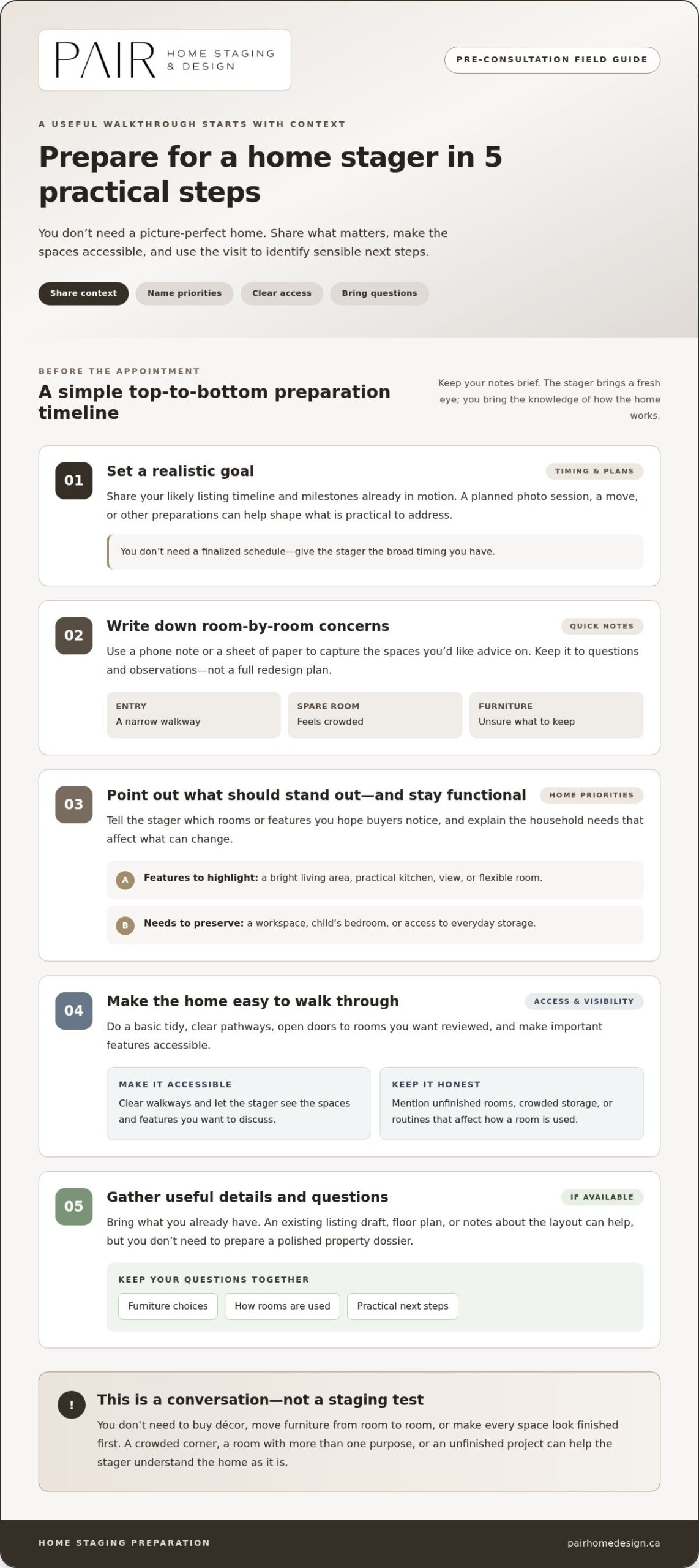
A little preparation can make the walkthrough more focused without turning it into a pre-staging project. For how to prepare for a home stager, keep the aim simple: share helpful context, note what you want advice on, clear access to the home, and gather your questions. You’re preparing for a conversation, not deciding how every room should look.
Start with a short note on your phone or a sheet of paper. Jot down room-by-room concerns, such as a narrow entry, a spare room that feels crowded, or a feature you’re unsure how to present. This gives the stager a useful starting point while leaving room for fresh eyes and tailored recommendations. Avoid drawing up a full redesign plan or deciding in advance which furniture must go.
- Share context: Note your listing timeline and any milestones that may affect preparations.
- Record priorities: Name the rooms, features, or practical issues you want to discuss.
- Clear access: Make it possible to walk through key rooms and view important features.
- Gather questions: Keep uncertainties about furniture, room use, and next steps in one place.
If you’re considering a consultation in Chilliwack, the article “Home Staging Consultation in Chilliwack: Your 2026 Pre-Listing Guide” is another resource to read as you prepare.
What details should you share before the appointment?
Bring the information you already have, not a polished property dossier. Share your expected listing timeline, features you’d like to highlight, and household constraints that could shape recommendations. If a bedroom also serves as a home office, for instance, explain what needs to remain in place for work. An existing listing draft, floor plan, or notes about the home’s layout can also help if they’re readily available.
Context helps the stager understand how the property functions and what matters to you. The National Association of REALTORS® Profile of Home Staging offers a broader look at staging; your appointment can focus on applying presentation choices to your home and listing goals.
How to make the walkthrough easier
Tidy enough to reach and view the spaces, but don’t aim for a staged appearance. Clear walkways, open doors to rooms you want reviewed, and make storage areas or key features accessible when practical. Secure personal belongings and plan where pets will be during the visit. If a room can’t be cleared because it’s in daily use, explain that. It’s useful information, too.
Hold off on buying furniture or decor until you’ve discussed what the home needs. A purchase intended to solve one room’s challenge may not suit the overall presentation. Use the visit to identify what deserves attention first, then consider which recommendations fit your timeline and household.
Pair Home Design offers pre-listing consultations and home staging across Chilliwack, the Fraser Valley, and Greater Vancouver, with guidance tailored to your property and listing plans.
What to Discuss With a Home Stager: Priorities, Furniture, and Next Steps
A useful consultation is a conversation about how the home should come across to buyers, not a request to approve every cushion or side table. Start by asking which rooms buyers should understand first and what each space needs to communicate. A living room might need to feel easy to gather in, while a spare room could show how the home accommodates work or guests. The stager can consider these priorities alongside the property and your listing plans.
It can also help to explore the broader case for presentation. The article “Is Home Staging Worth It? Busting the Myths About ROI in the 2026 BC Market” looks at that question in a local context. For a wider perspective on the profession, the Real Estate Staging Association (RESA) is a resource for homeowners curious about the staging industry.
Bring up practical needs early. If a clear path through the home matters for mobility, or you need a quiet work area during the listing period, say so. Staging recommendations should support the property’s presentation while taking your day-to-day routines into account.
How to talk about furniture and everyday needs
Before discussing edits, identify pieces with a practical, sentimental, or accessibility role. A sturdy chair may be essential for daily use; a dining table may be a family heirloom. Explain why an item matters, then ask whether it could stay, move to another room, or become part of the presentation.
Share the routines a plan needs to accommodate, such as getting ready for work, caring for children, or keeping essential storage within reach. Existing furniture may work well as it is, need a considered edit, or be complemented by curated inventory as part of a staging plan. You don’t have to decide in advance. Ask what can be repositioned, what might be edited, and which choices are part of professional staging.
Questions that make the consultation more actionable
Use direct questions to turn broad impressions into decisions. Ask which changes would make the clearest difference to the listing presentation, what to address before photography, and which rooms deserve attention first. These questions help distinguish a priority from a nice-to-have, so the plan reflects your timeline instead of treating every room as equally urgent.
- Which improvements matter most for this property and its intended listing presentation?
- What can I handle myself, and what relates to professional staging or styling?
- Which furniture should stay, be repositioned, or be considered for the presentation?
- What should we decide first, and what can wait until later?
A consultation provides tailored advice, while full home staging is a separate service. Clarifying the next step helps you understand whether the plan centres on homeowner-led edits, professional staging support, or a combination. That shared understanding is the heart of how to prepare for a home stager: bring your priorities and constraints, then make decisions together in a manageable order.
Home Stager Appointment-Day Checklist for a Lived-In Home
Appointment day is for looking closely and talking through possibilities, not for completing a last-minute makeover. You don’t need to hide every sign of family life or make the home resemble a listing photo. A few simple arrangements can help the stager move through the spaces, notice their proportions and features, and have a focused conversation with you.
Keep the plan realistic. If the household is working, children are home, or a pet needs a quieter space, account for that instead of trying to make the day run like a photo shoot. An honest walkthrough gives the stager a clearer picture of how the home functions and which recommendations will be practical.
A short checklist for the morning of the visit
Use this quick checklist to make the appointment comfortable and productive:
- Clear the main walkways and make the rooms included in the visit accessible.
- Move items that block the view of important features, such as a window, fireplace, or built-in storage.
- Set aside a spot for your notes, questions, and final discussion.
- Plan where pets will be and let household members know which rooms the stager will visit.
- Consider work calls, school routines, and other timing needs so you can participate without unnecessary disruption.
In the Fraser Valley and Greater Vancouver, rainy weather can mean wet shoes, umbrellas, and coats gathering near the entrance. If the entry is part of the walkthrough, keep a clear path through it and put wet-weather items somewhere convenient. There’s no need to make the entry feel unused; just make it easy to see and move through.
What not to do before the walkthrough
Resist the urge to decorate in a rush. Don’t conceal maintenance issues that could affect the presentation, discard furniture you may still need, or buy replacement pieces before discussing the home’s needs. A quick purchase might not suit the room, layout, or overall plan. The consultation is a better time to consider whether existing pieces should stay, move, or be edited.
And don’t apologize for ordinary living conditions. If a counter is in daily use or a room is shared by work and family, explain how it functions. That context can help the stager shape recommendations around the listing presentation without overlooking the needs you’ll still have while the home is for sale.
Privacy matters, too. Put away personal documents, medications, and valuables before the visit, and mention any spaces or belongings that need special consideration. You can keep household routines intact while making the relevant areas available for discussion.
That’s the practical version of how to prepare for a home stager: make access easy, keep your questions close, and leave design decisions for the walkthrough. If you’re ready to plan a pre-listing consultation or discuss staging for your home, connect with Pair Home Design.
After the Consultation: Turn Staging Advice Into a Listing-Ready Plan
A consultation is most useful when its recommendations become a clear plan you can act on. Rather than treating every suggestion as another item on an already full to-do list, note what needs doing, who will handle it, and how it fits your listing timeline. The goal is a considered presentation that works for the property and your household, not a perfect home overnight.
Separate homeowner-led tasks from decisions that may benefit from professional staging support. You might clear a surface or edit belongings yourself, while furniture placement, room balance, or choosing pieces for a cohesive presentation may call for a stager’s eye. Ask what the recommended next step is so you understand what the consultation has addressed and whether full home staging could help.
How to prioritize recommendations without feeling overwhelmed
Sort advice by room, effort, and timing. Start with changes that help buyers understand how a space works, move through the home comfortably, or appreciate its strongest features. Then consider what can be completed before listing photos and what can wait. A short, ordered plan is easier to manage than a long list that treats essential tasks and optional refinements as equally urgent.
Check each priority against the listing schedule and household routines. If a room is needed every day, decide how to make changes without disrupting its function. If a recommendation involves moving or storing furniture, plan it alongside other preparations rather than treating it as an isolated task.
- Group by room: Keep recommendations together so it’s easy to see what affects each space.
- Note the effort: Mark which tasks are simple edits and which need more planning or staging support.
- Set timing: Connect each task to a relevant listing milestone, such as preparing for photography.
When a consultation may lead to full home staging
A consultation can guide changes you make yourself or help shape a broader staging plan. These are distinct steps: the consultation provides tailored advice, while full home staging prepares the property’s presentation. If furnishings or decor are needed, curated inventory can be considered as part of a market-ready staging plan.
For more context about rental furnishings and how they fit into a listing plan, see “2026 Home Staging Rental Guide: Real Estate Success.” Keep your next step grounded in the consultation’s priorities and your timeline. You may decide to complete selected edits on your own, explore home styling, or discuss full staging for the property. There’s no need to treat every recommendation as an all-or-nothing choice.
The same calm approach that helps you understand how to prepare for a home stager can carry through after the visit: choose the first practical priority, consider how it supports the listing presentation, and build from there. To explore Pair Home Design’s pre-listing consultations and staging services, visit Pair Home Design.
Take the Next Step With a Clear Starting Point
The most valuable outcome of learning how to prepare for a home stager is feeling ready to make decisions with a professional perspective, rather than trying to solve every room on your own. Let the next step match what your property needs and what feels manageable for your listing plans. You can begin with advice, shape selected spaces, or consider a more complete staging plan.
At Pair Home Design, Rita’s membership in the Real Estate Staging Association reflects her connection to the home staging profession. Consultations, home styling, and full home staging support different homeowner needs. Curated inventory can also help create a cohesive, market-ready presentation as part of staging services.
Your home doesn’t need to be perfect to move forward. A thoughtful conversation can turn the starting point you have into a clear, considered plan. Explore home staging and consultation services with Pair Home Design, and take the next step at a pace that works for you.
Frequently Asked Questions
Should I clean my house before a home stager comes?
Yes, a light tidy is helpful, but a deep clean isn’t necessary for a consultation. Put away items that block access to counters, closets, or storage you want reviewed, and leave everyday surfaces visible enough to discuss. For example, clear a path to a packed pantry rather than reorganizing it first. If a room or storage area can’t be accessed, mention that at the start of the visit so the stager can account for it.
What should I do with my pets during a staging consultation?
Plan for your pets in whatever way keeps them settled and lets the stager move through the home comfortably. A dog might stay with a household member or in a secure room, while a cat may prefer a quiet space away from the walkthrough. Mention any routines, sensitivities, or door-opening concerns beforehand. If your pet needs familiar company or a particular setup, include that in your appointment plan.
Can I stay home while the stager looks at my property?
Yes, you can take part in the consultation and answer questions about how you use the home. Your presence can be especially helpful if a room has more than one purpose or a feature needs explanation. If you have a work call or another commitment, decide which parts of the appointment you can join and keep your key questions handy. That way, the discussion can reflect your household’s needs.
Should I move furniture before a home stager visits?
Usually, leave furniture in place unless something creates a safety concern or blocks access. Seeing the current arrangement helps the stager assess the size of the pieces and how they relate to the room. Before the visit, note any item you can’t move, such as a heavy cabinet, or furniture you hope to keep for personal reasons. Then you can discuss possible adjustments without risking damage or making a change you later need to reverse.
How far in advance should I prepare for a home stager?
There’s no major preparation project required, so allow enough time to collect your questions and coordinate a visit around your listing plans and daily schedule. Sellers in Chilliwack, Abbotsford, Hope, Mission, Langley, Maple Ridge, Coquitlam, Surrey, Burnaby, and Vancouver can also consider travel and household timing when arranging an appointment. If a listing milestone is already set, share it so the advice can take that timing into account.
Do I need to buy furniture or decor before a staging consultation?
No. Wait until you understand what the home needs before buying anything for the listing. A new chair or rug may not suit the room’s proportions or overall presentation, while an existing piece may work better after a thoughtful edit. If you have a spending limit or want to avoid purchasing items, mention that during the consultation. Professional staging may use curated inventory when it supports the plan.